In the rapidly evolving landscape of industrial automation, precision measurement is a cornerstone of efficiency and quality control. Among the various technologies enabling this precision, laser distance sensors have emerged as a critical tool. Xingning, as a notable player in the sensor manufacturing sector, offers a range of laser distance sensors designed to meet diverse industrial demands. This article delves into the technology behind these devices, their key applications, and essential factors for selection.
Laser distance sensors operate on the principle of time-of-flight or phase-shift measurement. A laser diode emits a focused beam of light towards a target. The sensor then detects the reflected light. By calculating the time difference between emission and reception, or by analyzing the phase shift of the modulated laser beam, the sensor accurately determines the distance to the target. Xingning sensors typically utilize advanced algorithms to filter environmental noise and ensure stable readings even in challenging conditions, such as varying surface colors or textures.
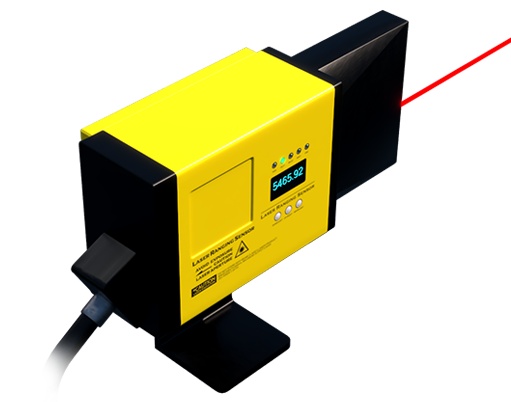
The core advantages of Xingning laser distance sensors are their non-contact measurement, high accuracy, and fast response times. Unlike mechanical probes or ultrasonic sensors, laser sensors do not physically touch the object, eliminating wear and tear and preventing damage to delicate surfaces. Accuracy levels can reach within sub-millimeter ranges, which is indispensable for applications requiring tight tolerances. Furthermore, measurement speeds are exceptionally high, often in the kilohertz range, allowing for real-time monitoring in high-speed production lines.
Typical industrial applications for Xingning laser distance sensors are vast and varied. In the automotive industry, they are used for panel gap inspection, weld seam tracking, and robot guidance. Within electronics manufacturing, these sensors ensure precise placement of components on circuit boards and measure the thickness of coatings or layers. Logistics and warehousing benefit from their use in palletizing, dimensioning packages, and controlling automated guided vehicles (AGVs). Additionally, they play a vital role in construction for leveling, alignment, and monitoring structural deformations.
When selecting a Xingning laser distance sensor for a specific application, several technical parameters must be carefully considered. The measuring range is the first criterion; sensors are available for short-range (a few centimeters), medium-range (up to several meters), and long-range applications. Accuracy and repeatability specifications define the sensor's precision and consistency. The laser spot size is crucial when measuring small objects or edges; a smaller spot allows for more precise targeting. Environmental factors such as ambient light, dust, fog, or temperature fluctuations can affect performance. Many Xingning models feature robust housings (often IP67 rated) and built-in compensation algorithms to withstand harsh industrial environments.

Output interfaces are another key selection factor. Common options include analog outputs (4-20 mA, 0-10 V), digital interfaces (RS-232, RS-485), and industrial fieldbus protocols (Profibus, Profinet, EtherCAT). The choice depends on the existing control system architecture. Ease of integration and configuration is also important. Modern Xingning sensors often come with intuitive software for parameter setting, calibration, and diagnostics, simplifying the setup process.
Looking ahead, the integration of laser distance sensors with Industry 4.0 frameworks is a growing trend. Xingning is likely focusing on enhancing connectivity features, enabling sensors to transmit data directly to cloud platforms for predictive maintenance and big data analytics. Improvements in laser safety (e.g., consistent adherence to Class 2 laser standards), power efficiency, and miniaturization will continue to drive adoption across even more sectors.
In conclusion, Xingning laser distance sensors represent a reliable and technologically advanced solution for non-contact distance measurement. Their high speed, accuracy, and versatility make them indispensable in modern automated processes. By thoroughly understanding the operational principles, application scenarios, and critical selection parameters outlined above, engineers and system integrators can effectively leverage these sensors to optimize performance, enhance product quality, and drive operational efficiency in their respective fields.