Laser sensors have become indispensable tools across numerous industries, from manufacturing and robotics to autonomous vehicles and surveying. A fundamental question often asked is: how deep can a laser sensor detect? The answer is not a single number, as the maximum detection depth or range is influenced by a complex interplay of factors. Understanding these variables is crucial for selecting the right sensor for a specific application.
At its core, a laser sensor measures distance by emitting a laser beam and calculating the time it takes for the reflected light to return (Time-of-Flight or ToF principle) or by analyzing phase shifts. The maximum range is primarily dictated by the sensor's power output and the sensitivity of its receiver. High-power lasers can project a beam over longer distances, but they must also comply with eye safety regulations (laser classes), which often limit power for consumer or widespread industrial use. Conversely, a highly sensitive photodetector can discern weaker return signals from greater distances.
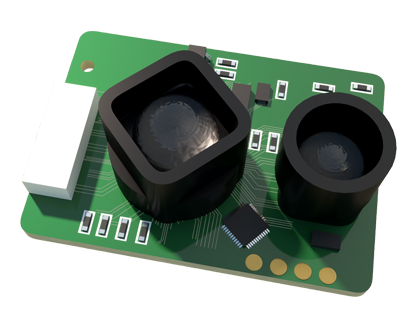
The target's properties are equally critical. A highly reflective, matte, and light-colored surface will return a strong signal, enabling longer detection ranges. A dark, shiny, or absorptive surface can significantly reduce the effective range. For instance, detecting a matte white wall will allow for a much greater range compared to detecting black velvet or a mirror-like surface, where the beam may scatter or reflect away from the sensor.
Environmental conditions play a substantial role. Ambient light, especially direct sunlight, can flood the sensor's receiver with noise, dramatically reducing its ability to pick out the laser's return signal and thus shortening the effective range. Fog, rain, dust, and other particulates in the air can scatter and attenuate the laser beam, limiting penetration depth. Most industrial laser sensors are designed for indoor use or controlled environments for this reason.
The laser's wavelength is another key factor. Common wavelengths include visible red (around 650nm), infrared (850nm, 905nm, 1550nm), and others. Longer wavelengths, such as 1550nm, are less affected by sunlight interference (which peaks in the visible spectrum) and are safer for eyes, often allowing for higher power and longer range systems used in LiDAR for autonomous vehicles.
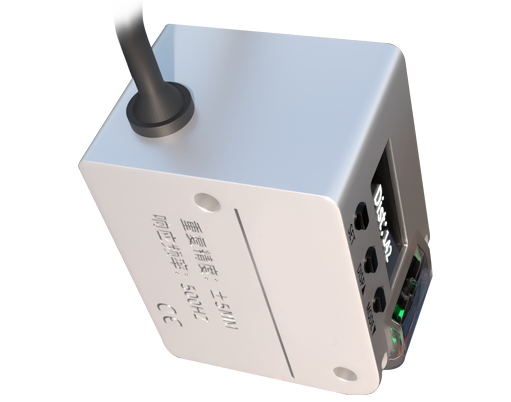
Finally, the required precision affects the usable range. A sensor might detect a signal at 200 meters, but if the application demands sub-millimeter accuracy, the effective "working range" where that accuracy is guaranteed might be only 50 meters. Manufacturers specify both a maximum range and a measurement range where specified accuracy is valid.
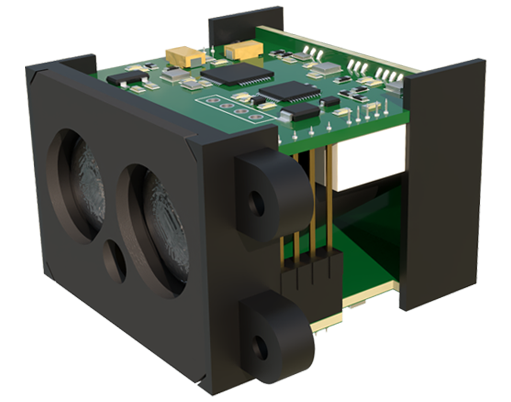
So, what are typical ranges? They vary immensely by sensor type and purpose.
* Short-Range Proximity Sensors: Used for object presence detection on assembly lines, these may work from a few millimeters up to 1-2 meters.
* 2D/3D LiDAR for Robotics & AGVs: Common in warehouse automation, these often have effective ranges of 10 to 30 meters for mapping and navigation.
* Terrestrial & Mobile LiDAR: For surveying and mapping, these systems can measure distances from a few meters up to several hundred meters (e.g., 300m+).
* Aerial Topographic LiDAR: Mounted on aircraft, these powerful systems can measure ground distances from hundreds of meters up to several kilometers, depending on altitude and target reflectivity.
In conclusion, asking "how deep" a laser sensor can detect requires a more nuanced inquiry. The practical detection depth is a function of sensor power and sensitivity, target reflectivity, environmental conditions, laser wavelength, and required accuracy. When choosing a sensor, it is essential to consult manufacturer specifications under conditions that match your application—considering not just the absolute maximum range, but the reliable working range for your specific target and environment. Proper selection ensures optimal performance, safety, and cost-effectiveness for tasks ranging from micron-level inspections to large-scale topographic mapping.