Two-wire proximity sensors represent a fundamental component in modern industrial automation and electrical control systems. As an electrical engineer, grasping the operational principles, advantages, and practical applications of these sensors is essential for designing efficient and reliable circuits. Unlike three-wire or four-wire sensors, two-wire proximity sensors simplify wiring by integrating both power supply and signal output into a single pair of wires, making them a popular choice for space-constrained or cost-sensitive installations.
At their core, two-wire proximity sensors function by detecting the presence or absence of metallic or non-metallic objects without physical contact. They operate on the principle of electromagnetic induction or capacitive sensing, depending on the target material. Inductive sensors, for instance, generate an oscillating electromagnetic field. When a metallic object enters this field, it induces eddy currents, causing a change in oscillation amplitude. This alteration is processed internally to switch the sensor's output state. Capacitive sensors, on the other hand, detect changes in capacitance when any object—metallic or non-metallic—approaches the sensing face, making them versatile for diverse materials like plastics, liquids, or granular substances.
The wiring simplicity of two-wire sensors stems from their series connection with the load, such as a PLC input module or relay coil. They are typically designed to work with standard DC or AC voltages, ranging from 10-30V DC or 20-250V AC. In a DC circuit, the sensor acts as a variable resistor or switch, modulating current flow to indicate target detection. For AC versions, they often incorporate solid-state switching elements like TRIACs to handle alternating current. This integration reduces installation time and minimizes potential wiring errors, but engineers must carefully consider voltage drop and leakage current. Since the sensor and load share the same loop, the voltage drop across the sensor can affect load operation, especially in low-voltage setups. Additionally, a small leakage current (typically under 2 mA) may persist even when the sensor is off, which could inadvertently activate highly sensitive loads.
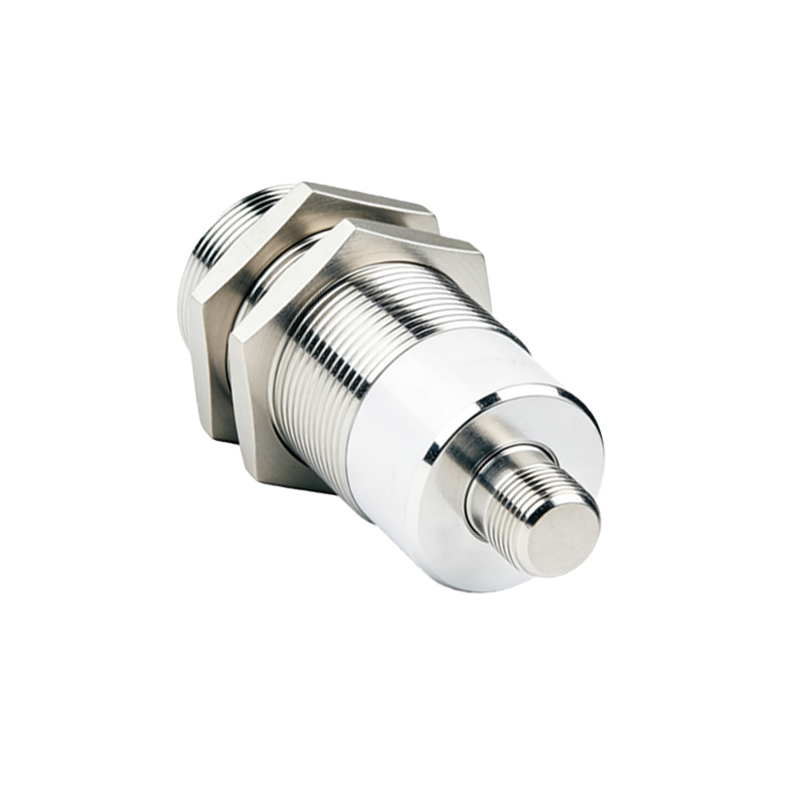
Key advantages of two-wire proximity sensors include reduced cabling costs, compact design, and enhanced reliability due to fewer connection points. They are ideal for high-volume applications where simplicity and durability are paramount, such as conveyor systems, machine tools, and packaging machinery. However, their limitations include lower switching speed compared to three-wire versions and sensitivity to electrical noise in industrial environments. Engineers should select sensors with appropriate shielding and ratings (e.g., IP67 for dust and water resistance) to ensure longevity in harsh conditions.
When integrating two-wire sensors into a control system, attention to detail is crucial. Always verify compatibility with the load's voltage and current specifications. For instance, using a sensor with insufficient current-carrying capacity may lead to premature failure. Additionally, consider environmental factors like temperature extremes, vibration, and exposure to chemicals, which can impact sensor performance. Modern advancements have led to "smart" two-wire sensors with diagnostic capabilities, such as short-circuit protection or LED indicators for status monitoring, further enhancing system robustness.
In practice, two-wire proximity sensors are often deployed in safety interlocks, object counting, and position detection tasks. For example, in an automated assembly line, they might detect the presence of components on a pallet, triggering subsequent actions like robotic arm movement. Their passive nature—drawing power only when active—also contributes to energy efficiency in large-scale installations. As Industry 4.0 evolves, these sensors are increasingly integrated into IoT networks, enabling real-time data collection for predictive maintenance and process optimization.
To maximize effectiveness, regular maintenance is advised. This includes cleaning sensing faces to prevent false triggers from debris accumulation and periodically testing response times. Calibration may be necessary for capacitive sensors used in variable material handling. By adhering to manufacturer guidelines and industry standards (e.g., IEC 60947-5-2), engineers can ensure optimal performance and safety.
In summary, two-wire proximity sensors offer a balance of simplicity and functionality, making them indispensable in electrical engineering. Their design reduces complexity while providing reliable non-contact detection, though careful planning is required to mitigate inherent drawbacks. As technology advances, these sensors will continue to evolve, supporting smarter and more connected industrial ecosystems.