Area laser sensors, also known as two-dimensional laser scanners, have become indispensable tools across a wide spectrum of industrial applications. Unlike traditional point or line sensors, these devices capture a dense cloud of distance data points across a plane, generating a precise profile or contour map of the target area. This capability unlocks a level of dimensional analysis, inspection, and guidance previously unattainable with simpler sensor types.
One of the most prominent applications is in automated logistics and warehousing. Here, area laser sensors are mounted on Autonomous Mobile Robots (AMRs) and Automated Guided Vehicles (AGVs). They continuously scan the floor and surrounding environment in a 2D plane, creating a real-time map for navigation and obstacle avoidance. The sensor detects pallets, racks, and unexpected obstacles, allowing the vehicle to calculate a safe path. Furthermore, they are used for volumetric measurement of packages on conveyor belts. By scanning the dimensions of irregularly shaped parcels, the system can calculate optimal packing and shipping costs with high accuracy, directly impacting operational efficiency and revenue.
In manufacturing, particularly in automotive and aerospace assembly, these sensors play a critical role in robot guidance and quality control. For instance, in door panel or windshield installation, a robot arm equipped with an area laser sensor can scan the car body's opening. The sensor captures the exact contour and position, allowing the robot to adjust its trajectory in real-time to achieve perfect alignment and sealing—a process known as adaptive robotics. This eliminates costly misalignments and rework. Similarly, in weld seam inspection, the sensor scans the completed weld, creating a detailed cross-sectional profile. Software then analyzes this profile against tolerance specifications to detect defects like undercut, porosity, or incorrect weld geometry without contact, ensuring structural integrity.

The field of industrial metrology has been revolutionized by area laser sensors. They enable fast, non-contact 3D measurements of components by taking multiple 2D profiles as the part is moved on a stage or as the sensor is passed over it. This is essential for reverse engineering, first-article inspection, and deformation analysis. For example, in plastic injection molding or metal casting, a freshly produced part can be scanned and its dimensions compared instantly to the original CAD model. Color-coded deviation maps quickly highlight areas out of tolerance, allowing for rapid correction of the manufacturing process.
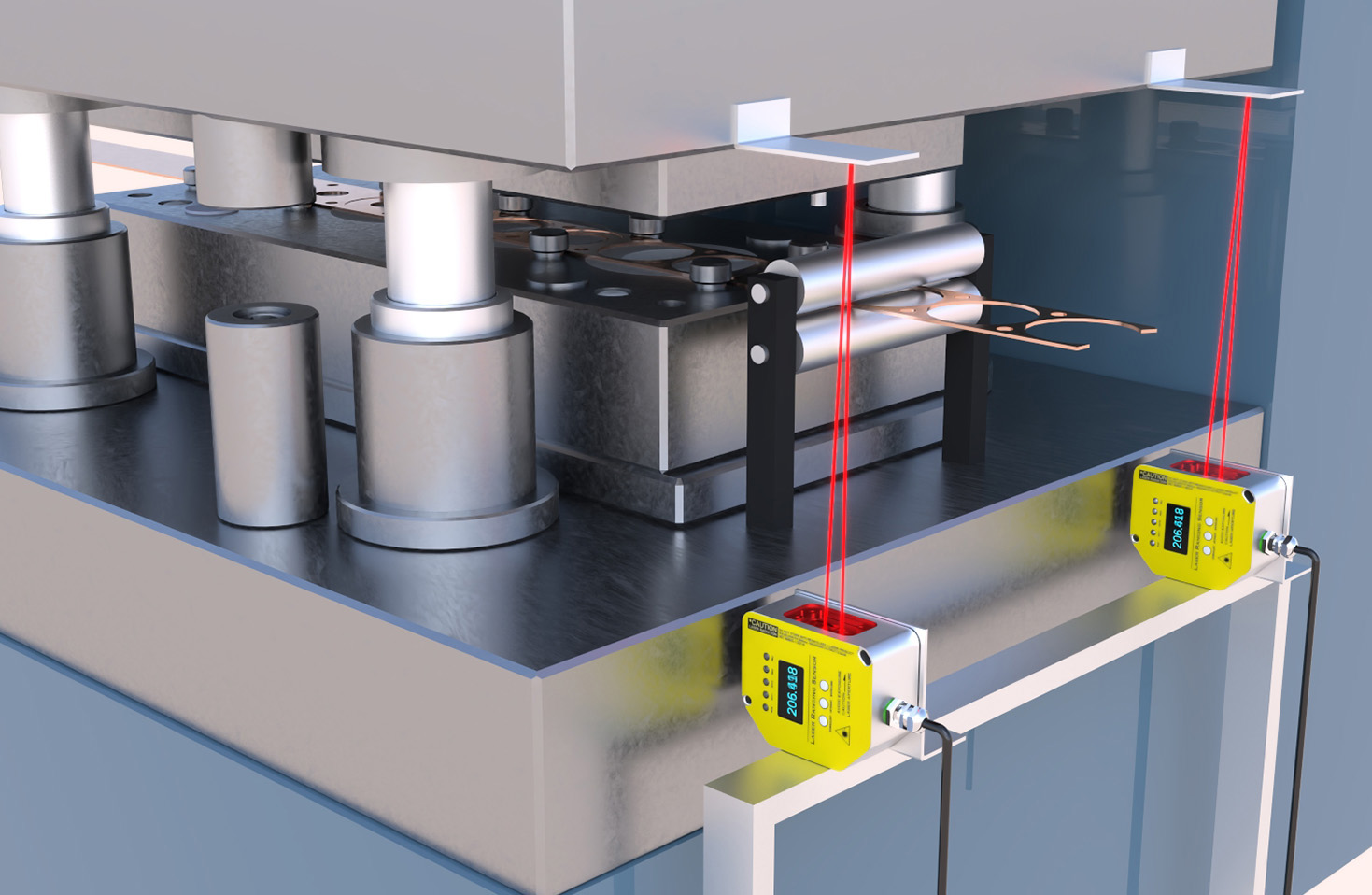
Another growing application is in bulk material level monitoring in silos, hoppers, and on conveyor belts. An area laser sensor mounted above an open container can scan the entire surface of the material (e.g., coal, gravel, grain). It doesn't just provide a single-point measurement but maps the surface topography, calculating an average level and even detecting uneven distribution or the formation of piles and valleys. This data is crucial for inventory management and preventing overfills or blockages in process industries.
The advantages of area laser sensors are clear: high precision, fast data acquisition, and robustness in harsh industrial environments (many are rated IP67). They provide rich data sets that facilitate advanced automation, reduce downtime, and enhance quality assurance. As machine vision and processing power continue to advance, the integration of area laser sensor data with AI algorithms promises even smarter applications, such as predictive maintenance by monitoring wear patterns or complex bin-picking solutions for randomly oriented parts. Their role as the "eyes" for intelligent automation systems is firmly established and continually expanding.
