In the dynamic landscape of industrial automation and machine safety, proximity sensors stand as fundamental components, enabling non-contact detection of objects. Among the diverse range available, M5 high-quality proximity sensors have carved a significant niche, renowned for their reliability, precision, and robust construction. This article delves into the essence of M5 proximity sensors, exploring their definition, operational principles, key features, and typical applications within various industrial sectors.
At its core, an M5 proximity sensor is a compact, cylindrical non-contact sensing device with an M5 threaded metal housing, typically 5mm in diameter. The "M5" designation refers to the metric thread size (5mm), which is a standard for mounting and installation. These sensors are designed to detect the presence or absence of metallic objects (primarily ferrous metals like steel and iron, though some variants detect non-ferrous metals) without any physical contact. This non-contact nature eliminates mechanical wear and tear, ensuring a long operational life and high reliability in demanding environments.
The operation of most M5 proximity sensors is based on the principle of electromagnetic induction. Internally, the sensor contains an oscillator circuit that generates a high-frequency electromagnetic field at its active face. When a metallic target enters this field, eddy currents are induced on the target's surface. This causes a change in the oscillation amplitude or frequency within the sensor's circuit. This change is detected, processed, and converted into a clean, digital output signal (typically PNP or NPN, sourcing or sinking) that switches state to indicate the object's presence. This entire process occurs with remarkable speed, allowing for high-speed counting, positioning, and detection tasks.
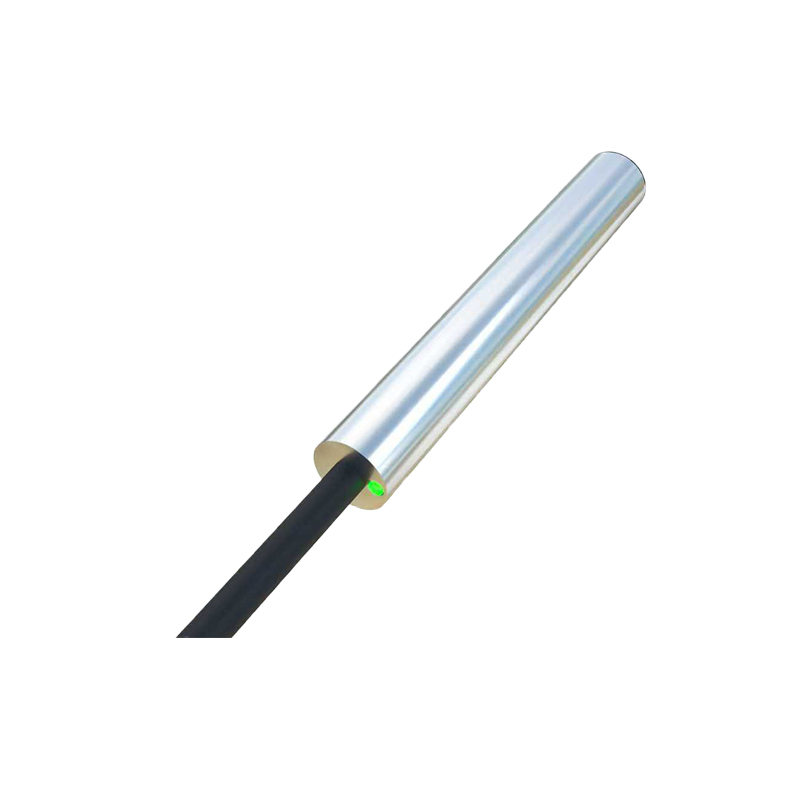
What distinguishes high-quality M5 proximity sensors are their exceptional characteristics. First and foremost is their precision and repeatability. High-quality models offer extremely short switching distances (often just 1-2mm for standard inductive types) with minimal hysteresis, ensuring consistent detection even with minute positional variations. The sensing distance is precisely calibrated and remains stable over time and across temperature fluctuations, a hallmark of superior manufacturing.
Robustness is another critical attribute. Premium M5 sensors are constructed with stainless steel housings (often V2A or V4A grades), providing excellent resistance to mechanical impacts, vibrations, and corrosion from oils, coolants, and mild chemicals. They commonly feature ingress protection ratings of IP67 or higher, making them dust-tight and capable of withstanding temporary immersion in water. This durability is essential for harsh industrial settings such as machining centers, welding lines, or outdoor equipment.
Electrical performance and noise immunity are equally vital. High-quality sensors incorporate advanced circuitry that suppresses electromagnetic interference (EMI) from motors, inverters, and welding equipment, preventing false triggering. They also offer wide operating voltage ranges (e.g., 10-30V DC) and low current consumption. Many feature built-in protection against short-circuits, reverse polarity, and overvoltage, safeguarding both the sensor and the connected control system (like a PLC).
Furthermore, leading manufacturers offer M5 sensors with diverse output configurations (e.g., 3-wire DC, 2-wire DC, or analog outputs), different sensing face materials (like PTFE for weld-field immunity), and various connector types (e.g., pre-wired cables or quick-disconnect plugs) to suit specific application needs. Some specialized variants include all-metal versions for extreme environments or factor-1 sensors capable of detecting all metals at the same nominal sensing distance.
The applications for M5 high-quality proximity sensors are vast and span numerous industries. In automotive manufacturing, they are used for precise part presence verification on assembly lines, tool positioning in robotic arms, and end-of-stroke detection in cylinders. Within packaging machinery, they facilitate high-speed bottle or container counting and label detection. In CNC machining, they serve as tool breakage detectors or workpiece position confirmers. Their small size makes them ideal for integration into compact machinery, semiconductor handling equipment, and small robotic grippers where space is at a premium.
When selecting an M5 proximity sensor, engineers must consider several parameters: the target material (ferrous or non-ferrous), required sensing distance, operating voltage, output type compatible with the controller, environmental conditions (temperature, chemicals), and required housing material. Choosing a sensor from a reputable manufacturer known for quality and consistency is paramount to ensure system uptime and reduce maintenance costs.
In conclusion, M5 high-quality proximity sensors represent a pinnacle of miniaturized, reliable sensing technology. Their combination of compact size, rugged design, precise operation, and electrical robustness makes them indispensable components in modern industrial automation. By understanding their working principles and key selection criteria, engineers and technicians can effectively leverage these sensors to enhance machine efficiency, ensure safety, and improve overall production reliability. As Industry 4.0 and smart manufacturing evolve, the demand for such dependable and