In the realm of industrial automation, precise detection and differentiation of color marks are critical for numerous processes, from packaging and printing to assembly and quality control. Color mark sensors, particularly those utilizing laser technology, have become indispensable tools for achieving high-speed, reliable, and accurate detection. This article delves into the working principles, key advantages, diverse applications, and essential selection criteria for laser-based color mark sensors.
At its core, a color mark sensor is designed to detect a specific color or contrast mark on a moving object or surface. Laser-based models employ a focused laser beam as their light source. The sensor emits this coherent light onto the target surface. The reflected light is then captured by the sensor's receiver. Unlike standard photoelectric sensors that detect the presence or absence of light, a color mark sensor analyzes the specific wavelength or chromaticity of the reflected light. Advanced models use RGB (Red, Green, Blue) sensing technology or true-color recognition algorithms to distinguish subtle differences in hue, saturation, and brightness, even against challenging backgrounds. The laser source provides a highly concentrated, bright spot, enabling detection of very small marks or precise edges with exceptional stability, largely immune to ambient light interference.
The advantages of using laser technology in color mark sensors are significant. First and foremost is precision. The collimated laser beam allows for spot sizes as small as 0.1mm, facilitating the detection of极小 marks, fine print, or thin lines that would be impossible with diffuse LED-based sensors. This leads to higher accuracy in registration and positioning tasks. Second is stability and long-range performance. Laser light maintains its intensity and focus over longer distances compared to standard LEDs, making these sensors suitable for applications where the sensing distance is variable or relatively large. Third is speed. The fast response time of laser diodes, combined with sophisticated processing electronics, enables these sensors to operate at extremely high line speeds, crucial for modern high-throughput manufacturing lines. Finally, their superior resistance to ambient light—including sunlight and factory lighting—ensures consistent performance without the need for light-shielding housings in many environments.
Applications for laser color mark sensors span a wide array of industries. In the packaging industry, they are used for label registration, detecting print marks on flexible films, and ensuring correct carton flap positioning. In the printing sector, they perform critical tasks in color registration control, web guiding, and detecting color marks for cutting or folding operations. The textile industry utilizes them for pattern alignment and color code reading on fabrics. In electronics manufacturing, they assist in PCB alignment and component placement verification based on color-coded markers. Furthermore, they are employed in automotive assembly for part identification and in pharmaceutical packaging for verifying tamper-evident seals or printed lot codes.
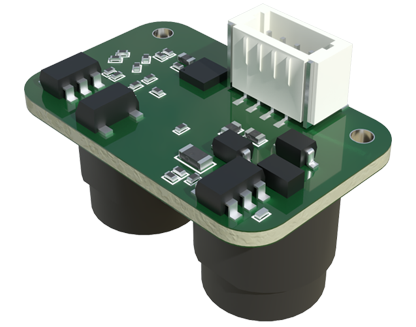
Selecting the right laser color mark sensor requires careful consideration of several parameters. The primary factor is the mark characteristics: its size, color, contrast with the background, and the substrate material. The sensor must have sufficient resolution and color discrimination capability for the specific mark. Sensing distance and spot size are equally important; ensure the sensor's specified range and minimal focus spot meet the application's physical constraints. Response time must be faster than the product's travel speed to guarantee reliable detection. Environmental factors such as temperature, humidity, and potential exposure to dust or chemicals dictate the required ingress protection (IP) rating. Lastly, consider output types (e.g., NPN/PNP, analog, IO-Link) and programmability features, such as teach-in functions for easy setup and the ability to store multiple color settings for flexible production changeovers.
In conclusion, laser-based color mark sensors represent a pinnacle of sensing technology for color differentiation tasks. Their precision, speed, and robustness make them vital for enhancing automation efficiency, reducing waste, and ensuring product quality. As manufacturing demands for miniaturization and speed continue to grow, the role of these advanced sensors will only become more prominent. Understanding their operation and selection criteria is key for engineers and technicians to implement effective and reliable automated solutions.