In the rapidly evolving landscape of smartphone technology, the camera system has become a primary battleground for innovation. Among the myriad of advancements, autofocus (AF) technology stands as a critical determinant of image quality and user experience. Moving beyond traditional contrast-detection and phase-detection systems, Realme has integrated sophisticated Laser Autofocus sensors into its flagship devices, marking a significant leap in focusing performance. This article delves into the engineering principles, operational advantages, and practical implications of this technology from an electrical engineering perspective.
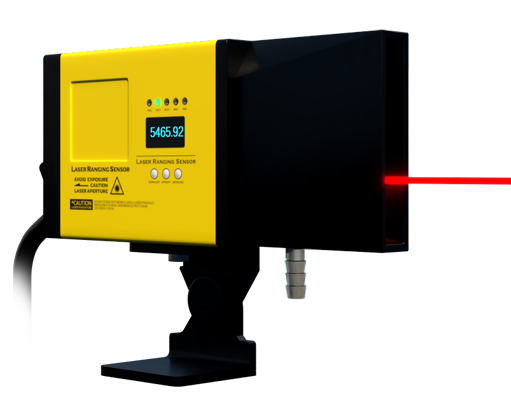
At its core, a Laser Autofocus sensor is a time-of-flight (ToF) based ranging system. The sensor module comprises a low-power infrared laser diode emitter and a dedicated sensor or receiver. When activated, the emitter projects an invisible, coherent beam of infrared light towards the subject. This light reflects off the subject and returns to the receiver. An internal microcontroller, often integrated with the Image Signal Processor (ISP), calculates the distance to the subject by precisely measuring the time delay between the emission and reception of the laser pulse. This calculation, governed by the fundamental equationdistance = (speed of light × time delay) / 2, yields an extremely accurate depth measurement, typically within a range of a few centimeters to several meters.
From an electrical design standpoint, the implementation is elegant yet demanding. The laser driver circuit must generate short, high-current pulses to activate the diode, ensuring consistent output while adhering to strict eye-safety regulations (compliant with IEC 60825-1 Class 1). The receiver side, often an avalanche photodiode (APD) or a specialized SPAD (Single-Photon Avalanche Diode) array, is highly sensitive to the weak returning signal. This necessitates sophisticated amplification and noise-filtering circuits to distinguish the signal from ambient infrared noise. The entire subsystem operates on a low-voltage domain and is meticulously shielded to prevent electromagnetic interference (EMI) from affecting the main camera sensors or other RF components.

The performance advantages over conventional AF methods are substantial. The most prominent benefit is speed. Laser AF operates independently of ambient light conditions and scene contrast. Whether in a dimly lit room or aiming at a featureless white wall, it acquires focus almost instantaneously, often in less than 0.3 seconds. This eliminates the frustrating "focus hunting" prevalent in contrast-detection systems. Secondly, it provides exceptional accuracy for medium-range subjects. While phase-detection pixels (PDAF) on the image sensor excel at tracking and continuous AF, the laser sensor provides an absolute distance reference, allowing the lens mechanism to move directly to the calculated position. This hybrid approach, where laser data is fused with PDAF and contrast data by the ISP's algorithms, creates a robust and versatile focusing system.
In practical application, this translates to tangible benefits for end-users. Portrait photography sees immediate improvement, with faster and more reliable subject separation for bokeh effects. Low-light and nightscape photography benefits drastically, as the camera can lock focus where other systems fail. Macro photography and scanning documents become more reliable due to precise close-range distance measurement. Furthermore, the laser sensor's data can be repurposed for augmented reality (AR) applications, providing quick environmental depth mapping.
However, engineering such a system is not without its challenges. Power consumption, though minimal per activation, must be managed within the device's overall thermal and battery budget. Component calibration is critical; any misalignment between the laser emitter and receiver leads to erroneous distance calculations. The sensor window on the phone's exterior must be kept clean, as smudges can scatter or block the infrared beam. Long-term reliability concerns include potential degradation of the laser diode output and ensuring the receiver's sensitivity over the product's lifespan.
Looking forward, the integration of Laser AF is likely to become more deeply embedded with other sensing modalities. We can anticipate tighter coupling with LiDAR scanners for more comprehensive 3D mapping, or with ultra-wideband (UWB) radios for spatial awareness. The evolution from single-point laser ranging to multi-point or scanning laser systems could provide even richer depth data for computational photography.
In conclusion, Realme's adoption of the Laser Autofocus sensor is a testament to the brand's commitment to leveraging precise electrical engineering solutions to solve real-world user pain points. It is not merely a marketing spec but a thoughtfully integrated subsystem that enhances the fundamental camera experience. By providing a fast, reliable, and light-independent reference point, it forms the cornerstone of a modern, hybrid autofocus system, ensuring that users can capture sharp, clear images in the decisive moment, regardless of the shooting environment. For the industry, it sets a benchmark for how dedicated hardware, when intelligently implemented, can deliver superior performance that software algorithms alone cannot achieve.