In the realm of industrial automation, sensors act as the critical sensory organs, providing machines with the ability to perceive and interact with their environment. Among these, proximity and vision sensors stand out for their pivotal roles in enabling precision, safety, and efficiency. While often discussed in tandem due to their complementary functions, they operate on fundamentally different principles and are categorized distinctly. This article delineates the primary classifications of both proximity sensors and machine vision systems, providing a clear framework for understanding their applications.
Classification of Proximity Sensors
Proximity sensors are non-contact devices designed to detect the presence or absence of an object within a defined range without physical contact. Their categorization is primarily based on their underlying detection technology.
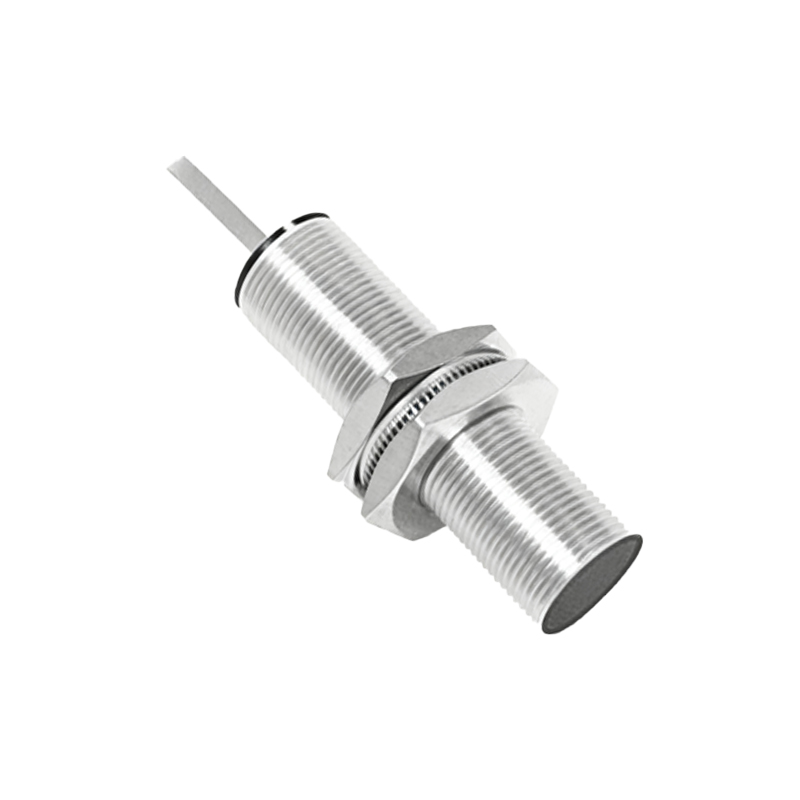
1. Inductive Proximity Sensors: These sensors generate an electromagnetic field. When a metallic object (ferrous or non-ferrous) enters this field, it induces eddy currents within the object, causing a change in the sensor's oscillation amplitude. This change triggers the output switch. Inductive sensors are exceptionally reliable for detecting metals and are widely used in machining, material handling, and automotive assembly lines. They are robust, resistant to environmental contaminants like dust and oil, and offer high switching frequencies.
2. Capacitive Proximity Sensors: These sensors can detect both metallic and non-metallic objects (plastics, wood, liquids, granules) by measuring changes in capacitance. The sensor forms one plate of a capacitor, with the target object acting as the other plate. As the object approaches, the capacitance increases until it reaches a threshold that activates the output. This makes them ideal for level detection in tanks, material handling of non-metals, and presence detection of packaged goods.
3. Ultrasonic Proximity Sensors: Operating on the principle of echolocation, these sensors emit high-frequency sound waves and measure the time taken for the echo to return. The time-of-flight calculation provides precise distance measurement, not just presence detection. They are effective for detecting objects of virtually any material, shape, or color, and are used in challenging environments with dust, mist, or varying light conditions. Common applications include palletizing, collision avoidance on AGVs, and liquid level sensing.
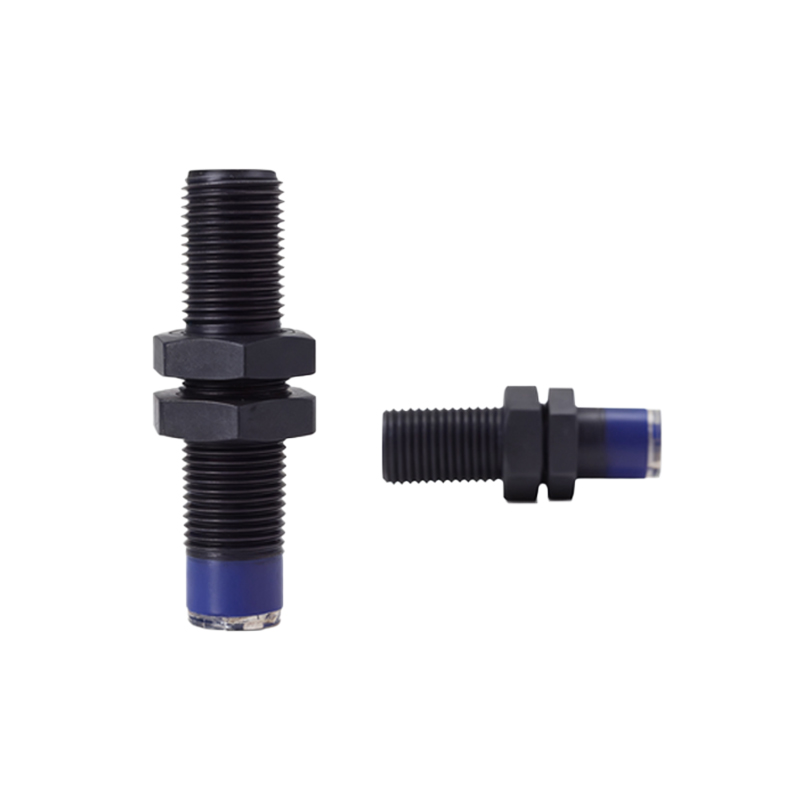
4. Photoelectric Sensors: While sometimes grouped separately, photoelectric sensors are a key proximity detection technology. They use a light emitter (usually LED or laser) and a receiver. They are further sub-divided into three main modes:
Through-beam (Opposed): The emitter and receiver are separate units. Detection occurs when the object breaks the light beam. This mode offers the longest sensing range and highest reliability.
Retro-reflective: The emitter and receiver are housed together, facing a reflector. Detection occurs when an object interrupts the beam to and from the reflector.
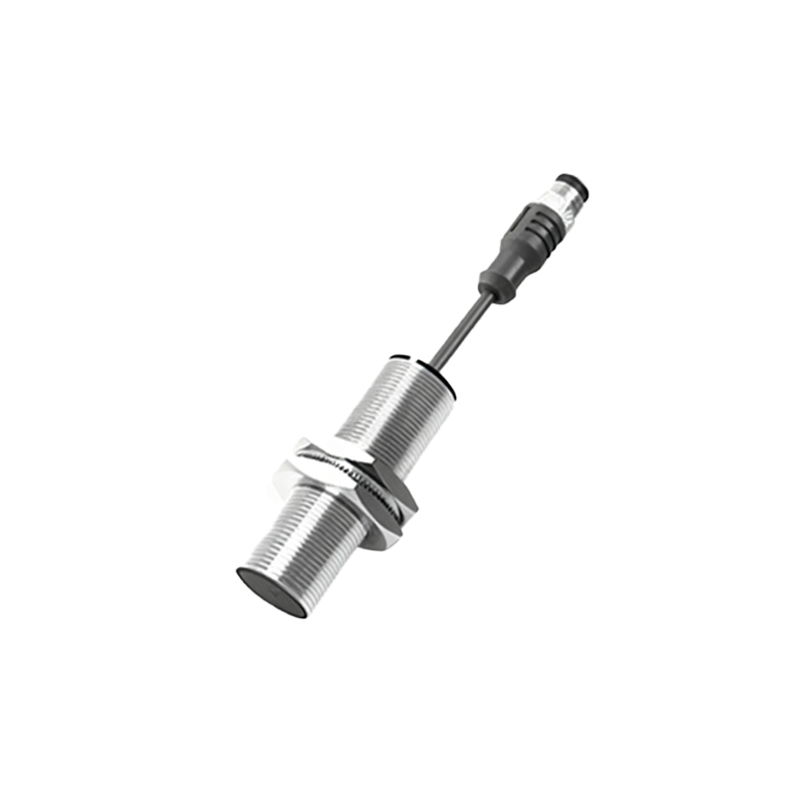
Diffuse (Proximity): The emitter and receiver are housed together. Detection relies on the light reflecting off the target object itself. Sensing distance depends on the object's color, texture, and reflectivity.
Classification of Machine Vision Systems
Vision sensors and systems interpret images to perform complex inspections, guidance, and identification tasks. Their classification is often based on system complexity and application scope.
1. Smart Cameras (Vision Sensors): These are all-in-one units integrating a camera, processor, lighting, and I/O in a single compact housing. They are pre-programmed for specific, often simpler, tasks like presence/absence checks, basic measurement, or barcode reading. They are designed for ease of use, quick deployment, and are cost-effective for dedicated applications.
2. PC-Based Vision Systems: These are more powerful and flexible systems where a high-resolution camera is connected to a separate industrial PC running sophisticated vision software. This architecture allows for complex image processing, large data handling, and integration with other plant systems. They are used for demanding applications like high-speed precision gauging, 3D inspection, robotic guidance for bin picking, and advanced optical character recognition (OCR).
3. 3D Vision Systems: Moving beyond 2D imaging, 3D vision systems capture depth information to create a profile or point cloud of an object. Technologies include stereo vision, laser triangulation, and structured light. These systems are essential for applications involving volume measurement, shape verification, robotic path planning for uneven surfaces, and assembly verification where height is a critical dimension.
4. Application-Specific Vision Systems: This category includes systems tailored for particular industries or tasks, such as:
Code Readers: Optimized for reading 1D/2D codes (barcodes, QR codes, Data Matrix) at high speeds.
Thermal Imaging Cameras: Used for predictive maintenance (detecting overheated components) and process monitoring.
Selection