In the rapidly evolving landscape of industrial automation and smart systems, proximity sensor technology stands as a cornerstone of innovation. These non-contact detection devices have transcended their basic functions, becoming intelligent components integral to efficiency, safety, and data-driven operations. This article delves into the core principles, cutting-edge advancements, and diverse applications of high-tech proximity sensors, providing a comprehensive overview for engineering professionals.
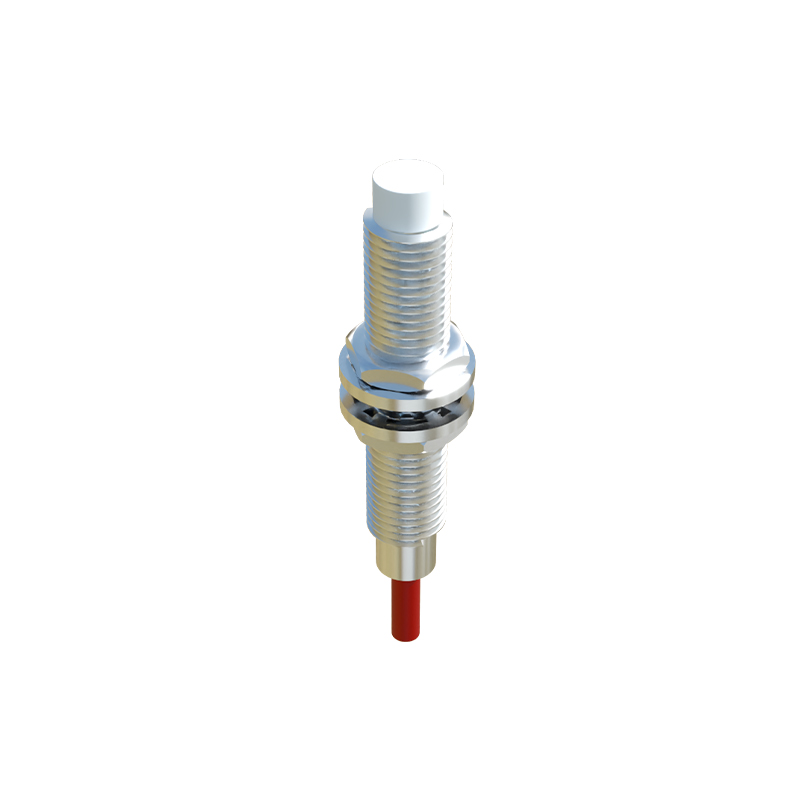
Fundamentally, a proximity sensor detects the presence or absence of an object within a specified range without physical contact. The operating principle varies by type, primarily including inductive, capacitive, ultrasonic, and photoelectric sensors. Inductive sensors, the workhorses of metal detection, generate an electromagnetic field. When a metallic target enters this field, it induces eddy currents, causing a change in oscillation amplitude that triggers the sensor's switch. Modern inductive sensors now feature enhanced sensing distances, exceptional resistance to electrical noise, and the ability to detect different types of metals with varying degrees of sensitivity. They are encapsulated in robust housings (e.g., stainless steel, PBT) to withstand harsh industrial environments involving coolants, oils, and metal chips.
Capacitive sensors operate on a different principle, detecting changes in capacitance formed by the sensor and the target object. They can sense a wide variety of materials, including metals, plastics, glass, wood, and liquids. Recent innovations in capacitive technology focus on improved shielding to prevent false triggers and adjustable sensitivity for precise level detection of powders or granular materials in tanks and hoppers. This makes them indispensable in food processing, pharmaceutical, and chemical industries.
Photoelectric sensors, utilizing a light transmitter and receiver, offer the longest sensing ranges. Advancements here are particularly striking. The integration of Time-of-Flight (ToF) and background suppression technologies allows for precise distance measurement and the ability to ignore objects beyond a set point, respectively. Laser-based photoelectric sensors provide micrometer-level accuracy for positioning tasks. Furthermore, the development of IO-Link enabled photoelectric sensors facilitates digital communication, allowing for remote parameter configuration, real-time diagnostics, and predictive maintenance data transmission directly to a PLC or control system.
Ultrasonic sensors emit high-frequency sound waves and evaluate the echo received. Their major advantage is consistency, as they are largely unaffected by target material, color, or transparency, and can operate reliably in dusty or foggy conditions. Contemporary ultrasonic sensors feature advanced algorithms for echo processing, enabling them to distinguish between multiple objects and provide analog output for continuous distance measurement. They are pivotal in challenging applications like bulk material level monitoring, loop control, and even in autonomous guided vehicles (AGVs) for obstacle detection.
The true leap in "high-tech" proximity sensors lies in their intelligence and connectivity. The integration of microprocessors and IoT capabilities has given rise to smart sensors. These devices go beyond simple on/off switching. They can self-monitor their operating status, detect contamination levels on the lens (for photoelectric types), signal overload conditions, and communicate this health data via industrial protocols like IO-Link, PROFINET, or EtherNet/IP. This enables condition-based monitoring, reducing unplanned downtime and transitioning maintenance strategies from reactive to predictive.
Another significant trend is miniaturization. Engineers can now embed powerful sensing capabilities into increasingly compact form factors, enabling their use in space-constrained applications like semiconductor manufacturing equipment, small robotic grippers, and consumer electronics assembly lines. These miniature sensors often maintain high performance despite their small size, featuring built-in amplifiers and various output configurations (PNP/NPN, NO/NC).
The application spectrum is vast. In automotive manufacturing, arrays of inductive and photoelectric sensors ensure precise robotic welding and part positioning. In packaging machinery, capacitive sensors verify foil seal presence, while photoelectric sensors count products on high-speed lines. In the renewable energy sector, ultrasonic sensors monitor wind turbine blade pitch. The rise of collaborative robots (cobots) relies heavily on safe, accurate proximity sensing for human-robot interaction. Furthermore, in smart infrastructure, capacitive touch sensors and microwave proximity detectors enhance user interfaces and security systems.
Looking ahead, the convergence of sensing technology with Artificial Intelligence and edge computing promises the next frontier. Sensors will not only collect data but also pre-process it locally, making preliminary decisions and only sending relevant insights to the central controller. This reduces network load and enables faster, more autonomous system responses. Material science will also contribute, with new compounds and coatings enhancing sensor durability and performance in extreme temperatures and corrosive environments.
In conclusion, high-tech proximity sensors are no longer mere switches. They are sophisticated, connected, and intelligent data points at the edge of the industrial network. Their continuous evolution in precision, robustness, and cognitive capability is fundamental to advancing Industry 4.0, driving towards smarter, safer, and more efficient automated systems across all sectors. For engineers, staying abreast of these technological trends is crucial for designing the next generation of