In the world of industrial automation and machine control, proximity sensors are fundamental components, often described as the "eyes" of a system. But what exactly is a proximity sensor? At its core, a proximity sensor is a non-contact electronic device designed to detect the presence or absence of an object within a specified range without any physical contact. This key characteristic makes them invaluable for applications requiring high reliability, fast response, and minimal wear and tear.
Unlike mechanical limit switches that require physical actuation, proximity sensors operate by emitting an electromagnetic field, beam of light, or ultrasonic waves and then monitoring for changes in the field or return signal. When a target object enters the sensor's detection zone, it causes a detectable change—such as eddy currents in a metal target, capacitance variation, or interruption of a light beam. This change is converted by the sensor's internal circuitry into a clean, binary electrical output signal (typically ON/OFF). This signal is then sent to a controller like a PLC (Programmable Logic Controller) to trigger a programmed action, such as stopping a conveyor, counting parts, or initiating a robotic sequence.
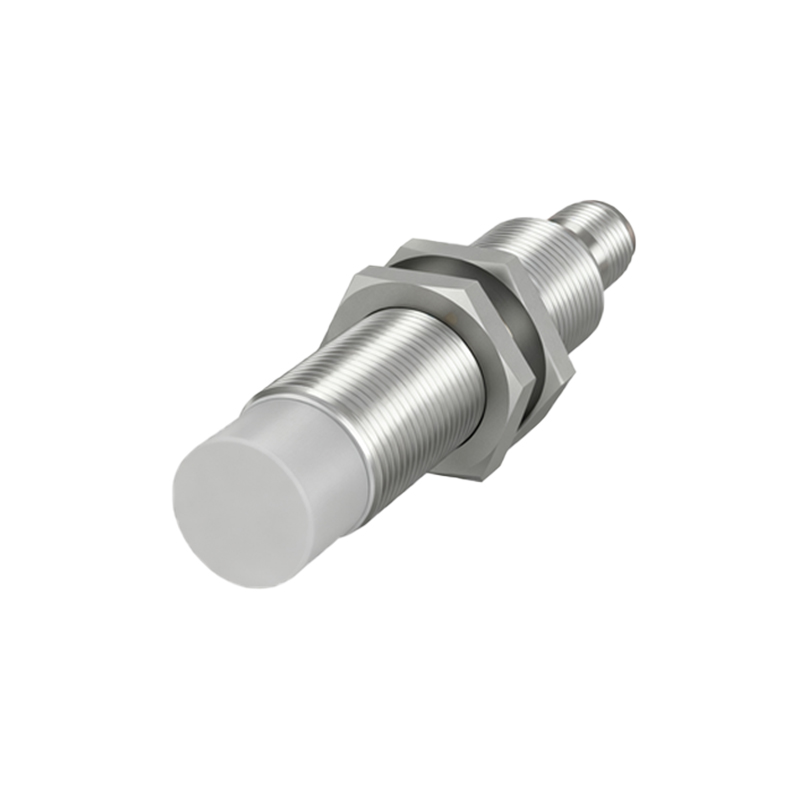
The functionality and application of a proximity sensor are largely determined by its underlying technology. The most common types include:
1. Inductive Proximity Sensors: These are the workhorses of the industry for metal detection. They generate an oscillating electromagnetic field from a coil at the sensing face. When a conductive metal object enters this field, it induces eddy currents on the object's surface, which in turn dampens the oscillation amplitude of the sensor. The sensor's circuit detects this damping and triggers an output switch. Inductive sensors are robust, resistant to environmental factors like dust and oil, and are ideal for detecting ferrous and non-ferrous metals at short ranges, typically up to 60mm.
2. Capacitive Proximity Sensors: These sensors can detect both metallic and non-metallic materials, including liquids, plastics, wood, and granules. They function by generating an electrostatic field. Any object that enters this field alters the capacitance of the sensor's circuit. The sensor detects this change in capacitance and activates its output. Capacitive sensors are perfect for level detection in tanks, material handling, and detecting non-metallic objects, though they can be influenced by environmental humidity and material composition.
3. Photoelectric Sensors: Operating on the principle of light transmission, these sensors use a light emitter (usually LED) and a receiver. They are categorized by their operating mode: through-beam (separate emitter and receiver), retro-reflective (uses a reflector), and diffuse (reflective), where the emitter and receiver are in the same housing. Photoelectric sensors offer the longest sensing ranges among proximity types and can detect virtually any object, but their performance can be affected by color, transparency, and ambient light conditions.
4. Ultrasonic Sensors: These sensors measure distance or detect objects by emitting high-frequency sound waves and calculating the time for the echo to return. They are excellent for detecting objects regardless of color, transparency, or material, and are widely used for level measurement, distance control, and presence detection in challenging environments with dust or fog, where optical sensors might fail.
Selecting the right proximity sensor involves careful consideration of several key parameters. The sensing distance, or nominal range, is critical and must account for installation tolerances and target material. Output type (NPN sinking, PNP sourcing, or analog) must be compatible with the control system's input card. Housing material (often nickel-plated brass or stainless steel) and IP (Ingress Protection) rating determine the sensor's suitability for harsh environments involving washdowns, coolants, or metal chips. Other factors include response frequency (how fast it can detect objects), target material and size, and installation requirements (flush or non-flush mounting for inductive sensors).
The applications of proximity sensors span virtually every industry. In automotive manufacturing, they position robotic arms and verify part placement. On packaging lines, they count bottles and detect label positions. In material handling, they control pallet positioning on conveyors. They provide safety interlocking on machine guards, control elevator floor levels, and manage inventory in automated storage systems. Their ability to provide precise, reliable, and maintenance-free detection is a cornerstone of modern efficient, safe, and automated industrial processes.
In summary, a proximity sensor is far more than just a simple switch. It is a sophisticated, application-specific device that translates physical presence into actionable electronic data. Understanding the different technologies—inductive, capacitive, photoelectric, and ultrasonic—and their respective strengths is essential for engineers and technicians to design, troubleshoot, and optimize automated systems for peak performance and reliability.