Proximity sensors are indispensable components in modern industrial automation, providing non-contact detection of objects within a defined sensing range. Their ability to operate without physical contact ensures reliability, longevity, and high-speed operation in demanding environments. This guide details the primary types of proximity sensors, their operating principles, and typical applications.
The fundamental categorization of proximity sensors is based on their underlying detection technology. The most prevalent types are Inductive, Capacitive, Ultrasonic, Photoelectric, and Magnetic (Reed Switch or Hall Effect) sensors.
1. Inductive Proximity Sensors
Inductive proximity sensors are designed to detect metallic objects, primarily ferrous metals like steel and iron, though some models can also sense non-ferrous metals like aluminum, copper, and brass with reduced sensing range. The core component is a coil wound around a ferrite core, which forms part of an oscillator circuit. When a metallic target enters the sensor's electromagnetic field, eddy currents are induced on the target's surface. This causes a change in the oscillation amplitude or frequency, which is detected by the sensor's circuitry, triggering a solid-state output switch. These sensors are renowned for their robustness, high switching frequency, and immunity to environmental factors like dust, oil, and moisture. Common applications include position sensing of machine parts (e.g., cylinder piston position), metal detection in conveyor systems, and revolution counting.
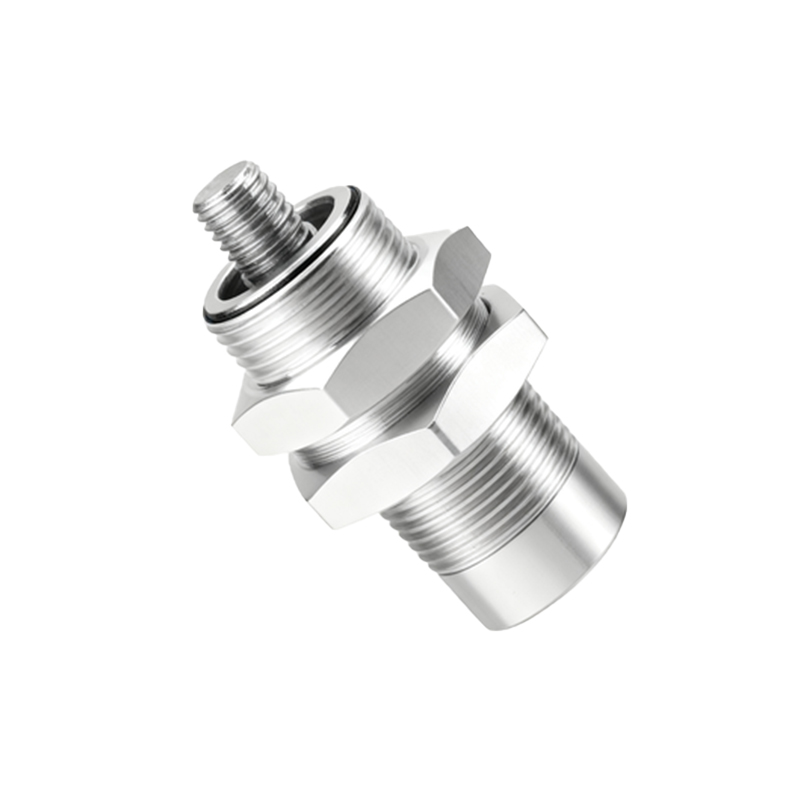
2. Capacitive Proximity Sensors
Capacitive sensors can detect both metallic and non-metallic objects, including liquids, powders, plastics, glass, and wood. They operate by generating an electrostatic field. The sensor face and the detected object act as two plates of a capacitor. When an object enters this field, it alters the capacitance of the system. The sensor's internal circuit measures this change and activates the output. A key feature is the sensitivity adjustment, often via a potentiometer, allowing tuning for different materials and overcoming challenges like detecting a material through a thin container wall. They are extensively used in level detection for liquids and granular materials, presence detection of non-metallic products, and touch-sensitive control panels.
3. Ultrasonic Proximity Sensors
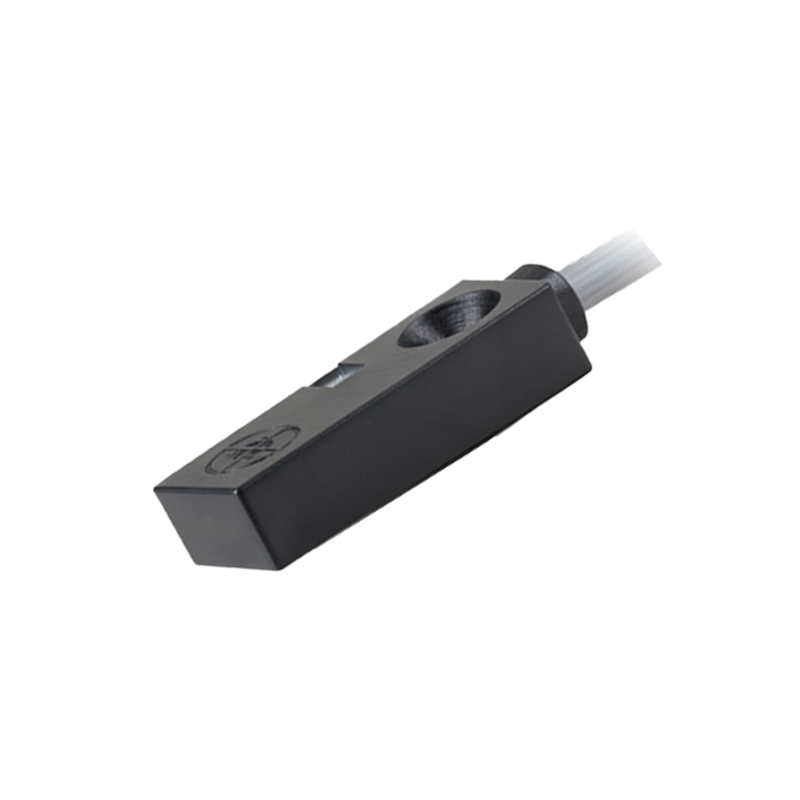
These sensors use sound waves beyond the human hearing range (typically above 20 kHz). They emit ultrasonic pulses and measure the time taken for the echo to return from a target object. This time-of-flight principle allows them to measure distance (analog output) or simply detect presence within a set window (switch output). Ultrasonic sensors are effective for detecting objects of virtually any material, shape, color, or transparency, as long as the surface is capable of reflecting sound. They perform well in challenging environments with dust, fog, or varying light conditions. Common uses include bulk material level monitoring, loop control in web processing, and robot palletizing.

4. Photoelectric Sensors
Photoelectric sensors employ a light emitter (usually LED in infrared, red, or laser light) and a receiver. They are categorized by their operating mode: Through-beam, Retro-reflective, and Diffuse (proximity) mode. Through-beam sensors have separate emitter and receiver units; an object is detected when it interrupts the light beam, offering the longest sensing range and highest reliability. Retro-reflective models use a single unit and a reflector; detection occurs when the beam to the reflector is blocked. Diffuse sensors detect objects by measuring the light reflected directly from the target's surface, with sensing distance dependent on the target's color and reflectivity. Photoelectric sensors are versatile for detecting small objects, transparent materials (using polarized filters), and for long-range applications.
5. Magnetic Proximity Sensors
These sensors detect the presence of a permanent magnet. The two main technologies are Reed Switches and Hall Effect sensors. A Reed Switch consists of two ferromagnetic reeds sealed in a glass tube; when a magnet approaches, the reeds attract and close the contact. They are simple, cost-effective, but have limited switching speed and mechanical life. Hall Effect sensors are solid-state devices that output a voltage in response to a magnetic field. They offer virtually infinite operational life, very high switching frequencies, and can provide analog output proportional to magnetic field strength. Magnetic sensors are predominantly used in conjunction with pneumatic cylinders (with embedded magnets on the piston) for end-position detection.
Selection of the appropriate proximity sensor depends on several factors: the target material, required sensing distance, environmental conditions (temperature, contaminants), electrical output requirements (PNP/NPN, NO/NC, analog), mounting constraints, and necessary housing style (cylindrical, rectangular, slot-style). Understanding the distinct characteristics of each sensor type is crucial for designing efficient, reliable, and cost-effective automation systems across manufacturing, packaging, material handling, and automotive industries.