In the realm of industrial automation and control systems, inductive proximity sensors are indispensable components for non-contact detection of metallic objects. Among the various output configurations, the PNP type stands out for its widespread adoption, particularly in regions following European and many international standards. This article delves into the intricacies of PNP inductive proximity sensors, explaining their fundamental operation, key benefits, and typical application scenarios.
At its core, an inductive proximity sensor generates an electromagnetic field from a coil within its sensing face. When a metallic target enters this field, eddy currents are induced on the target's surface. This causes a change in the oscillation amplitude within the sensor's internal LC tank circuit. A dedicated circuit detects this change and triggers the sensor's switching element. In a PNP sensor, this switching element is a PNP transistor. The "PNP" designation refers to the type of semiconductor used in the output stage. In a standard three-wire DC sensor, you will typically find wires for brown (positive supply, +V), blue (negative supply, 0V or common), and black (the switched output signal).
The operational principle of the PNP output is defined as "sourcing" or "positive switching." When the sensor is powered (with +V on brown and 0V on blue) and no target is present, the black output wire is in a high-impedance state, effectively disconnected from the positive supply. Upon detecting a valid metallic target within its specified sensing range, the internal PNP transistor switches on. This action connects the black output wire internally to the positive supply voltage (+V). Therefore, the output provides a positive voltage signal to the load. The load (such as a PLC input, relay coil, or indicator lamp) is connected between the black output wire and the 0V (blue wire). Current flows from the sensor's output, through the load, and to the common negative, completing the circuit. This sourcing behavior is a critical characteristic that dictates how the sensor integrates into a control system.
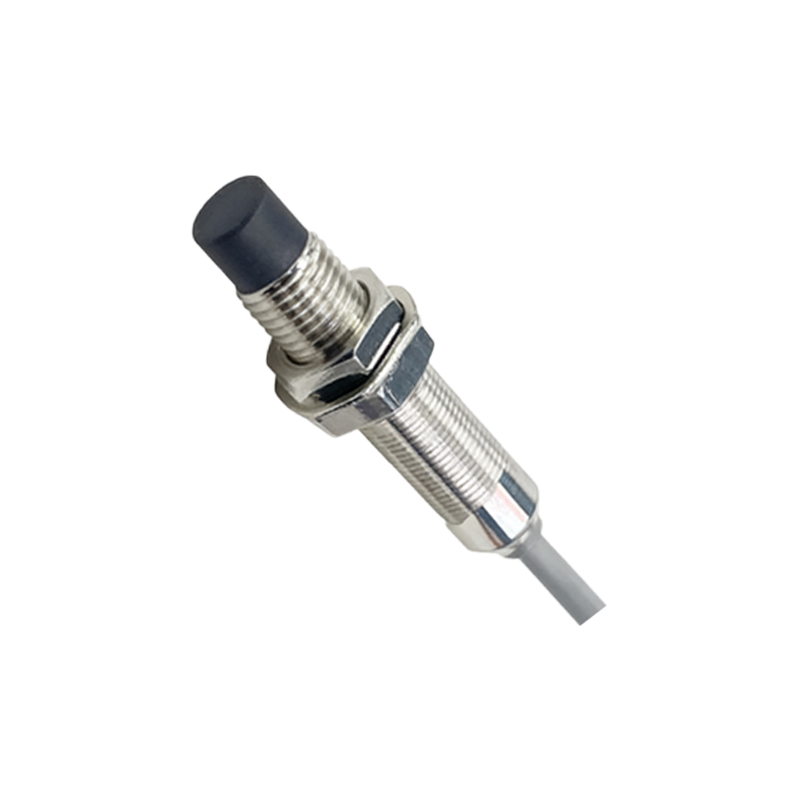
Choosing a PNP inductive proximity sensor offers several distinct advantages. Their compatibility with many programmable logic controllers (PLCs) and control devices designed for sinking inputs (where the PLC input provides the path to common) is a primary reason for their popularity. The wiring configuration is often considered intuitive: the sensor "sources" the positive potential to the load. Furthermore, in many 24V DC systems, PNP outputs align well with standard practices for controlling relays, solenoids, and other actuators that expect a switched positive voltage. They also provide a clear, high-level signal when active, which can be beneficial for diagnostic purposes.
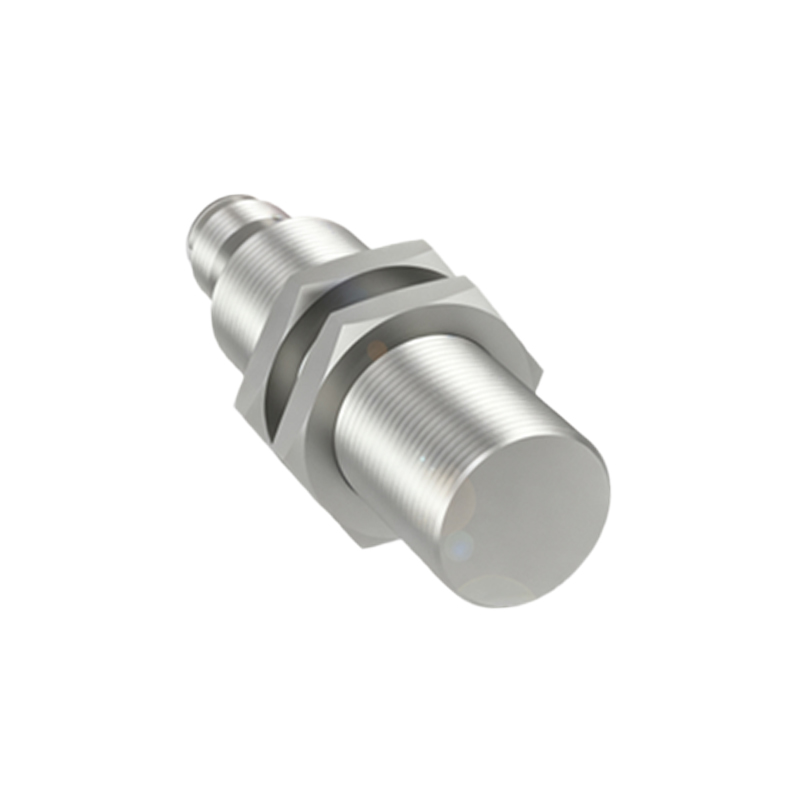
When selecting and applying a PNP inductive sensor, several technical parameters require careful consideration. The sensing distance, often specified as the nominal range (Sn), is crucial and can vary based on the target material's size, shape, and composition (e.g., steel, aluminum, brass). Factors like housing material (typically nickel-plated brass, stainless steel, or PBT plastic), switching frequency, temperature rating, and protection class (IP67/IP69K for harsh, washdown environments) must align with the application's demands. Electrical specifications such as supply voltage range (commonly 10-30V DC), output current capacity, and voltage drop are equally important to ensure reliable operation and longevity.
The applications for PNP inductive proximity sensors are vast and span across numerous industries. In automotive manufacturing, they are used for part presence verification on assembly lines, robot end-effector positioning, and detecting piston positions in cylinders. Packaging machinery utilizes them for counting metallic items, detecting fill levels in metal containers, and ensuring proper cap placement. In material handling, they monitor the position of metal pallets, control gate operations on conveyors, and provide end-of-travel limits for automated guided vehicles (AGVs). Their robustness also makes them suitable for harsh environments like metal stamping, machining centers, and outdoor equipment.
Installation and wiring are straightforward but demand attention to detail. Ensuring a stable, clean DC power supply within the sensor's specified range is paramount. Proper shielding and separation from high-current power lines are recommended to prevent electrical noise interference. The sensor should be mounted securely, with consideration for the target's approach direction, as the sensing range can differ for axial, lateral, and frontal approaches. Always refer to the manufacturer's datasheet for precise mounting dimensions, sensing curves, and connection diagrams.
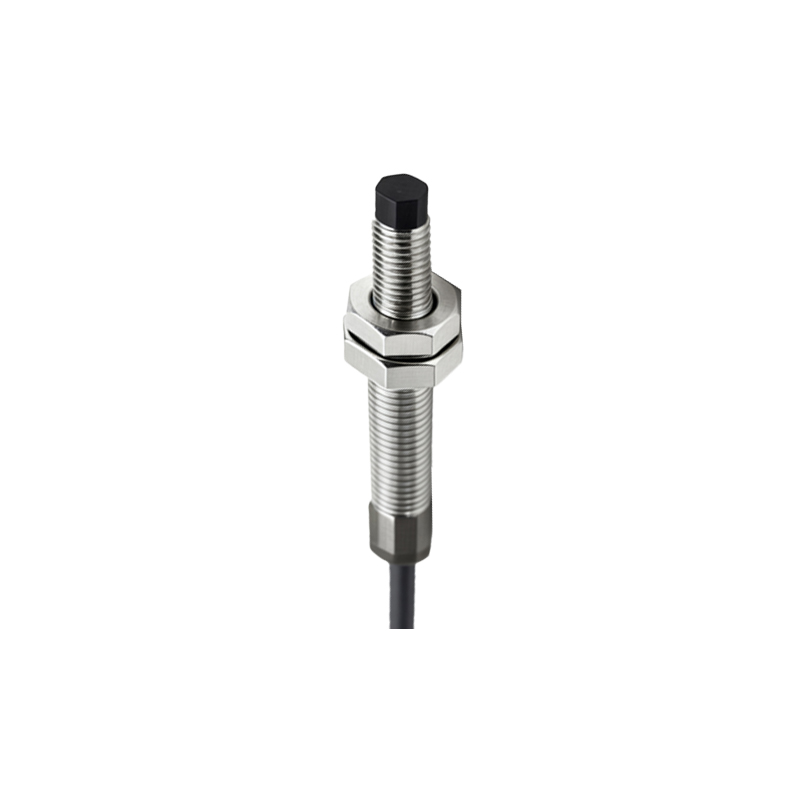
In summary, PNP inductive proximity sensors represent a mature, reliable, and versatile technology for metallic object detection. Their sourcing output logic integrates seamlessly into a vast array of modern control systems. By understanding their operating principle—where the output switches the positive voltage to the load upon detection—engineers and technicians can effectively specify, install, and troubleshoot these sensors. Their durability, precision, and adaptability continue to make them a cornerstone of