In the realm of industrial automation and control systems, proximity sensors are indispensable components. They detect the presence or absence of an object without physical contact, ensuring reliable, non-invasive operation in diverse environments. This article explores the most common types of proximity sensors, their working principles, and typical applications.
Inductive proximity sensors are widely used for detecting metallic objects. They operate based on electromagnetic induction. The sensor generates an oscillating electromagnetic field. When a metal object enters this field, eddy currents are induced, causing a change in the oscillation amplitude. This change is detected by the sensor's circuitry, triggering an output signal. Inductive sensors are robust, resistant to dust, oil, and moisture, making them ideal for harsh industrial settings like metal machining, automotive assembly, and conveyor systems. They typically detect ferrous metals (like iron and steel) at short ranges, though some specialized versions can sense non-ferrous metals.
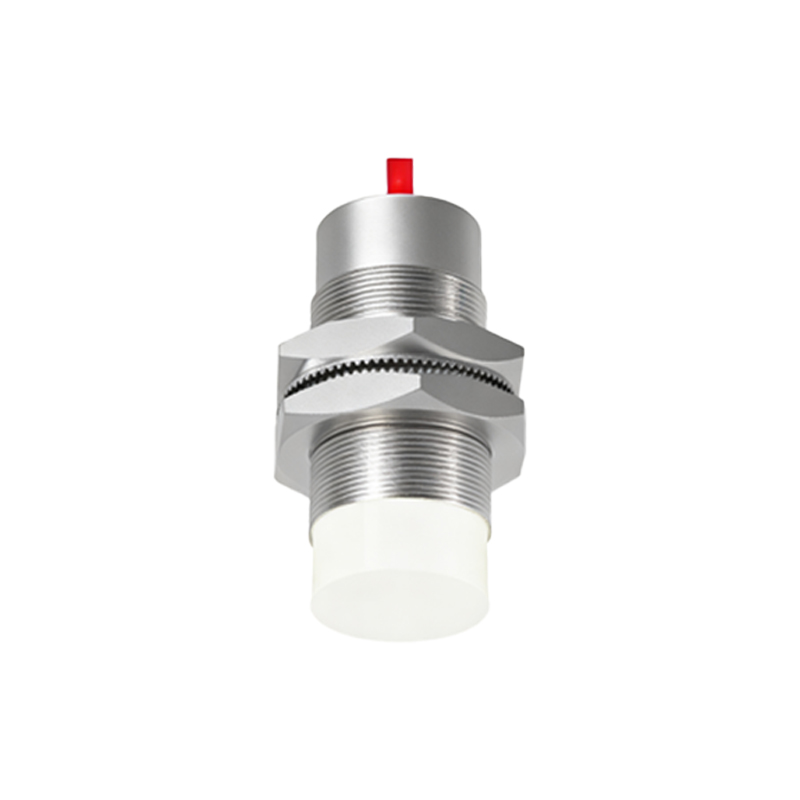
Capacitive proximity sensors can detect both metallic and non-metallic objects, including liquids, plastics, wood, and granular materials. They function by measuring changes in capacitance. The sensor forms one plate of a capacitor, with the target object acting as the other plate. As an object approaches, the capacitance increases, altering the sensor's internal oscillator. Once a threshold is reached, the output switches. These sensors are versatile and used in applications such as level detection in tanks, material handling, and presence sensing of non-metallic products. However, they can be sensitive to environmental factors like humidity.
Ultrasonic proximity sensors utilize sound waves beyond human hearing. They emit high-frequency ultrasonic pulses and measure the time taken for the echo to return after reflecting off an object. By calculating the time-of-flight, the sensor determines distance or presence. These sensors are effective for detecting objects of various materials, shapes, and colors, and are less affected by dust, light, or smoke. Common uses include distance measurement, object counting, and liquid level monitoring in industries like packaging, food and beverage, and logistics. Their range is generally longer than inductive or capacitive sensors.
Magnetic proximity sensors, often called reed switches or Hall effect sensors, detect magnetic fields. Reed switches consist of two ferromagnetic reeds sealed in a glass tube; when a magnet approaches, the reeds contact, closing a circuit. Hall effect sensors generate a voltage proportional to the magnetic field strength. These sensors are simple, cost-effective, and used in applications where position sensing of moving parts is needed, such as in cylinder position detection, door switches, and safety interlocks. They are highly reliable but limited to detecting magnetic objects.
Photoelectric proximity sensors use light beams to detect objects. They consist of a light emitter (usually LED) and a receiver. When an object interrupts or reflects the light beam, the receiver detects the change, triggering an output. There are three main types: through-beam (separate emitter and receiver), retro-reflective (uses a reflector), and diffuse (reflects light off the object). Photoelectric sensors offer long sensing ranges and can detect small objects regardless of material. They are prevalent in packaging, electronics assembly, and automated storage systems. However, they may be affected by ambient light or dirty environments.
Each type of proximity sensor has distinct advantages and limitations. Selection depends on factors like target material, sensing distance, environmental conditions, and cost. For instance, inductive sensors excel with metals in tough settings, while capacitive sensors handle diverse materials. Ultrasonic sensors provide accurate distance data, magnetic sensors offer simplicity, and photoelectric sensors deliver versatility. Understanding these differences is crucial for optimizing automation processes, enhancing efficiency, and ensuring safety. As technology advances, smart sensors with integrated diagnostics and connectivity are becoming more common, further expanding their role in Industry 4.0 applications.