Proximity sensors are a cornerstone of modern industrial automation, enabling machines to detect the presence, absence, or position of an object without physical contact. Among the various types, inductive and capacitive proximity sensors are the most prevalent, each operating on distinct principles suited to specific materials and environments. This article delves into the technology, selection criteria, and diverse applications of these critical components.
Fundamental Operating Principles
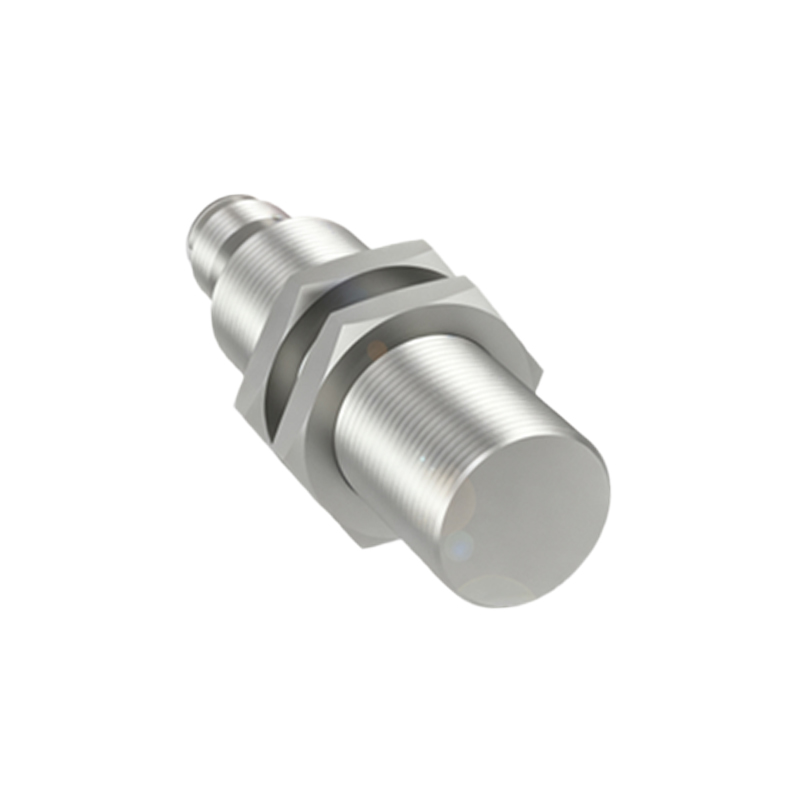
Inductive proximity sensors generate an electromagnetic field. When a metallic object (the "target") enters this field, it induces eddy currents within the target. The sensor detects the resulting energy loss in its internal oscillator circuit, triggering a solid-state output switch. These sensors are ideal for detecting ferrous and non-ferrous metals like steel, aluminum, copper, and brass. Their sensing range is influenced by the target's material, size, and shape, with standardized correction factors (e.g., for stainless steel or aluminum) provided by manufacturers.
Capacitive proximity sensors, in contrast, function by generating an electrostatic field. They can detect both metallic and non-metallic materials, including liquids, plastics, glass, wood, and granules. The sensor forms one plate of a capacitor, the target forms the other, and the air gap is the dielectric. As a target enters the sensing field, it alters the capacitance, which is measured by the sensor's circuit to initiate an output signal. This makes them exceptionally versatile for level detection, material handling, and presence sensing of non-conductive objects.
Key Specifications and Selection Criteria
Choosing the correct proximity sensor requires careful consideration of several parameters:
Sensing Distance (Sn): The nominal operating distance under standardized conditions. A crucial rule is to derate this value (typically use 70-80%) in real-world applications to account for temperature fluctuations, voltage variations, and target material differences.
Hysteresis: The difference between the switch-on and switch-off points. This built-in feature prevents output chattering when a target is at the exact sensing limit, ensuring stable operation.
Output Type: Sensors are available with NPN (sinking) or PNP (sourcing) transistor outputs, as well as analog (4-20 mA, 0-10V) or IO-Link versions for continuous distance measurement. The choice must match the controller's input card specifications.
Shielded vs. Unshielded Design: Shielded (flush-mountable) sensors have a concentrated frontal field, allowing installation in metal without false triggering. Unshielded (non-flush) sensors offer a longer sensing range but require a non-metallic surround.
Environmental Ratings: Ingress Protection (IP) ratings (e.g., IP67, IP69K) are critical for resistance to dust, water, and washdowns. Temperature range, resistance to chemicals, and mechanical robustness (e.g., PVC, stainless steel housing) must also be evaluated.
Advanced Features and Industry 4.0 Integration
Modern proximity sensors incorporate sophisticated features that enhance system intelligence and reliability. Diagnostics via LED indicators or IO-Link communication provide real-time status on operating mode, switch point drift, and potential contamination. Temperature monitoring can warn of overheating. IO-Link-enabled sensors go further, allowing parameterization (e.g., adjusting sensing distance or output delay), detailed condition monitoring data access, and seamless integration into digital twin frameworks. This facilitates predictive maintenance, reducing unplanned downtime.
Common Applications Across Industries
The applications are virtually limitless:
Automotive Manufacturing: Position verification of robotic arms, end-of-stroke detection for cylinders, part counting on conveyors, and hole detection in metal stamping.
Packaging: Detecting foil lids on containers, monitoring fill levels in hoppers, and controlling the presence of plastic bottles or cardboard boxes.
Material Handling: Jam detection on conveyors, pallet positioning, and sorting systems based on material type.
Food & Beverage: Level sensing of liquids or powders in stainless steel tanks, detecting glass or plastic containers, and ensuring cap presence.
Machine Tooling: Tool breakage detection, workpiece positioning on CNC lathes, and monitoring spindle orientation.
Installation and Troubleshooting Best Practices
Proper installation is paramount. Ensure adequate clearance from adjacent metal (as per datasheet guidelines) to prevent mutual interference between sensors. Use correct mounting hardware and torque to avoid housing damage. For challenging environments with heavy spatter or buildup, choosing a sensor with a "teach-in" function or an extended range can compensate for coating accumulation on the face.
Common failure modes include physical damage from impact, electrical overload, and sensing face contamination. A systematic approach to troubleshooting involves verifying power supply voltage, checking load current, inspecting the sensor face for buildup, and confirming the target material and size are within specifications