Proximity sensors are a fundamental component in modern industrial automation and electrical systems. As an electrical engineer, understanding their operation, types, and applications is crucial for designing efficient and reliable control systems. This article delves into the core principles of proximity sensors, with a particular focus on phase-sensitive types, exploring their meaning and significance in the field.
At its most basic, a proximity sensor is a device that detects the presence or absence of an object within a specified range without any physical contact. It does this by emitting an electromagnetic field or a beam of electromagnetic radiation and looking for changes in the field or return signal. The key advantage is the elimination of mechanical wear and tear, enabling high-speed operation and longevity in harsh environments.
The term "phase" in the context of proximity sensors typically refers to the operational principle of certain types, most notably inductive and capacitive sensors. While not universally labeled as "phase proximity sensors" in catalogs, the phase relationship between transmitted and received signals is a critical detection parameter for many.
Inductive Proximity Sensors and Phase Shift
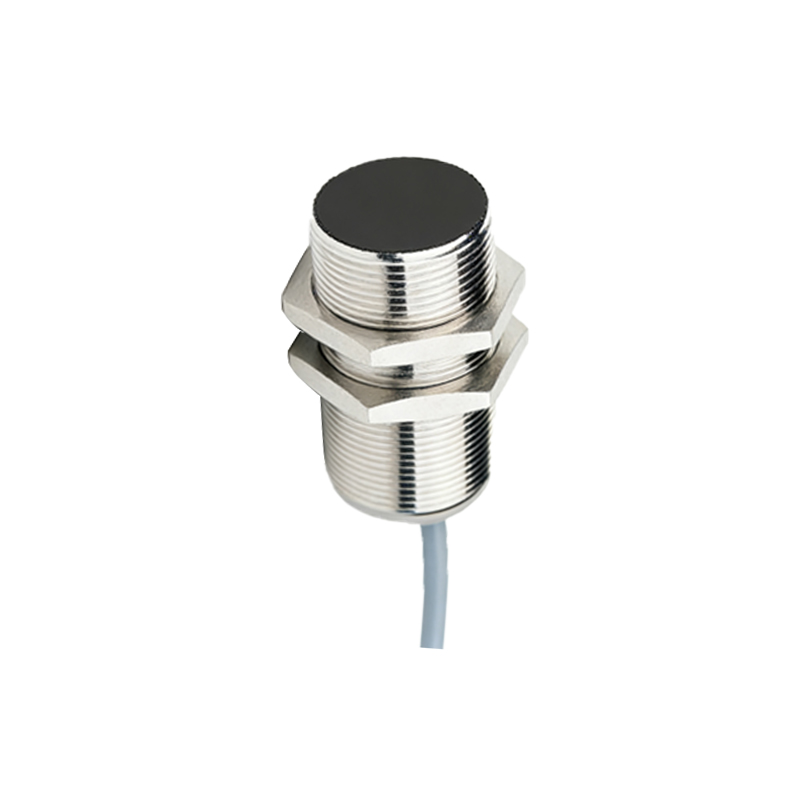
Inductive proximity sensors are the most common type used for detecting metallic objects. They operate based on the principle of electromagnetic induction. The sensor contains a coil that is part of an oscillator circuit. When an AC current passes through this coil, it generates an alternating magnetic field. When a conductive (metallic) target enters this field, eddy currents are induced on the surface of the target. These eddy currents create their own magnetic field, which opposes the original field from the sensor coil.
This opposition causes a change in the oscillation characteristics of the circuit. Crucially, it results in a measurable phase shift between the voltage and current in the oscillator coil. The sensor's electronic circuitry is designed to monitor this phase shift. When the phase shift exceeds a predetermined threshold—indicating a target is within the detection range—the sensor's output state changes (e.g., from OFF to ON). This method is highly reliable for detecting ferrous and non-ferrous metals, though with different sensing distances.
Capacitive Proximity Sensors and Phase Detection
Capacitive proximity sensors can detect both metallic and non-metallic objects, including liquids, plastics, and wood. They function by generating an electrostatic field. The sensor face and the target act as two plates of a capacitor. As a target approaches, the capacitance between the sensor and the target increases. This changing capacitance alters the oscillation frequency or amplitude in the sensor's internal circuit.
Advanced capacitive sensors often utilize phase-locked loop (PLL) or similar circuitry to detect these changes. The circuit compares the phase of a reference signal with the phase of the signal affected by the changing capacitance. A phase difference indicates the presence of a target. This phase-sensitive detection allows capacitive sensors to be finely tuned to ignore certain materials or to detect materials through thin non-conductive barriers.
Key Applications in Electrical Engineering
Phase-sensitive detection in proximity sensors enhances noise immunity and stability. Applications are vast:
Machine Automation: Position verification of robotic arms, end-of-travel detection, and part counting on conveyor belts.
Material Handling: Detecting the presence of packages, bottles, or sheets without contact.
Safety Systems: Used as non-contact interlocks on machine guards and doors.
Automotive Industry: Sensing gear tooth speed (for anti-lock braking systems), detecting throttle position, and checking seatbelt engagement.
Process Control: Level detection of liquids or granular materials in tanks using capacitive sensors.
Selection and Considerations
When specifying a proximity sensor for an electrical project, engineers must consider:
1. Target Material: Inductive for metals; capacitive for a wider range.
2. Sensing Distance: The nominal range, which is typically reduced for non-ferrous metals.
3. Output Type: Digital (PNP/NPN) or analog (4-20mA, 0-10V).
4. Environmental Factors: Temperature, humidity, and the presence of chemicals or washdown requirements.
5. Electrical Characteristics: Supply voltage (e.g., 10-30V DC) and current rating.
In summary, the "phase" in proximity sensor operation is a sophisticated detection mechanism rooted in the analysis of signal changes caused by a target's interaction with an electromagnetic or electrostatic field. Inductive sensors rely on the phase shift from eddy current losses in metals, while capacitive sensors detect phase changes from varying capacitance. For the electrical engineer, a deep understanding of these principles is not academic—it is essential for selecting the right sensor to create robust, maintenance-free, and precise automation solutions. Mastery of these components ensures systems perform reliably, maximizing uptime and efficiency in any industrial setting.