In the intricate world of industrial automation and machine design, proximity sensors stand as fundamental components, enabling non-contact detection and measurement. Their reliability and versatility are built upon a set of core characteristics that define their performance and suitability for various demanding environments. Here are the ten key features that make modern proximity sensors indispensable.
First and foremost is Non-Contact Operation. This is the defining trait. Proximity sensors detect the presence or absence of an object without any physical touch. This eliminates mechanical wear and tear on both the sensor and the target, leading to dramatically increased longevity and reliability. It allows for the detection of fragile, soft, or easily damaged objects that would be unsuitable for limit switches.
High Switching Frequency is a critical feature for high-speed automation. Modern inductive and capacitive sensors can operate at frequencies exceeding several kilohertz. This enables them to detect objects on fast-moving production lines, such as in packaging, bottling, or small parts assembly, without missing a single item, ensuring process accuracy and throughput.
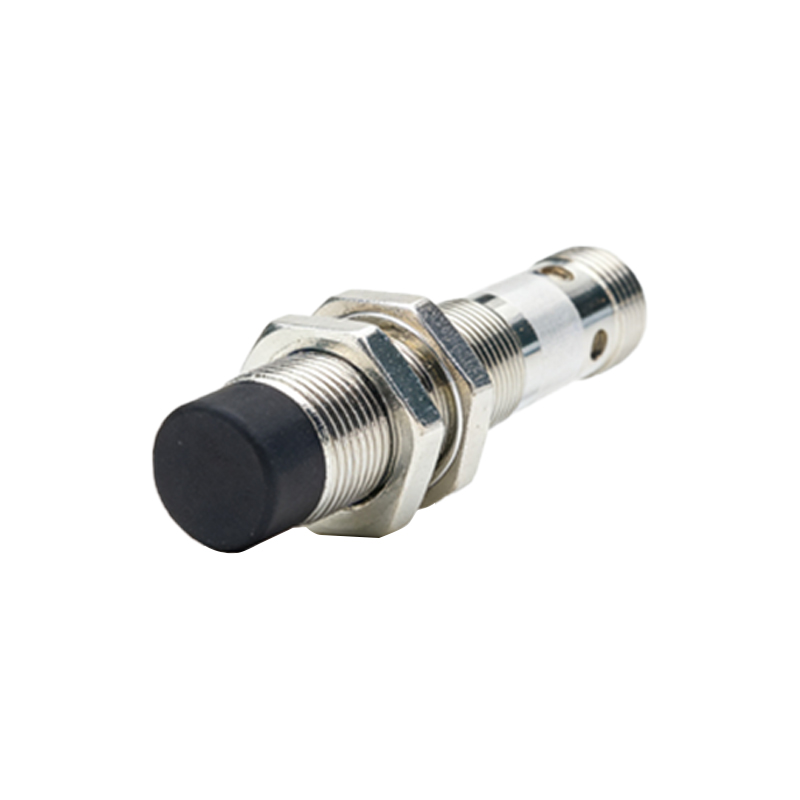
Environmental Robustness is engineered into their core. High-quality proximity sensors are built to withstand harsh industrial conditions. They typically feature robust housings made of materials like nickel-plated brass, stainless steel, or PBT plastic, offering high resistance to dust, dirt, oil, coolants, and chemical splashes. Many possess IP67, IP68, or IP69K ratings, making them suitable for washdown environments in food processing or outdoor applications.
Exceptional Repeat Accuracy ensures consistent performance. A high-quality proximity sensor will trigger at precisely the same point every time an object enters its sensing range. This precision is vital for positioning control, counting applications, and ensuring robotic arms or actuators operate within exact tolerances, directly impacting product quality.
The Wide Range of Sensing Distances caters to diverse needs. Depending on the technology (inductive, capacitive, ultrasonic, or photoelectric) and specific model, sensing ranges can vary from a few millimeters to several meters. This allows engineers to select the perfect sensor for the application, whether it's detecting a metal screw at 2mm or a large pallet at 2 meters.
Output Flexibility integrates them seamlessly into control systems. Proximity sensors are available with various output types, including DC 3-wire (NPN sinking or PNP sourcing), analog (4-20mA, 0-10V), and IO-Link for smart sensor capabilities. This allows for direct connection to PLCs (Programmable Logic Controllers), relays, or other control devices, simplifying wiring and system integration.
Immunity to Ambient Conditions is a significant advantage. Inductive sensors, for instance, are largely unaffected by dust, smoke, or light. Capacitive sensors can be tuned to ignore certain materials. This stability ensures reliable operation where other sensing methods might fail due to environmental interference, reducing false triggers and maintenance downtime.
Compact and Versatile Design allows for installation in space-constrained locations. Manufacturers offer sensors in tubular forms (e.g., M8, M12, M18, M30), rectangular blocks, and slot styles. This variety enables mounting in tight machine frames, on robotic grippers, or within complex assemblies without compromising the machine's design.
Advanced Diagnostic and Smart Features are hallmarks of modern "intelligent" sensors. Features like built-in LED status indicators (for power, output, and diagnostics), teach-in functionality for easy adjustment, and short-circuit/overload protection are standard. IO-Link sensors go further, providing detailed parameterization, condition monitoring, and process data directly to the control system for predictive maintenance.
Finally, Material and Object Versatility extends their application scope. While inductive sensors detect metals, capacitive sensors can detect nearly any material—liquids, plastics, wood, and glass. Ultrasonic sensors work well with sound-reflective surfaces, and photoelectric sensors use light beams. This spectrum allows one to choose the optimal technology based on the target object's properties.
In conclusion, the combination of non-contact sensing, high speed, environmental durability, precision, and smart connectivity forms the foundation of the modern proximity sensor. Understanding these ten key features empowers engineers and technicians to select, apply, and maintain these critical components effectively, driving efficiency and innovation across countless industrial sectors from automotive manufacturing to pharmaceutical production.