In the intricate world of industrial automation and machinery control, precision and reliability are non-negotiable. Among the myriad of components that ensure seamless operation, mechanical synchronous proximity sensors stand out as critical devices for non-contact detection and synchronization. Unlike standard proximity sensors that may operate independently, the "synchronous" aspect of these sensors ties their operation directly to a specific phase or position of a moving machine component, typically a rotating shaft. Their primary function is to detect the presence or absence of a target—such as a gear tooth, keyway, or cam lobe—and generate a precise electrical signal at the exact moment of alignment. This signal is then used to synchronize subsequent operations, like tool actuation, part ejection, or data logging, with the machine's cycle.
The core mechanism often involves a sensor head positioned near a synchronizing disk or rotor attached to a shaft. As the shaft rotates, specific features on the disk pass close to the sensor. Common sensing technologies employed include inductive, magnetic, or, less frequently, capacitive principles. Inductive sensors are prevalent for detecting metallic targets, generating an eddy current damping effect in an oscillator circuit when a metal object enters its field. The synchronous design ensures this detection event is locked to a precise angular position of the shaft. This is fundamentally different from a simple on/off detection; it is about generating a "marker" or "home" pulse that defines a repeatable reference point within a 360-degree rotation.
The applications of mechanical synchronous proximity sensors are vast and vital. In high-speed packaging machinery, they ensure that labeling, filling, and sealing operations occur at the exact correct position of the product carrier. Within automotive assembly lines, they synchronize robotic welders to the precise location on a vehicle chassis moving on a conveyor. Printing presses rely heavily on these sensors to register print heads, ensuring each color layer is perfectly aligned with the previous one. In rotary indexing tables, they provide the crucial signal to start and stop rotation accurately, positioning workpieces for machining or assembly. Furthermore, they play a key role in condition monitoring, where the timing of the pulse can be analyzed to detect shaft slippage, bearing wear, or imbalance by identifying deviations from the expected timing.
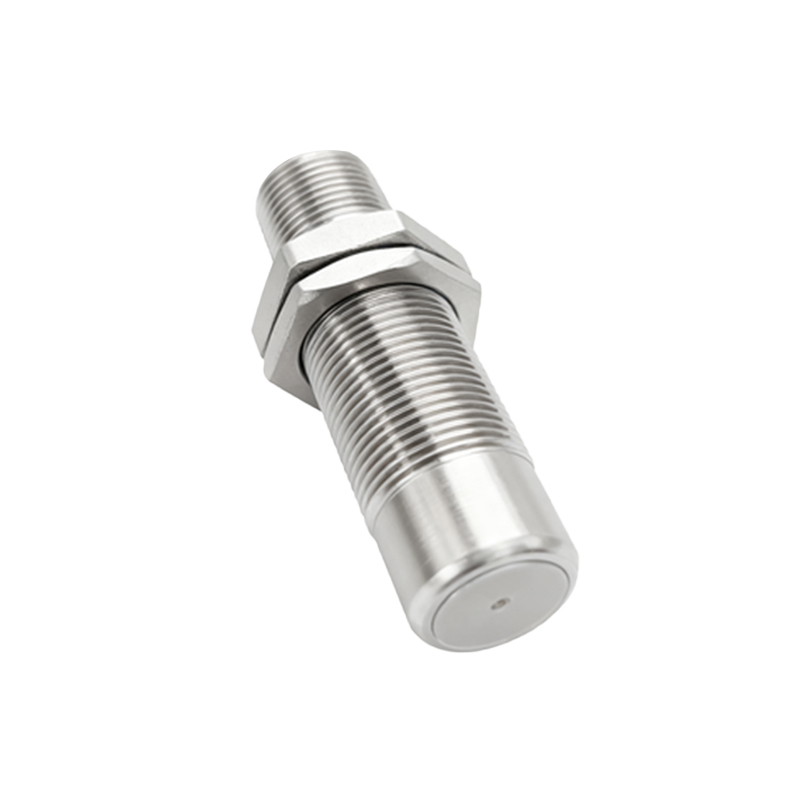
The advantages of using such sensors are compelling. They enable true mechanical synchronization without physical contact, eliminating wear and tear associated with limit switches or mechanical actuators. This leads to higher reliability, longer service life, and reduced maintenance downtime. Their solid-state design offers fast response times, capable of handling very high rotational speeds. The precision they afford directly translates to improved product quality, reduced waste, and enhanced overall equipment effectiveness (OEE). By providing a consistent reference signal, they simplify complex control logic, allowing Programmable Logic Controllers (PLCs) to execute timed sequences with high accuracy.
However, proper selection and installation are paramount. Engineers must consider factors such as the required sensing distance, the speed of the target, the material of the target (ferrous or non-ferrous metal), environmental conditions (temperature, humidity, presence of oils or coolants), and the required output signal type (PNP/NPN, analog, or a specialized sync pulse). Misalignment or incorrect air gaps can lead to unreliable signals or complete failure. Shielding may be necessary in electrically noisy environments to prevent false triggering.
In conclusion, mechanical synchronous proximity sensors are indispensable components in the orchestration of modern industrial motion. They act as the precise eyes of the control system, providing the critical timing heartbeat that synchronizes discrete actions to the continuous flow of mechanical rotation. Their role in enhancing accuracy, efficiency, and reliability in automated processes cannot be overstated. As machinery continues to evolve towards greater speed and intelligence, the fundamental principle of synchronous sensing remains a cornerstone of robust and precise industrial automation, bridging the gap between mechanical movement and electronic control with unwavering consistency.
