In the realm of industrial automation, the reliability and precision of sensing technology are paramount. Among the diverse array of sensors available, the SN05-N square metal inductive proximity switch stands out as a robust and versatile solution for object detection in demanding environments. This article provides a comprehensive technical overview of the SN05-N sensor, detailing its operating principles, key specifications, and typical applications within the electrical and automation engineering sectors.
The SN05-N is a non-contact, inductive-type proximity sensor housed in a durable square metal casing, typically constructed from nickel-plated brass or stainless steel. This rugged enclosure provides excellent resistance to mechanical stress, cutting fluids, oils, and other industrial contaminants, making it suitable for harsh factory floor conditions. The fundamental operating principle is based on electromagnetic induction. The sensor generates a high-frequency oscillating electromagnetic field from its active face. When a metallic target object enters this detection field, eddy currents are induced on the surface of the target. This causes a change in the oscillation amplitude within the sensor's internal LC tank circuit. The sensor's embedded circuitry detects this change and triggers a solid-state switching output, signaling the presence of the object.
A critical specification of the SN05-N is its nominal sensing distance, standardized at 5mm. It is crucial to note that this rated operating distance (Sn) is defined using a standard target of mild steel (Fe 360) with a thickness of 1mm. The actual sensing range can vary with different metals due to their material-specific damping factors. For instance, the effective sensing distance for stainless steel is approximately 0.8 times the rated distance, while for aluminum or copper alloys, it can be reduced to 0.3-0.4 times Sn. Engineers must account for these factors during system design to ensure reliable operation.
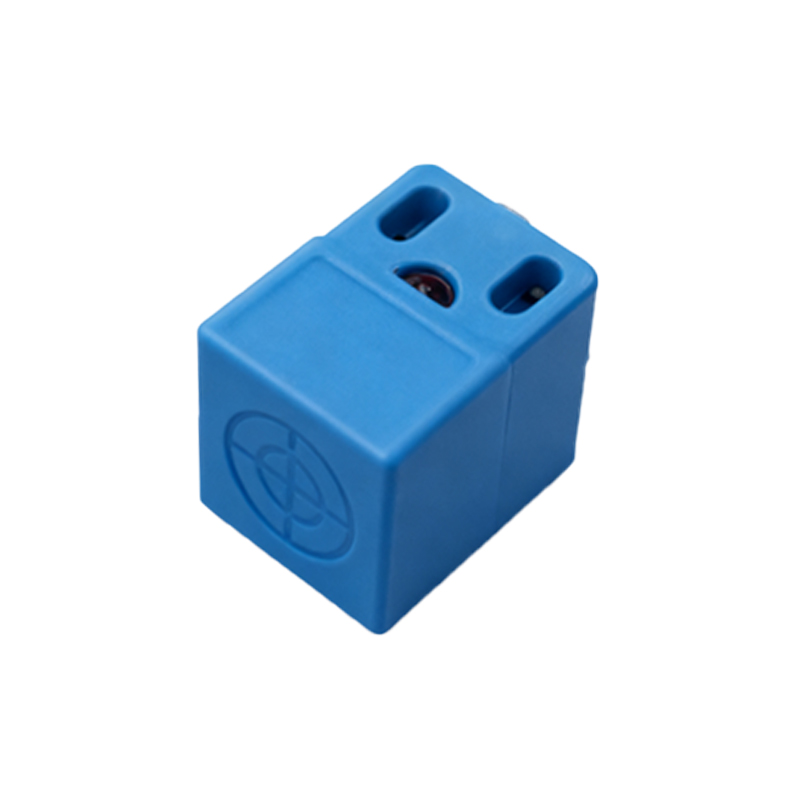
The sensor is available in multiple output configurations to interface seamlessly with various control systems. The most common versions include DC three-wire types with NPN (sinking) or PNP (sourcing) transistor outputs, as well as two-wire AC/DC models. The NPN output variant connects the load between the sensor's output wire and the positive voltage supply, sinking current to common when activated. Conversely, the PNP variant sources current from the positive supply to the load. The operating voltage range typically spans from 10-30V DC for DC models and 20-250V AC for AC models, offering flexibility for different control cabinet designs. The output current rating is generally up to 200mA, sufficient to drive relays, PLC input modules, or small solenoids directly.
Key performance features include a high switching frequency, often up to 1000 Hz, allowing for the detection of rapidly moving parts on assembly lines or packaging machinery. The SN05-N also boasts minimal hysteresis, ensuring precise and repeatable switching points. Furthermore, it is designed with built-in protection against short-circuits, reverse polarity (for DC models), and transient voltage spikes, enhancing system longevity. Many models feature an LED status indicator for visual confirmation of the output state, which is invaluable for commissioning and troubleshooting.
Installation of the square form factor is straightforward, facilitated by mounting holes or slots on the sensor body. However, proper installation is critical. Engineers must adhere to the specified flush-mounting conditions, ensuring that the sensing face is recessed in a metal bracket, or account for reduced sensing distances in non-flush (unshielded) mounting scenarios. Additionally, maintaining adequate clearance between adjacent sensors is necessary to prevent mutual interference. The sensor's wiring should follow standard practices, with careful attention to cable routing away from high-power lines to minimize electromagnetic interference.
The applications for the SN05-N inductive proximity sensor are extensive across industrial automation. Common use cases include: position sensing of metal parts on conveyors, end-of-travel detection for cylinders and actuators in pneumatic systems, counting metallic objects, monitoring the presence of tools in CNC machine magazines, and verifying the closed position of metal doors or guards for safety interlocking. Its robust metal housing makes it particularly well-suited for machine tools, material handling equipment, automotive manufacturing lines, and packaging machinery.
In summary, the SN05-N square metal inductive proximity sensor represents a fundamental component in the electrical engineer's toolkit for industrial sensing. Its combination of a rugged metal housing, consistent 5mm sensing range, versatile electrical outputs, and robust performance under tough conditions makes it a reliable choice for countless detection tasks. By understanding its technical parameters, installation requirements, and material dependencies, engineers can effectively integrate the SN05-N to enhance the reliability, safety, and efficiency of automated systems.