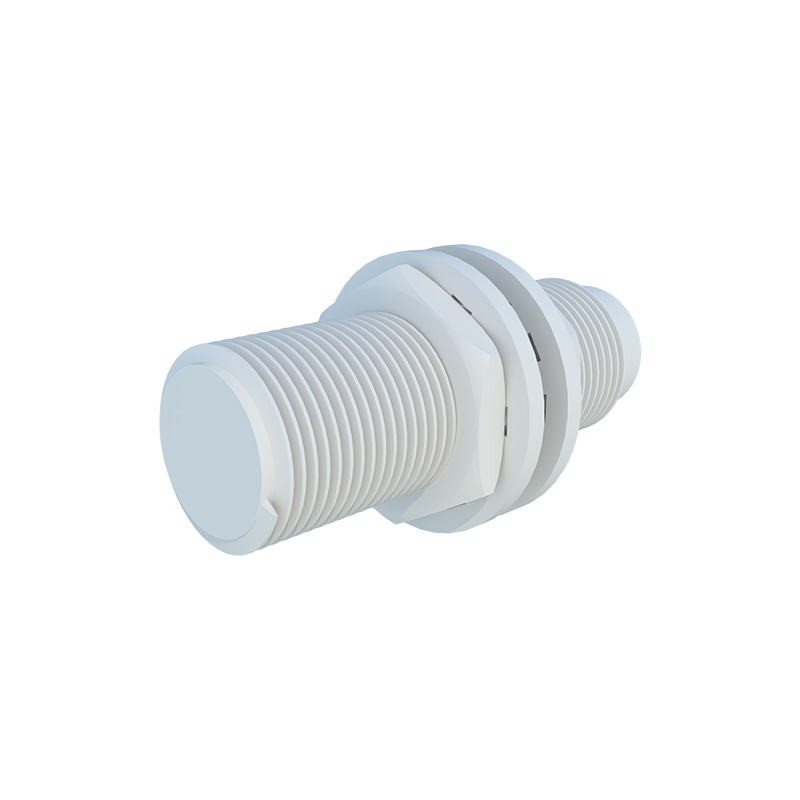
Capacitive and inductive proximity sensors are fundamental components in modern industrial automation, offering non-contact detection capabilities for a wide range of materials. These sensors enhance efficiency, reliability, and safety in manufacturing processes, from packaging and material handling to automotive assembly and food processing. Understanding their operating principles, key differences, and application considerations is essential for engineers and system integrators.
Inductive proximity sensors operate based on electromagnetic induction. The sensor generates an oscillating electromagnetic field from its coil and ferrite core. When a metallic object enters this field, eddy currents are induced on the target's surface, causing a change in the oscillation amplitude. This change is detected by the sensor's circuitry, triggering a switching output. Inductive sensors are highly effective for detecting ferrous and non-ferrous metals, such as steel, aluminum, copper, and brass. Their sensing range is influenced by the target material's properties; typically, ferrous metals allow for a longer range compared to non-ferrous ones. These sensors are robust, resistant to environmental factors like dust, oil, and moisture, and are commonly used in metal detection tasks—counting metal parts, monitoring conveyor belt positions, or ensuring proper machine tool alignment.
In contrast, capacitive proximity sensors function by detecting changes in capacitance. The sensor's active surface and the target act as two electrodes, forming a capacitor. An oscillator circuit generates an electric field. When any material—solid, liquid, granular, or powder—enters this field, it alters the dielectric constant, increasing capacitance. Once capacitance reaches a threshold, the sensor activates its output. This principle allows capacitive sensors to detect non-metallic materials, including plastics, glass, wood, paper, and liquids. They are versatile in applications like level detection in silos or tanks, presence sensing of plastic bottles on production lines, or moisture content monitoring. However, capacitive sensors can be sensitive to environmental changes, such as humidity or temperature fluctuations, requiring careful calibration.
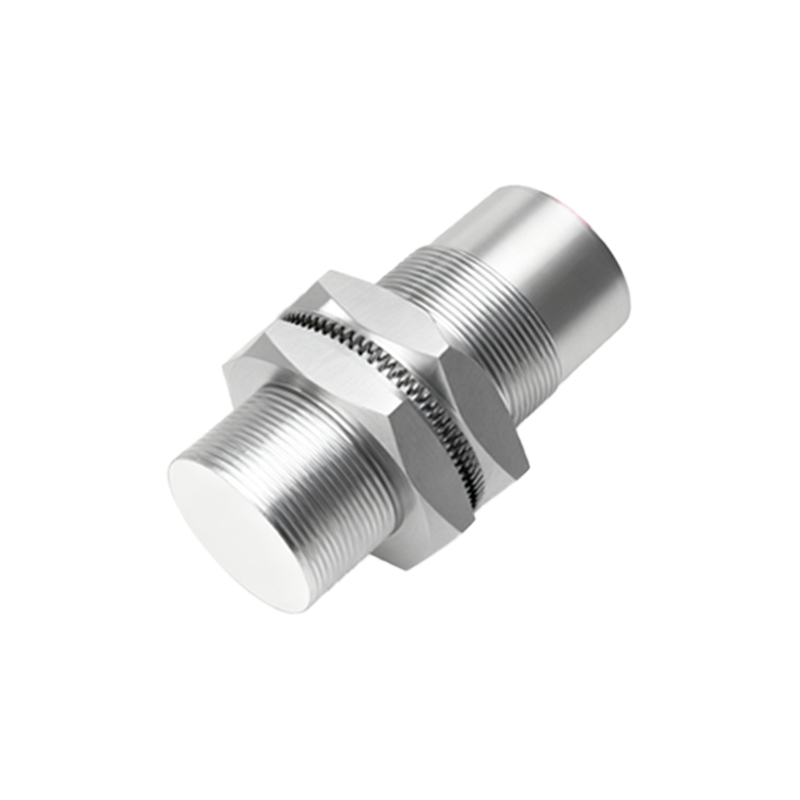
Key differences between these sensor types lie in their detection capabilities and environmental suitability. Inductive sensors excel in metal-only environments, offering high precision and immunity to non-metallic interferences. They typically have shorter sensing ranges (up to 60 mm) but provide fast response times and long operational life. Capacitive sensors, with ranges up to 40 mm, detect diverse materials but may respond to unintended targets, like background objects or moisture, necessitating shielding or adjustment. In terms of construction, inductive sensors often feature metal housings for durability in harsh conditions, while capacitive sensors may use plastics or ceramics to optimize sensitivity.
Selection criteria for engineers include target material, sensing distance, environmental conditions, output requirements, and installation constraints. For instance, in a bottling plant, inductive sensors might detect metal caps, while capacitive sensors monitor liquid levels in containers. In dirty or wet environments, sensors with high IP ratings (e.g., IP67 or IP69K) are preferred. Output options—like NPN/PNP transistors or analog signals—should align with control system compatibility. Regular maintenance, such as cleaning sensor faces and checking wiring, ensures consistent performance.
Advancements in sensor technology continue to drive innovation. Modern proximity sensors integrate smart features, such as IO-Link communication for real-time diagnostics and parameter adjustment, reducing downtime. Miniaturization allows for installation in compact spaces, while enhanced materials improve resistance to extreme temperatures and chemicals. In Industry 4.0 applications, these sensors contribute to data collection for predictive maintenance and process optimization.
In summary, capacitive and inductive proximity sensors are indispensable tools in automation. By leveraging their distinct principles, industries can achieve precise, reliable object detection across varied scenarios. Engineers must assess application needs thoroughly to select the optimal sensor, ensuring seamless integration and operational excellence. As automation evolves, these sensors will remain critical enablers of efficiency and innovation.