In the realm of modern building automation and smart systems, the functionality of human presence sensors, particularly their ability to detect proximity and distance, represents a cornerstone of energy efficiency, security, and user convenience. Unlike basic motion detectors that trigger based on movement within a broad zone, advanced proximity and distance-sensing capabilities allow for nuanced, layered responses based on how close or far a person is from a sensor node. This article delves into the technical principles, implementation strategies, and practical applications of this sophisticated sensing paradigm.
The core technology enabling proximity and distance (often termed "approach/retreat" or "near/far") sensing in human presence detectors typically revolves around a few key methodologies. Passive Infrared (PIR) sensors, while excellent for gross motion detection, have inherent limitations in gauging exact distance. Therefore, more advanced systems often integrate or rely solely on active sensing technologies. Microwave (radar) sensors and ultrasonic sensors are prominent examples. They operate on the principle of emitting a signal—electromagnetic waves in the microwave spectrum or sound waves beyond human hearing—and analyzing the reflected signal. By measuring the time-of-flight (ToF) or the frequency shift (Doppler effect and its more precise variant, Frequency-Modulated Continuous Wave or FMCW radar), these sensors can accurately calculate the distance to a target and track its movement toward or away from the sensor. Another growing technology is based on infrared light, using modulated LED arrays and photodiode receivers in a ToF configuration, which is highly effective for short to medium ranges.
Implementing reliable proximity and distance logic requires robust signal processing and algorithm design. Raw sensor data is often noisy, influenced by environmental factors like moving curtains, pets, or HVAC airflow. Advanced filtering algorithms, including Kalman filters, are employed to distinguish human movement from background noise. The system firmware is then programmed with defined threshold zones. For instance, a lighting control system might define a "near zone" (e.g., within 3 meters) and a "far zone" (e.g., 3 to 8 meters). When a person enters the far zone, the system might initiate a pre-wake sequence, such as gradually illuminating pathway lighting at 30% intensity. As the person approaches and crosses into the near zone, the system can trigger the primary area lights to 100% or activate a specific workstation. Conversely, the "retreat" or "away" function is equally critical. Upon detecting that all occupants have moved beyond the far zone threshold, the system initiates a delay timer. If no re-entry is detected, it executes a shut-down or standby command, ensuring no energy is wasted on an unoccupied space.
The applications for this granular sensing are vast and transformative. In commercial offices, it enables "follow-me" lighting and HVAC, where comfort settings travel with the employee, optimizing energy use per occupied sub-zone rather than an entire floor. In retail, proximity sensing can trigger informational displays or targeted lighting as a customer approaches a product aisle, enhancing engagement. For security, distance profiling can differentiate between someone loitering near a sensitive perimeter (sustained presence in a near zone) versus someone passing by on a sidewalk, reducing false alarms. In residential settings, it adds a layer of sophistication to smart home scenes, allowing for gentle night lighting that activates only when someone is approaching a staircase, not just moving in the distant hallway.
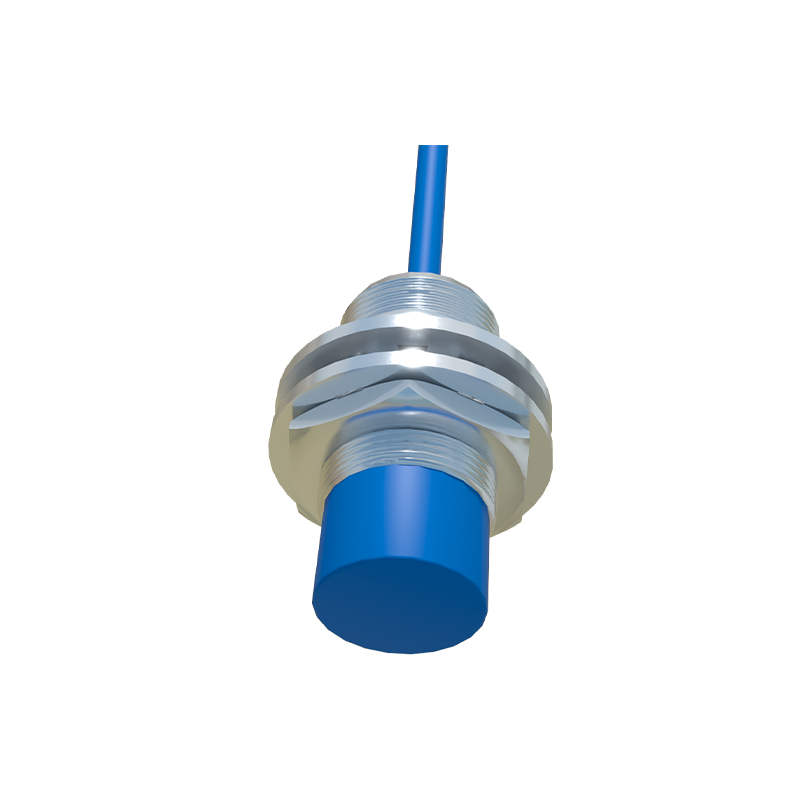
However, engineers must navigate several challenges. Sensor selection is paramount; the required range, field of view, resolution, and immunity to interference dictate whether radar, ultrasonic, or IR ToF is optimal. Multi-sensor data fusion, combining PIR for occupancy verification with radar for distance measurement, is a common strategy to boost reliability. Privacy concerns, particularly with radar sensors that can detect subtle movements like breathing, must be addressed through data anonymization and on-edge processing, ensuring no personally identifiable data is stored or transmitted. Furthermore, installation and calibration are more complex than with simple binary sensors, requiring careful zoning configuration during commissioning to match the physical architecture of the space.
In conclusion, the proximity and distance sensing functionality in human presence detectors marks a significant evolution from basic occupancy to intelligent spatial awareness. By translating the physical vector of human movement—approach and retreat—into actionable, graded control signals, engineers can design systems that are not only more efficient but also more intuitive and responsive to human needs. As sensor fusion, AI-driven analytics, and low-power wireless networking continue to advance, the precision and applications of this technology will only deepen, solidifying its role as an essential component in the intelligent infrastructure of the future.