In the realm of industrial automation, the M33 proximity sensor stands as a pivotal component, renowned for its reliability and precision in non-contact detection. This cylindrical inductive sensor, typically measuring 30mm in diameter with an M30x1.5 thread, is engineered to detect metallic objects without physical contact, thereby minimizing wear and tear in harsh environments. Its robust construction, often featuring stainless steel or nickel-plated brass housings, ensures durability against mechanical shocks, vibrations, and contaminants like oil or coolant.
The operational principle of the M33 proximity sensor is based on electromagnetic induction. It generates an oscillating electromagnetic field from its sensing face. When a metallic target enters this field, eddy currents are induced, causing a change in oscillation amplitude. This alteration is detected by the sensor's internal circuitry, triggering a switching signal—typically as a digital output (PNP or NPN). Key specifications include sensing ranges up to 15mm for ferrous metals, with reduced ranges for non-ferrous metals like aluminum or copper. Response frequencies can reach 1kHz, allowing for high-speed detection in applications such as conveyor systems or robotic arms.
Installation and wiring are straightforward, adhering to international standards like IEC 60947-5-2. The sensor is usually connected via a pre-wired cable or quick-disconnect connector, with options for 2-wire, 3-wire, or 4-wire configurations. Proper mounting is critical: maintaining a minimum distance between sensors prevents mutual interference, and ensuring the target approaches axially optimizes performance. Many M33 models feature LED indicators for status monitoring and short-circuit protection for enhanced safety.
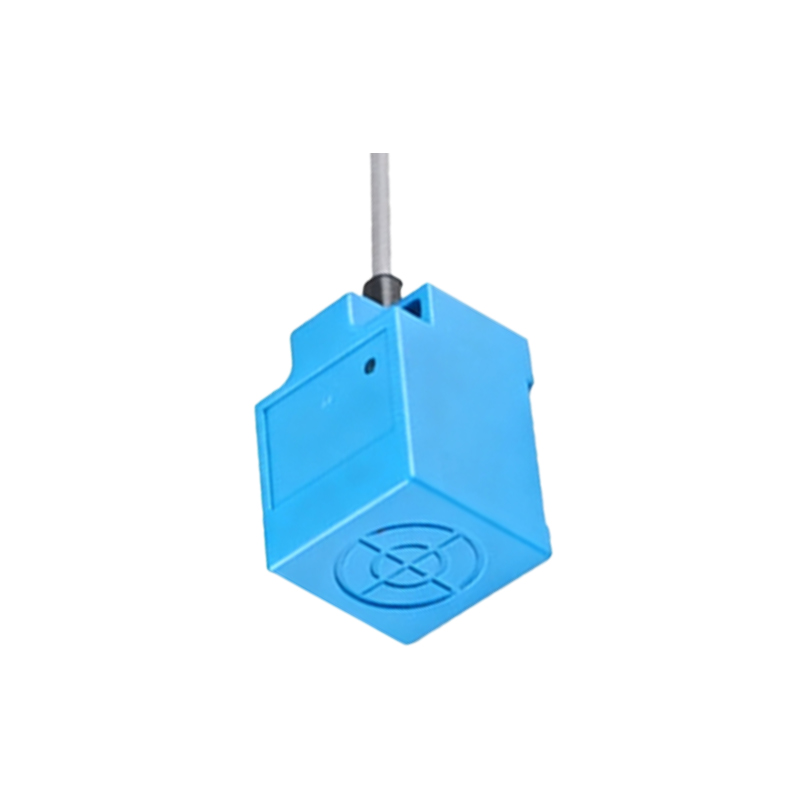
Applications span diverse industries, from automotive manufacturing to packaging machinery. In assembly lines, M33 sensors detect piston positions or count metal parts; in CNC machines, they monitor tool presence or workpiece positioning. Their IP67 or IP68 ratings make them suitable for washdown areas in food processing or outdoor use. Advanced versions offer analog outputs for distance measurement or teach-in functionality for adjustable sensing ranges.
When selecting an M33 sensor, consider factors like target material, required sensing distance, environmental conditions (temperature ranges from -25°C to 70°C are common), and output type. Regular maintenance involves cleaning the sensing face to prevent false triggers and checking for cable integrity. As Industry 4.0 evolves, M33 sensors are increasingly integrated into IoT networks, enabling predictive maintenance and real-time data analytics.
In summary, the M33 proximity sensor is a cornerstone of modern automation, offering unmatched accuracy and resilience. Its versatility and compliance with global standards ensure seamless integration into complex systems, driving efficiency and reducing downtime. For engineers, understanding its nuances is key to leveraging its full potential in optimizing industrial processes.