In the realm of industrial automation, motion control, and robotics, precise angular measurement is paramount. Among the diverse sensor technologies available, proximity rotary angle sensors have carved out a significant niche due to their non-contact operation, robustness, and reliability. Unlike traditional potentiometers or optical encoders, these sensors detect angular position without physical contact with the moving part, leading to enhanced longevity and reduced maintenance.
The fundamental operating principle of a proximity rotary angle sensor revolves around the variation of an electromagnetic field. A typical sensor consists of a stationary part (the stator, containing the sensing electronics) and a rotating part (the rotor or target). The rotor is often a simple metallic or conductive disc, sometimes with a specific geometric pattern. As the rotor turns, it alters the electromagnetic field generated by the oscillator circuit in the stator. This alteration—whether a change in inductance, capacitance, or eddy currents—is precisely measured and converted into a corresponding analog voltage, current, or digital signal representing the absolute angular position. Common technologies include inductive, capacitive, and magneto-resistive principles, with inductive sensing being particularly prevalent for its insensitivity to non-conductive contaminants like oil, dust, or moisture.
The advantages of proximity-based sensing are compelling. The absence of mechanical wear between the sensing element and the target ensures a virtually infinite mechanical life cycle, making them ideal for high-cycle applications. They are inherently sealed units, offering high degrees of protection (e.g., IP67, IP69K) against harsh environmental conditions. Furthermore, they provide true absolute position measurement upon power-up, eliminating the need for a homing routine. Their output is generally immune to vibrations and can withstand significant shaft misalignments.
These characteristics make proximity rotary angle sensors indispensable across numerous sectors. In automotive engineering, they are used in throttle valve positioning, pedal sensing, and suspension height measurement. Within industrial machinery, they monitor the angle of robotic arms, control valve positions in process industries, and regulate the tilt of forklift masts. In agriculture and construction equipment, they measure the articulation angle of steering joints or the boom position on excavators, operating reliably in muddy and dusty environments. Renewable energy applications, such as pitch control in wind turbines, also rely on their durability.
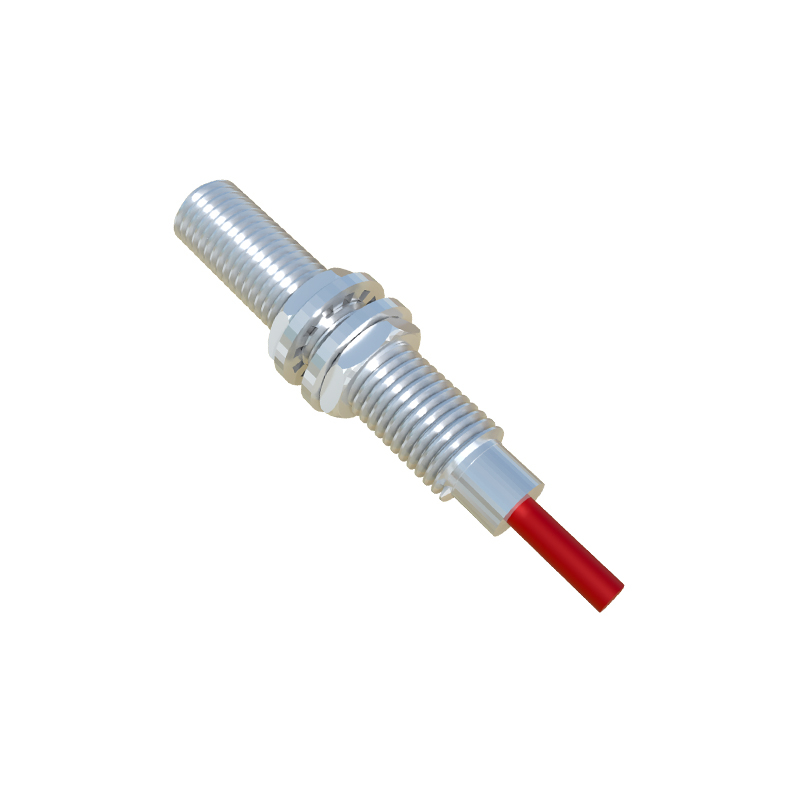
Selecting the appropriate proximity rotary angle sensor requires careful consideration of several key parameters. First, the required measurement range (e.g., 0-90°, 0-360°) and electrical output type (0-10V, 4-20mA, PWM, or digital protocols like CANopen or SAE J1939) must match the control system's input. Resolution and linearity error define the precision of the measurement. Environmental ratings for temperature, shock, vibration, and ingress protection (IP code) are critical for survivability in the intended application. Mechanical aspects such as shaft type (solid or hollow), bearing design, mounting configuration, and allowable shaft load must be compatible with the host system. Finally, the sensor's immunity to electromagnetic interference (EMI) and the presence of built-in diagnostics can be decisive factors for complex or safety-related systems.
Installation and integration are straightforward but demand attention to detail. Proper alignment between the sensor and the target shaft is necessary to minimize measurement error. The sensor must be mounted securely to prevent movement under vibration. Electrical connections should follow the manufacturer's guidelines, paying special attention to cable shielding in electrically noisy environments to ensure signal integrity. For digital-output sensors, configuration via software may be required to set parameters like the measurement range or output scaling.
Looking ahead, the evolution of proximity rotary angle sensors is aligned with broader Industry 4.0 trends. Integration of more advanced on-board diagnostics, predictive maintenance capabilities, and enhanced digital communication interfaces (like IO-Link) is becoming standard. These "smart sensors" not only provide position data but also can report their own health status, enabling proactive system management and reducing unplanned downtime.
In conclusion, proximity rotary angle sensors offer a robust, contactless solution for angular measurement challenges in demanding environments. Their principle of operation grants them superior durability and environmental resistance compared to contacting technologies. By understanding their operating principles, key advantages, and application criteria, engineers can effectively specify and integrate these sensors to enhance the performance, reliability, and intelligence of modern mechanical and automated systems.