In the realm of industrial automation, robotics, and scientific research, the demand for reliable distance measurement under extreme conditions is paramount. Low temperature laser distance sensors have emerged as a critical solution, enabling precise, non-contact measurement in environments where conventional sensors would falter or fail. These specialized devices are engineered to maintain high accuracy, stability, and performance in sub-zero temperatures, often reaching as low as -40°C or beyond, making them indispensable in cold storage logistics, polar research, outdoor industrial automation, and aerospace applications.
The core technology behind these sensors typically involves time-of-flight (ToF) or phase-shift measurement principles using a laser diode. The sensor emits a modulated laser beam towards a target. The beam reflects off the surface and returns to a receiver within the sensor. By calculating the time delay or phase difference between the emitted and reflected signals, the sensor determines the distance with remarkable precision. However, operating in low-temperature environments presents significant engineering challenges. Standard electronic components, laser diodes, and optical elements can suffer from performance degradation, increased noise, or physical failure when exposed to prolonged cold.
To overcome these hurdles, manufacturers employ a suite of advanced design strategies. Key among these is the selection of components rated for extended temperature ranges. This includes using laser diodes and photodetectors specifically designed for low-temperature operation, ensuring consistent output power and sensitivity. Furthermore, sophisticated thermal management is integrated. This may involve internal heating elements that gently warm critical components to within their optimal operational range upon startup, without causing condensation issues that could obscure optics. The sensor housing is also crucial, constructed from materials like stainless steel or specialized polymers that resist thermal contraction and maintain seal integrity to protect against moisture ingress, which can freeze and cause damage.
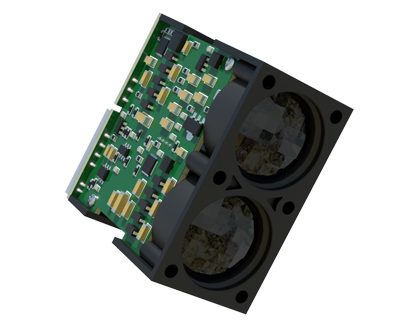
Signal processing algorithms are another vital area of innovation. Low temperatures can introduce electronic noise and drift. Advanced digital signal processors (DSPs) run proprietary algorithms that filter out temperature-induced noise and dynamically compensate for any minor drifts in the laser's characteristics or electronic timing circuits. This ensures that the distance output remains stable and accurate over the entire specified temperature range. Calibration is performed across the temperature spectrum, not just at room temperature, guaranteeing specified performance metrics like linearity, resolution, and repeatability are met under real-world cold conditions.
The applications for low-temperature laser distance sensors are diverse and growing. In automated cold storage warehouses and food processing plants, they are used for inventory management, pallet positioning, and robotic guidance systems, operating reliably in constant sub-zero temperatures. In environmental monitoring and polar research, these sensors measure ice sheet thickness, snow depth, or structural deformations in research stations. The energy sector utilizes them for monitoring equipment and processes in LNG (Liquefied Natural Gas) facilities, where cryogenic temperatures are present. In aerospace, they are employed in testing components in thermal vacuum chambers that simulate the cold of space.
When selecting a low-temperature laser distance sensor, several specifications require careful attention beyond the standard measuring range and accuracy. The operating temperature range (e.g., -40°C to +70°C) and storage temperature range are fundamental. The sensor's startup behavior in cold conditions—whether it requires a warm-up period—impacts system readiness. Ingress Protection (IP) rating is critical to ensure resilience against humidity and condensation. Additionally, understanding the potential for slight variations in accuracy across the temperature range, often detailed in datasheets as "temperature coefficient," is essential for high-precision applications.
In conclusion, low temperature laser distance sensors represent a fusion of optical precision, electronic robustness, and intelligent software compensation. They transform challenging, frigid environments from no-go zones for instrumentation into arenas of precise, automated measurement. As industries continue to push automation into more extreme environments and global cold chain logistics expand, the role of these hardened sensors will only become more central, driving efficiency, safety, and data integrity where it was previously difficult to achieve.