Laser sensor simulators have become indispensable tools in the field of industrial automation and electrical engineering. These sophisticated devices replicate the behavior and output signals of actual laser sensors, allowing engineers to develop, test, and troubleshoot complex systems without the need for physical sensor hardware in the initial stages. The core principle involves generating precise, programmable electronic signals that mimic the response a real laser sensor would produce under various conditions, such as detecting an object at a specific distance or sensing a particular surface reflectivity.
From a technical standpoint, a high-fidelity laser sensor simulator consists of several key components. A central processing unit runs simulation algorithms that model the physics of laser triangulation, time-of-flight, or confocal measurement principles, depending on the sensor type being emulated. This is coupled with a digital signal processor to generate the corresponding analog voltage or current outputs, digital switching signals, and serial communication protocols like IO-Link, PROFINET, or EtherNet/IP. The user interface, often software-based, provides engineers with granular control over parameters. One can simulate object presence, distance values, signal strength, background suppression effects, and even introduce real-world error conditions like signal dropout, electrical noise, or dirty lens scenarios to test system robustness.
The applications are vast and critical. In the design phase of automated machinery, simulators enable the validation of PLC (Programmable Logic Controller) logic and safety circuits long before the mechanical assembly is complete. This parallel development significantly shortens project timelines. For system integrators, they are vital for factory acceptance testing (FAT) and site acceptance testing (SAT), where demonstrating full system functionality without all physical components on-site is often a requirement. Maintenance and training departments rely heavily on simulators. Technicians can safely diagnose faults in a control system by substituting a suspected faulty laser sensor with a simulator, isolating the problem to either the sensor or the downstream electronics. Furthermore, they provide a risk-free environment for training personnel on system behavior and fault response.
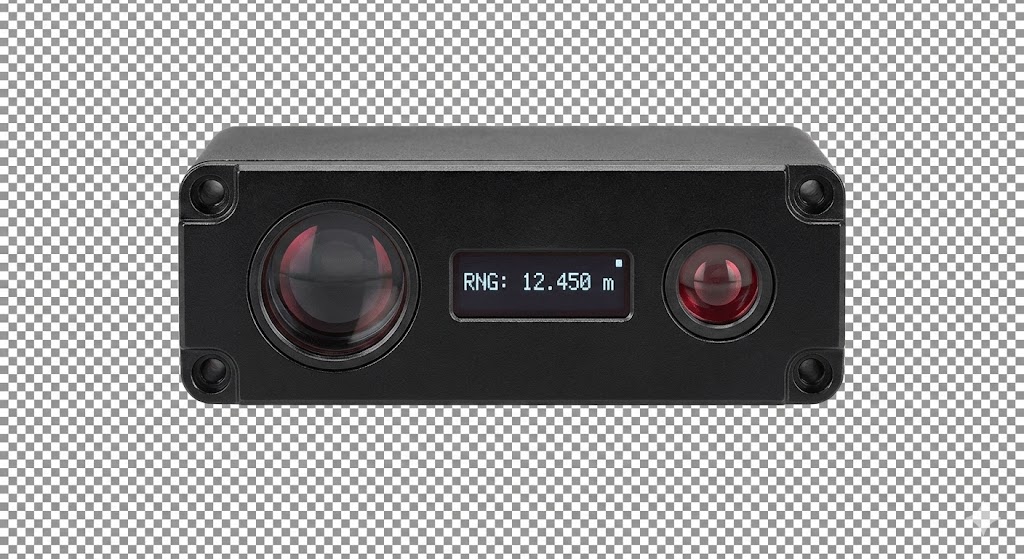
When selecting a laser sensor simulator, engineers must consider several specifications. Output signal compatibility is paramount—ensuring the simulator matches the output type (e.g., NPN/PNP, 4-20mA, 0-10V) of the target sensor. The resolution and accuracy of the simulated measurement must be sufficient for the application. For instance, simulating a high-precision micrometer-range confocal displacement sensor requires a simulator with microvolt-level output fidelity. Programmability and the ability to create complex, dynamic sequences (e.g., simulating a moving conveyor belt with objects of varying heights) are features that distinguish advanced models. Finally, form factor matters; portable, battery-operated units are essential for field service, while rack-mounted versions suit laboratory environments.
Looking ahead, the evolution of laser sensor simulators is closely tied to trends in Industry 4.0 and smart manufacturing. Future simulators will likely offer deeper integration with digital twin platforms, allowing the simulated sensor data to feed directly into a virtual replica of the entire production line for comprehensive simulation. Enhanced capabilities to simulate networked sensor data and cybersecurity stress tests on industrial networks will also become standard. For the practicing engineer, mastering these tools is no longer optional but a core competency for efficient design, commissioning, and lifecycle management of modern automated systems. By providing a bridge between the digital design world and physical operation, laser sensor simulators ensure reliability, reduce costs, and accelerate innovation.
