In the realm of industrial automation and machinery, the reliable detection of objects without physical contact is paramount. Among the myriad of solutions available, the E2E series of proximity sensors stands out as a benchmark for durability, precision, and versatility. This article delves into the technical specifications, operational principles, and key application areas of these widely adopted sensors, providing a detailed overview for engineers and system integrators.
Proximity sensors, fundamentally, are devices that detect the presence or absence of an object within a specified sensing range. The E2E series, a prominent line from leading manufacturers, primarily utilizes the inductive sensing principle. This technology is based on generating an electromagnetic field from an oscillator circuit within the sensor's sensing face. When a metallic object enters this field, eddy currents are induced on the object's surface. This causes a change in the oscillation amplitude, which is detected by the sensor's circuitry, subsequently triggering a solid-state output switch. A key advantage of this inductive method is its immunity to environmental factors like dust, oil, and moisture, making E2E sensors exceptionally robust for harsh industrial environments.
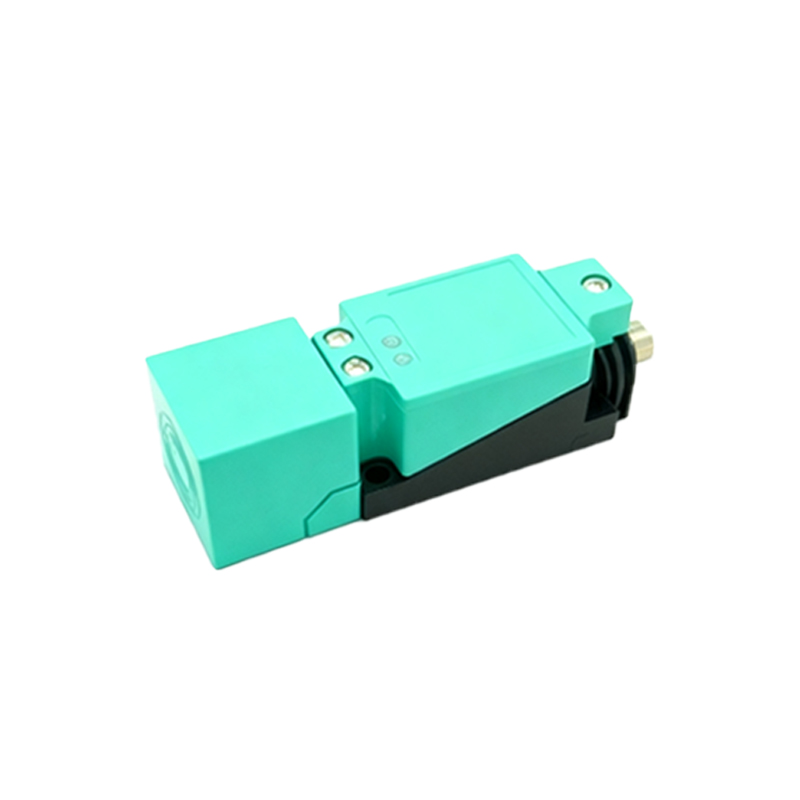
The E2E series is characterized by several critical specifications that define its performance. The sensing distance, a primary parameter, varies by model but is designed with precision, often featuring embedded or non-embedded mounting styles which affect the effective range. These sensors are typically available in standard cylindrical metal housings (e.g., M8, M12, M18, M30 threaded barrels), offering mechanical strength and ease of installation. The output configurations commonly include NPN (sinking) or PNP (sourcing) transistor outputs, as well as analog (4-20mA or 0-10V) and IO-Link variants for more advanced data communication. The operating voltage range is usually broad, such as 10-30V DC, ensuring compatibility with standard industrial control systems. Furthermore, they boast high switching frequencies, enabling detection of rapidly moving objects on production lines.
One of the hallmark features of the E2E series is its rugged construction. Many models are built to meet high Ingress Protection (IP) ratings like IP67 or IP69K, signifying complete protection against dust and the ability to withstand high-pressure, high-temperature water jets. This makes them ideal for washdown applications in food and beverage or pharmaceutical industries. Additionally, they often exhibit high electromagnetic compatibility (EMC) immunity, preventing malfunctions from electrical noise prevalent in factories with heavy machinery and motor drives.
The application spectrum for E2E proximity sensors is vast. They are indispensable in automated assembly lines for part presence verification, positioning control, and end-of-travel detection. In metalworking and machining centers, they are used for tool wear monitoring, spindle positioning, and workpiece counting. Material handling systems, including conveyor belts and robotic arms, rely on these sensors for object detection and palletizing sequence control. Their robustness also sees them deployed in outdoor or corrosive environments, such as in automotive manufacturing or heavy equipment.
When selecting an E2E sensor for a specific task, several factors must be considered. First, the target material must be metallic (ferrous or non-ferrous, with different reduction factors for non-ferrous metals). The required sensing distance and the available mounting space dictate the housing size and style. The electrical interface (NPN/PNP) must match the controller's input card specifications. For applications involving different metals or requiring precise distance measurement, analog-output models are preferable. Environmental conditions, particularly temperature extremes and exposure to chemicals, necessitate checking the sensor's material specifications, such as stainless steel housings and PBT sensing faces.
Installation and maintenance are straightforward but crucial for optimal performance. Ensuring a proper mounting distance from metal surroundings (to avoid side-effects) and maintaining a clean sensing face free from debris, paint, or buildup are essential practices. While these sensors are virtually wear-free due to their non-contact nature, periodic functional checks are recommended as part of a preventive maintenance schedule to ensure long-term system reliability.
In conclusion, the E2E series proximity sensors represent a mature and highly reliable technology that forms the backbone of countless sensing applications in modern industry. Their combination of robust design, precise inductive sensing, and flexible electrical options ensures they continue to be a preferred choice for engineers seeking to enhance automation efficiency, safety, and reliability. As Industry 4.0 and smart factory concepts evolve, the integration of advanced communication protocols like IO-Link in newer E2E models further extends their capabilities into the realm of predictive maintenance and data-driven process optimization.