Laser sensors are pivotal components in modern industrial automation, offering unparalleled precision in measurement, detection, and control. The emission principle of a laser sensor revolves around the generation and projection of coherent light, which forms the basis for its high accuracy and reliability. At its core, a laser sensor consists of a laser diode, optical components, and electronic circuitry. The laser diode, typically made from semiconductor materials like gallium arsenide, emits light through a process called stimulated emission. When an electric current passes through the diode, electrons are excited to higher energy levels. As these electrons return to their ground state, they release photons in a coherent manner—meaning the light waves are in phase, monochromatic, and directional. This coherent light is then collimated and focused by lenses or mirrors into a narrow beam, which is projected toward a target.
In industrial settings, the emitted laser beam interacts with objects in its path. Depending on the sensor type—such as triangulation, time-of-flight, or confocal sensors—the reflected or scattered light is captured by a receiver. For instance, in triangulation sensors, the position of the reflected beam on a detector array changes with the target's distance, allowing precise distance calculations. Time-of-flight sensors measure the round-trip time of the laser pulse to determine range, making them ideal for long-distance applications. The emission wavelength, often in the visible red (around 650 nm) or infrared spectrum (e.g., 850 nm or 1550 nm), is chosen based on environmental factors like ambient light interference and material reflectivity. Infrared lasers are common in harsh industrial environments due to their lower susceptibility to noise.
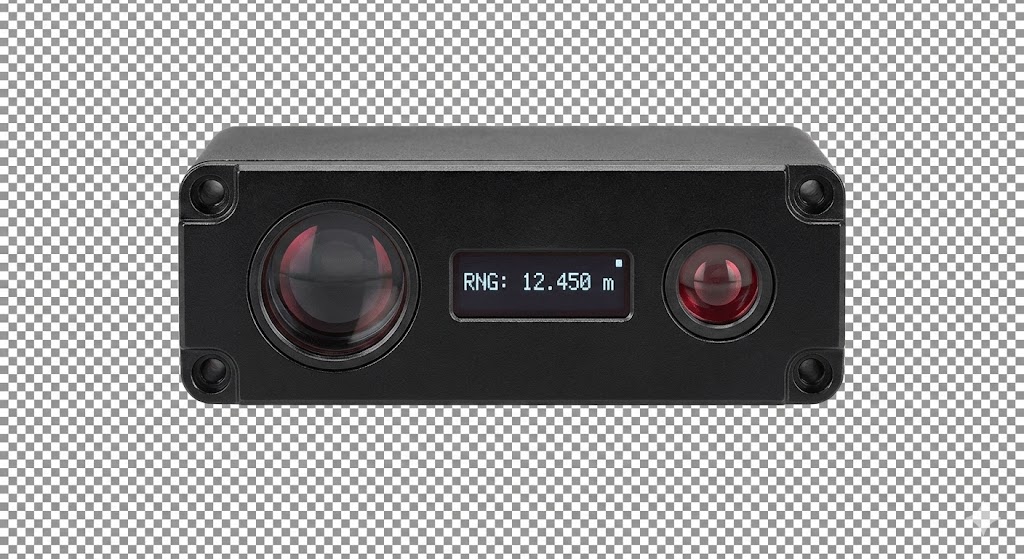
Key to the emission process is modulation, where the laser beam is pulsed or frequency-modulated to enhance signal integrity. Pulsed lasers emit short bursts of light, reducing power consumption and minimizing heat generation, while continuous-wave lasers provide steady output for high-speed scanning. Advanced sensors incorporate feedback mechanisms to stabilize emission power, ensuring consistent performance despite temperature fluctuations or component aging. Safety is also paramount; laser sensors comply with international standards (e.g., IEC 60825) by limiting output power to Class 1 or Class 2 levels, which are eye-safe for incidental exposure.
Applications of laser sensor emission span diverse industries. In manufacturing, they enable non-contact measurement of dimensions, surface defects, and alignment in assembly lines. Automotive systems use them for obstacle detection in autonomous vehicles, while logistics rely on laser scanners for barcode reading and inventory management. The emission principle's robustness allows sensors to operate in challenging conditions, such as dust, vibration, or extreme temperatures, by employing protective housings and adaptive algorithms.
Future trends in laser sensor technology focus on miniaturization and integration with IoT platforms. Emerging developments include VCSELs (Vertical-Cavity Surface-Emitting Lasers), which offer lower cost and higher efficiency for mass production. Additionally, multi-wavelength emission systems are being explored to handle complex materials, like transparent or reflective surfaces, by analyzing differential reflections. As industries embrace smart factories and precision engineering, understanding the emission principles of laser sensors remains essential for optimizing their deployment and innovation.
In summary, the emission mechanism of laser sensors leverages coherent light generation, precise beam control, and intelligent modulation to deliver accurate, reliable data. By mastering these principles, engineers can harness laser technology to drive automation, quality control, and safety across global industrial landscapes.