In the world of industrial automation and precision engineering, accurately measuring the rotational speed of motors is a fundamental requirement. Traditional methods, such as using tachometers or encoders, have served their purpose but often come with limitations like physical contact wear, installation complexity, or reduced accuracy at extreme speeds. Enter laser sensor technology—a non-contact, high-precision solution that is transforming how engineers monitor and control motor performance.
Laser sensors operate on the principle of optical triangulation or time-of-flight measurement. When directed at a rotating motor shaft or a marked target on the shaft, the sensor emits a focused laser beam. The reflected light is captured by a detector within the sensor. As the shaft rotates, variations in the reflected signal—caused by surface irregularities, reflective tape, or dedicated encoding patterns—are analyzed. By calculating the frequency of these variations, the sensor determines the rotational speed in revolutions per minute (RPM) with exceptional accuracy. This process occurs without any physical contact, eliminating mechanical wear and allowing measurement on hot, fragile, or electrically hazardous surfaces where contact probes would fail.
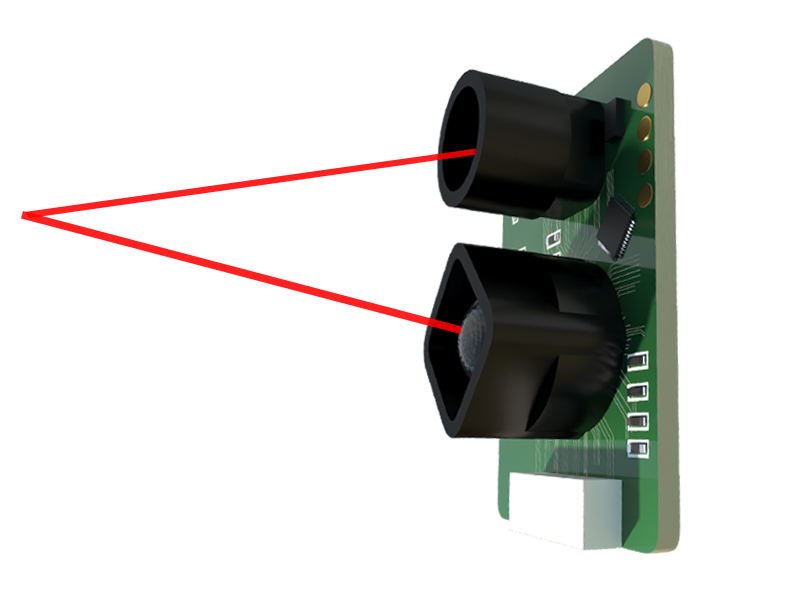
The advantages of using laser sensors for motor speed measurement are substantial. First and foremost is precision. Modern laser sensors can achieve resolutions down to 0.1% of the measured value, even at speeds exceeding 100,000 RPM, far surpassing the capabilities of many mechanical or magnetic counterparts. This high accuracy is crucial in applications like turbine testing, high-speed spindle monitoring in CNC machining, and quality control in manufacturing lines where minute speed fluctuations can indicate defects or inefficiencies.
Secondly, the non-contact nature of laser sensing offers unparalleled flexibility and reliability. Since there is no physical linkage, issues like slippage, bearing load, or sensor degradation over time are virtually eliminated. Installation is often simpler, requiring only a clear line of sight to the target area. This makes retrofitting existing machinery straightforward and reduces maintenance downtime. Furthermore, laser sensors can measure speed at a distance, which is invaluable for monitoring motors in enclosed, hazardous, or hard-to-reach environments.
A key application driving adoption is in predictive maintenance. By continuously and accurately monitoring motor speed, laser sensors help establish baseline performance profiles. Deviations from these profiles—such as gradual speed drops or irregular oscillations—can signal emerging problems like bearing wear, imbalance, or lubrication issues long before a catastrophic failure occurs. This enables condition-based maintenance, saving significant costs on unplanned downtime and component replacements. In the automotive industry, for instance, laser sensors are used to test and validate the performance of electric vehicle drive motors, ensuring efficiency and longevity.
The integration of laser sensors with modern digital systems amplifies their utility. Sensor outputs are typically digital or analog signals that feed directly into Programmable Logic Controllers (PLCs), data acquisition systems, or Industrial Internet of Things (IIoT) platforms. Here, speed data can be logged, visualized in real-time on dashboards, and analyzed alongside other parameters like temperature and vibration. This facilitates comprehensive system health monitoring and enables advanced process control loops that dynamically adjust motor speed for optimal operation.
Despite their benefits, implementing laser sensor systems requires careful consideration. The target surface must provide adequate optical contrast; a perfectly smooth, shiny, or dark surface might not reflect sufficient light. Solutions include applying retro-reflective tape or using sensors with adjustable sensitivity. Ambient light interference, particularly from strong industrial lighting, can also affect performance, necessitating sensors with modulated laser beams or protective housings. Choosing the right sensor model with appropriate range, sampling rate, and output format for the specific motor and environment is essential for success.
Looking ahead, advancements in laser diode technology and signal processing are making these sensors more compact, affordable, and robust. Emerging trends include the development of multi-point laser sensors that can measure speed at several locations simultaneously and the integration of embedded intelligence for edge computing directly at the sensor.
In conclusion, laser sensors represent a significant leap forward in motor speed measurement technology. By offering non-contact, high-precision, and reliable monitoring, they enhance performance, safety, and maintenance strategies across countless industries. As motors continue to evolve, becoming faster and more integral to automated systems, the role of laser sensors in ensuring their precise control and health will only become more critical.