In the world of automation and smart technology, sensors act as the essential sensory organs for machines. Among the most crucial are proximity and distance sensors, two distinct yet often complementary technologies that enable devices to perceive and interact with their surroundings without physical contact. Understanding their principles, differences, and applications is key to grasping modern industrial and consumer electronics.
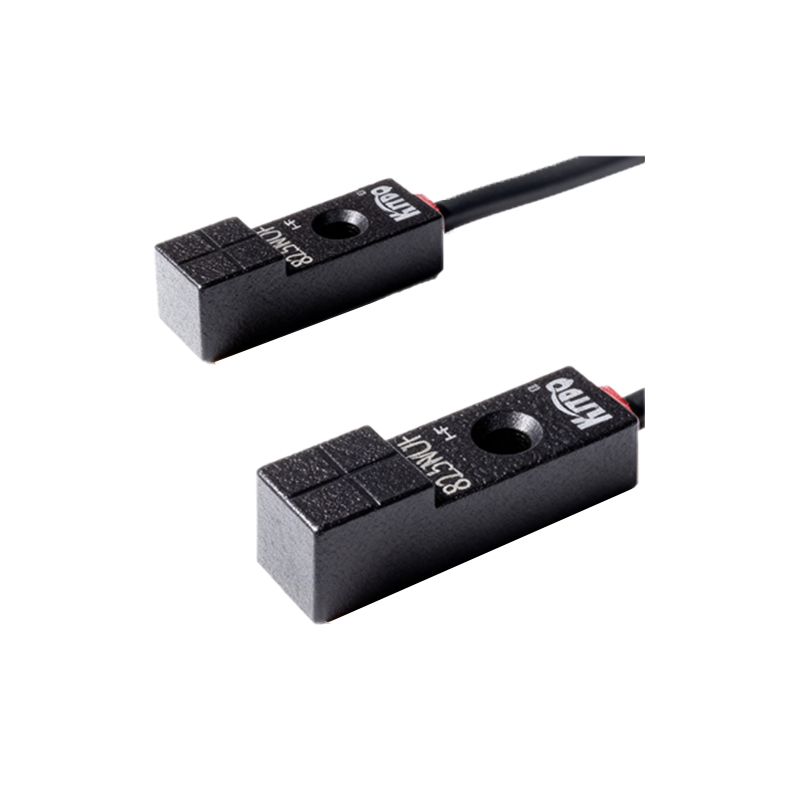
A proximity sensor is designed to detect the presence or absence of an object within a short, predefined range. Its primary function is a simple binary output: "object near" or "object not near." It does not typically provide information about the exact distance to the object. These sensors operate using various physical principles. Inductive proximity sensors, for instance, generate an electromagnetic field and detect changes caused by metallic objects. Capacitive sensors can detect both metallic and non-metallic materials, including liquids, by sensing changes in capacitance. Other common types include ultrasonic and photoelectric (optical) proximity sensors, which use sound waves or light beams, respectively, to detect an object's presence. Their key characteristic is their limited, short-range detection zone.
In contrast, a distance sensor, often called a ranging sensor, is specifically engineered to measure the precise interval between the sensor and a target object. It provides a continuous output, such as an analog voltage, current, or digital data, representing the exact distance. Common technologies for distance measurement include ultrasonic time-of-flight (calculating distance based on the time for a sound pulse to return), laser triangulation (using a laser spot and a receiver at a known angle to calculate distance), and LiDAR (Light Detection and Ranging), which uses pulsed laser light to create high-resolution 3D maps. Time-of-Flight (ToF) cameras, which measure the time for light to bounce back, are another advanced form of distance sensing.
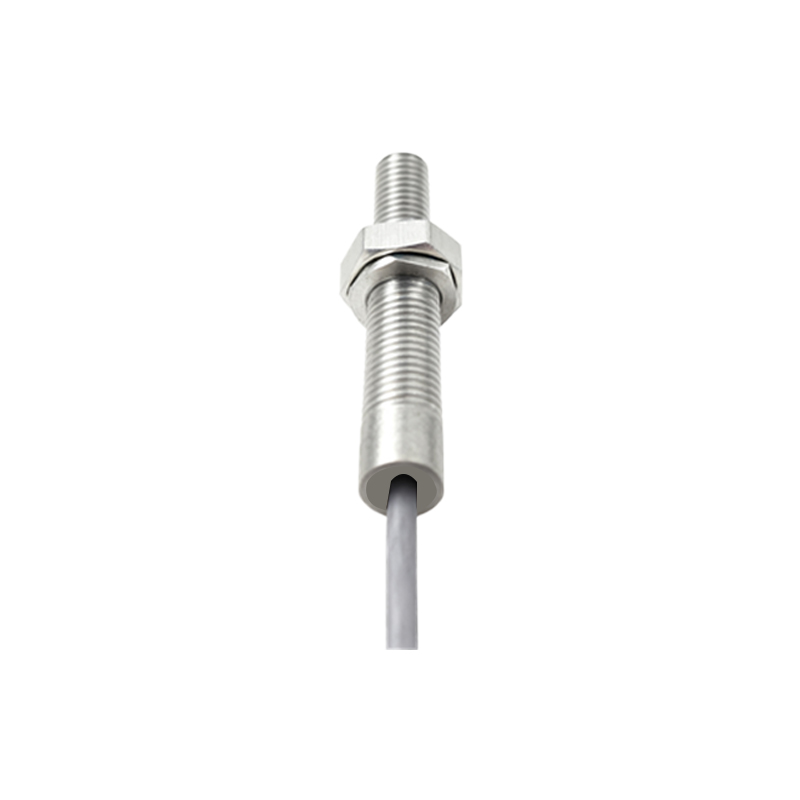
The core difference lies in their output. A proximity sensor gives a simple on/off signal, while a distance sensor provides a scaled measurement. Think of a proximity sensor as a touchless switch and a distance sensor as a touchless ruler. This fundamental distinction dictates their applications.
Proximity sensors are ubiquitous in scenarios requiring reliable, fast detection. In manufacturing, an inductive sensor verifies if a metal part is in position on an assembly line. In consumer devices, a capacitive proximity sensor in a smartphone screen turns off the display during a call to prevent accidental touches. They are also found in touchless faucets, security systems for door/window status, and as safety interlocks on machinery to prevent operation when a guard is open.
Distance sensors enable more complex spatial awareness and control. They are the backbone of robotics for navigation and obstacle avoidance. In automotive applications, ultrasonic distance sensors provide parking assistance, while more sophisticated radar and LiDAR systems are critical for advanced driver-assistance systems (ADAS) and autonomous vehicles. In logistics, laser distance sensors ensure precise positioning in automated storage and retrieval systems. They are also used in construction for leveling and surveying, and in drones for maintaining altitude and terrain following.
Often, these sensors work in tandem. A robotic system might use a proximity sensor for initial, fast detection of an object in its path and then engage a precise laser distance sensor to gauge exactly how far away it is and plan a maneuver. This combination ensures both speed and accuracy.
When selecting a sensor, engineers must consider several factors: the required range, the nature of the target material (metal, plastic, liquid), environmental conditions (dust, moisture, temperature), required response speed, accuracy, and of course, cost. For a simple presence check, a robust and inexpensive proximity sensor is ideal. For applications involving precise positioning, mapping, or complex automation, a distance sensor is necessary.
The evolution of these technologies continues to push boundaries. Miniaturization and cost reduction are bringing advanced LiDAR and ToF sensors into mobile phones for augmented reality and improved photography. Developments in sensor fusion, where data from multiple sensor types is combined, are creating systems with unprecedented environmental perception.
In summary, proximity and distance sensors are foundational components of the automated world. The former offers a reliable, simple presence detection, while the latter provides detailed spatial data. From the smartphone in your pocket to the most advanced industrial robot or self-driving car, these invisible workhorses are constantly at work, bridging the gap between the physical world and digital control, enabling smarter, safer, and more efficient interactions between machines and their environment.