Accurate measurement of liquid levels in storage tanks is a critical task across numerous industries, from petroleum and chemical processing to agriculture and wastewater management. The oil tank level gauge serves as the essential instrument for this purpose, providing real-time data on inventory, ensuring operational safety, and facilitating efficient logistics. This article explores the common types of level gauges, their working principles, key applications, and factors to consider when selecting the right device for your needs.
The most traditional and widely recognized type is the mechanical sight glass or gauge glass. It consists of a transparent tube mounted vertically alongside the tank, directly connected to the interior. The liquid level inside the tube matches the level in the tank, allowing for visual inspection. While simple, cost-effective, and requiring no external power, it has limitations. It is prone to breakage, can become cloudy, and only offers local readability, which poses safety risks for personnel who must physically check it, especially with hazardous materials.
Modern operations increasingly rely on electronic and automated level measurement technologies. These can be broadly categorized into contact and non-contact methods. A prevalent contact method is the float-type level transmitter. A float, whose density is between that of the product and the vapor, moves with the liquid surface. This mechanical movement is converted into an electrical signal—often via a magnetostrictive, resistive, or inductive coupling—which is then transmitted to a remote control room display or system. These devices offer continuous, reliable measurement and are suitable for a wide range of liquids, including crude oil, diesel, and various chemicals.
Another common contact technology is the pressure-based level gauge. It operates on the fundamental principle that hydrostatic pressure at a given point in a liquid is proportional to the height of the liquid column above it. A pressure sensor, or transducer, installed at the bottom of the tank measures this pressure. By knowing the specific gravity of the stored liquid, the system's electronics can accurately calculate the level. This method is robust and effective for both level and volume calculation but requires calibration for the specific product density.
For applications where avoiding contact with the liquid is paramount—due to corrosion, high viscosity, contamination risk, or stringent hygiene standards—non-contact level gauges are ideal. Radar level gauges are a leading technology in this category. They emit microwave pulses towards the liquid surface, which reflect back to the antenna. The instrument calculates the level based on the time-of-flight of the signal. Advanced radar devices are highly accurate, largely unaffected by temperature, pressure, or vapor, making them excellent for large storage tanks and volatile environments.
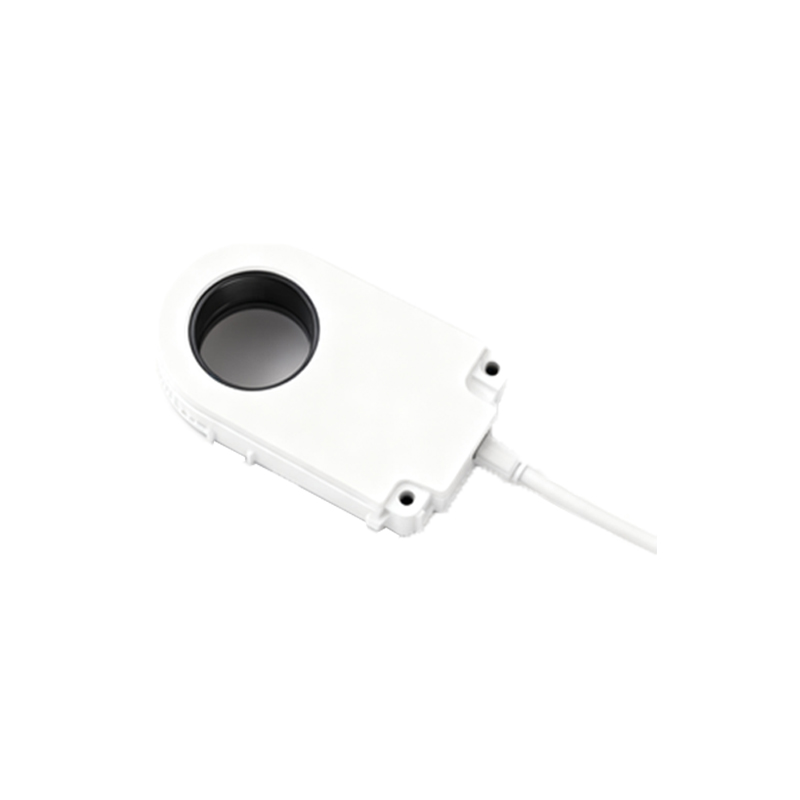
Ultrasonic level gauges represent another popular non-contact option. They work on a similar time-of-flight principle but use sound waves. A transducer mounted at the tank top emits an ultrasonic pulse, which reflects off the product surface and returns. The device measures the echo time to determine distance. While cost-effective and easy to install, ultrasonic performance can be affected by heavy foam, dust, vapor, or significant temperature gradients within the tank vapor space.
The choice of an appropriate oil tank level gauge depends on a careful analysis of several factors. First, consider the tank and process conditions: the physical properties of the liquid (density, dielectric constant, viscosity, corrosiveness), the temperature and pressure range inside the tank, and the presence of agitation, foam, or vapor. Second, define the performance requirements: the needed accuracy, resolution, and whether continuous monitoring or point-level detection (high/low alarms) is sufficient. Third, evaluate installation constraints: available mounting points, tank height, and the need for compliance with safety standards like ATEX for hazardous areas. Finally, consider the total cost of ownership, which includes not just the initial purchase price but also installation, calibration, maintenance, and integration costs with existing Supervisory Control and Data Acquisition (SCADA) or inventory management systems.
In practice, these gauges are indispensable for tank farm inventory management, preventing overfills and spills, optimizing transportation schedules, and ensuring accurate custody transfer during the loading and unloading of tanker trucks and ships. They form a critical component of automated blending processes and safety shutdown systems. Regular maintenance, such as verifying calibration, checking for sensor fouling, and ensuring electrical connections are secure, is vital for long-term reliability and measurement integrity.
Ultimately, selecting the right oil tank level gauge is not about finding the most advanced technology, but about matching the instrument's capabilities to the specific application requirements. A thorough understanding of both the process conditions and the available technologies will lead to a selection that enhances safety, optimizes operations, and provides a strong return on investment through accurate and reliable level measurement.