Metal proximity sensors are indispensable components in modern industrial automation, offering non-contact detection of metallic objects. These devices operate on various principles, with inductive proximity sensors being the most prevalent for metal detection. Their core function involves generating an electromagnetic field from an oscillator circuit. When a metallic target enters this field, eddy currents are induced within the metal, causing a change in the sensor's oscillation amplitude. This change is detected by a threshold circuit, which subsequently triggers a solid-state output switch. This fundamental principle enables reliable, wear-free operation, a key advantage over mechanical limit switches.
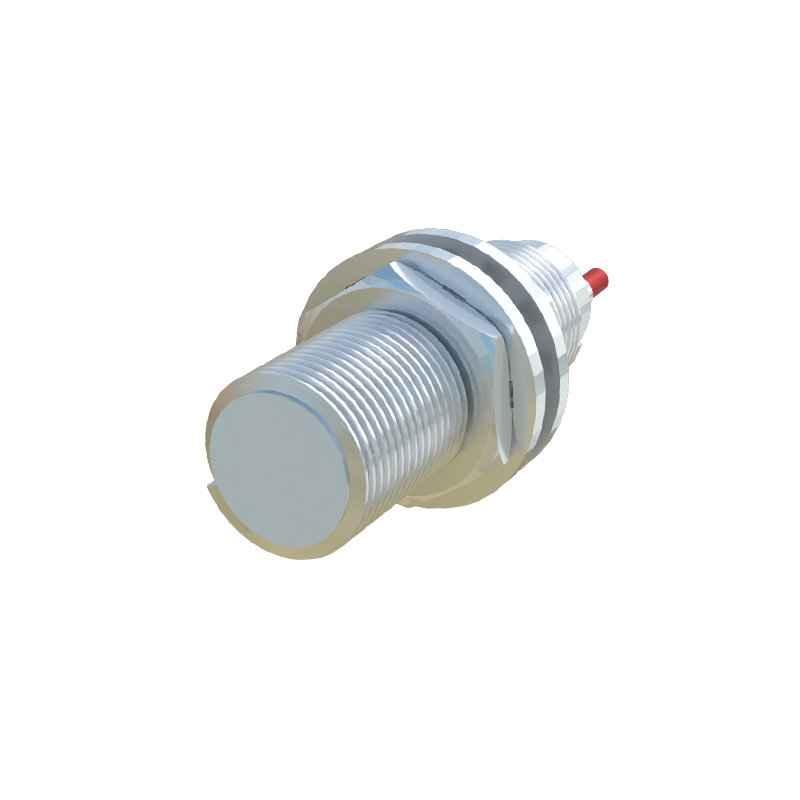
The defining characteristics of metal proximity sensors contribute significantly to their widespread adoption. First and foremost is their non-contact nature, which eliminates physical wear and tear on both the sensor and the target, ensuring exceptional longevity and reduced maintenance. They are renowned for high switching frequency and fast response times, often in the millisecond range, making them ideal for high-speed counting, positioning, and sequencing tasks on production lines. Their construction is typically robust, featuring housings made from materials like nickel-plated brass, stainless steel, or PBT plastic, granting high resistance to vibration, shock, and harsh industrial environments including exposure to coolants, oils, and dust. Many models conform to IP67 or IP69K ingress protection ratings, safeguarding against water and dust ingress.
Another critical feature is their insensitivity to surface conditions. Unlike optical sensors, they reliably detect metallic objects regardless of color, transparency, or surface finish (though the type of metal and target size do affect sensing distance). They also exhibit excellent repeat accuracy, consistently detecting a target at the same point, which is vital for precision automation. Modern sensors offer diverse output configurations (NPN, PNP, NO, NC) and connection methods (pre-wired cables or quick-disconnect connectors) for easy integration into control systems like PLCs.
The functions and applications of metal proximity sensors are vast and integral to industrial processes. A primary role is position detection and end-position monitoring. They verify if a cylinder is fully extended or retracted, confirm the presence of a part in a fixture, or indicate the open/closed status of doors or guards on machinery. In counting and sorting applications, they tally products on a conveyor belt or detect metal tags for sorting purposes. They are crucial for speed monitoring by measuring the rotational speed of gears or shafts, often serving as simple encoders. Furthermore, they provide thread detection in bottling plants by confirming the presence of a metal cap, and act as a safety interlock by ensuring a protective metal guard is in place before machine operation commences.
Selecting the appropriate sensor involves considering several parameters. The nominal sensing distance (Sn) is a theoretical value under standardized conditions. The effective operating distance (Sr) accounts for manufacturing tolerances and supply voltage variations. Critical real-world considerations include the reduction factor, which indicates how different metals (like stainless steel, brass, or aluminum) reduce the effective sensing range compared to mild steel. The hysteresis is the difference between the switch-on and switch-off points, preventing output chatter when a target is at the sensing edge. Mounting considerations (flush, non-flush) and environmental factors like temperature extremes and electromagnetic interference also influence selection.
In conclusion, metal proximity sensors are vital enablers of industrial automation. Their combination of non-contact operation, robustness, high speed, and reliability makes them perfect for demanding environments. From ensuring precise positioning in robotic cells to providing critical safety interlocks and enabling high-speed counting, their functions form the backbone of efficient, safe, and modern manufacturing and material handling systems. Understanding their characteristics allows engineers to deploy them effectively, enhancing system performance and uptime.