In the realm of industrial process control, environmental monitoring, and occupational health, the accurate detection and measurement of particulate matter (PM) is paramount. Among the various sensing technologies available, infrared laser dust sensors have emerged as a dominant and reliable solution. This article delves into the operational principles, key advantages, diverse applications, and critical selection criteria for these sophisticated instruments.
At its core, an infrared laser dust sensor operates on the principle of light scattering, specifically Mie scattering. The sensor incorporates a stable infrared laser diode, typically emitting light at a wavelength around 850nm or 940nm. A controlled airflow, often generated by a small fan or pump, draws the ambient air sample through a precisely designed optical chamber. As dust particles pass through the focused laser beam, they scatter the light in all directions. A photodetector, positioned at a specific angle (commonly 90 degrees to minimize interference from the direct beam), captures this scattered light. The intensity of the scattered light is directly proportional to the concentration and size of the particles. Sophisticated algorithms within the sensor's microcontroller then convert this photoelectric signal into a digital output, typically providing mass concentration readings for PM2.5, PM10, or total suspended particulates (TSP).
The superiority of infrared laser sensors over older technologies like piezoelectric or light-dependent resistor (LDR) based sensors is significant. First and foremost is their high precision and sensitivity. The coherent, monochromatic nature of laser light allows for the detection of extremely low concentrations of fine particles, down to the microgram per cubic meter (µg/m³) range. Secondly, they offer excellent long-term stability. The laser source degrades very slowly, and modern designs incorporate self-calibration routines and temperature compensation to maintain accuracy over years of operation. Furthermore, their response time is remarkably fast, providing real-time or near-real-time data crucial for dynamic control systems. Finally, they are relatively compact, have low power consumption, and offer digital interfaces (such as UART or I2C), facilitating easy integration into larger monitoring networks or control panels.
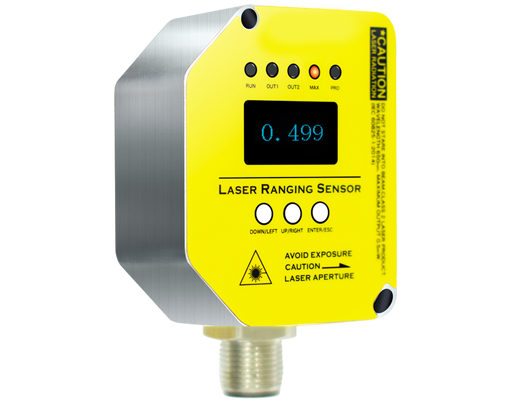
The applications for infrared laser dust sensors are vast and cross-sectoral. In industrial settings, they are indispensable for monitoring dust emissions at source points like crushers, conveyors, and bag filter outlets to ensure compliance with environmental regulations. They protect sensitive machinery by monitoring air quality in control rooms and data centers, preventing particulate-induced damage to electronics. Within manufacturing processes, particularly in pharmaceuticals, food processing, and semiconductor fabrication, they ensure cleanroom standards are maintained. For occupational health and safety, these sensors provide continuous monitoring in workplaces such as mines, woodshops, and chemical plants, alerting personnel to hazardous airborne concentrations. Beyond industry, they form the backbone of urban air quality monitoring stations and are increasingly integrated into smart building HVAC systems for improved indoor air quality management.
Selecting the appropriate infrared laser dust sensor requires careful consideration of several technical parameters. The required measurement range is primary; ensure the sensor covers the expected concentration levels, from clean environments to heavily polluted ones. Particle size sensitivity is another critical factor; confirm the sensor reports the specific PM size fractions relevant to your application (e.g., PM1.0, PM2.5). Accuracy and resolution specifications must meet the demands of the task, whether for general trend monitoring or regulatory reporting. Environmental durability is key for harsh installations; look for robust housings with appropriate Ingress Protection (IP) ratings and specifications for operating temperature and humidity ranges. The type of output signal (analog voltage, PWM, or digital serial) must be compatible with your data acquisition system. Lastly, consider maintenance needs, such as the recommended calibration interval and the availability of replacement parts like inlet filters.
In conclusion, infrared laser dust sensors represent a mature, high-performance technology for particulate matter monitoring. Their combination of accuracy, stability, and versatility makes them the instrument of choice for engineers and professionals tasked with ensuring process efficiency, regulatory compliance, and human safety. By understanding their working principles and carefully matching sensor specifications to application requirements, one can implement a reliable and effective dust monitoring solution.