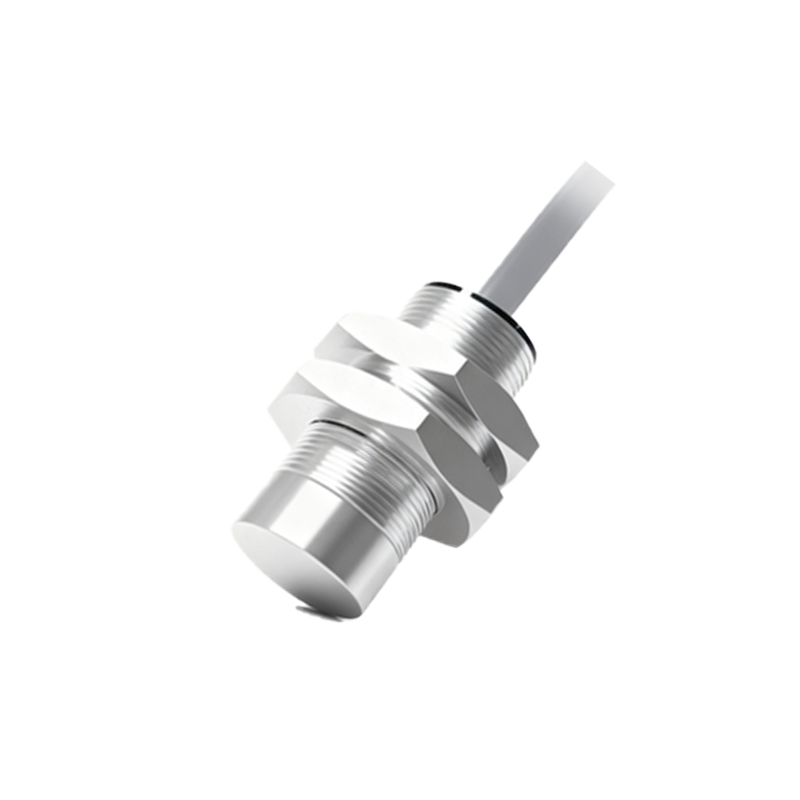
In the realm of industrial automation, proximity sensors are indispensable components for non-contact detection, and the E2E-X7D1 model stands as a prominent example of reliability and precision. This cylindrical, shielded inductive proximity sensor is engineered to detect metallic objects with high repeat accuracy, making it a staple in various demanding environments such as assembly lines, material handling systems, and machine tooling.
The E2E-X7D1 operates on the principle of electromagnetic induction. It generates a high-frequency oscillating magnetic field from its sensing face. When a metallic target enters this field, eddy currents are induced within the target, causing a change in the oscillation amplitude. The sensor's internal circuit detects this change and triggers a solid-state output switch. A key specification of this model is its 8mm sensing distance, which is designed for applications requiring consistent detection at a close range. The sensor is typically rated for a DC supply voltage, commonly 12-24V DC, ensuring compatibility with standard industrial control systems. Its output configuration is often a 3-wire type (NPN or PNP transistor output), providing a clean switching signal to programmable logic controllers (PLCs) or other control devices.
Durability is a cornerstone of the E2E-X7D1's design. Housed in a robust nickel-plated brass barrel, it offers excellent resistance to corrosion and physical impact. The sensing face is made of a specially formulated plastic that minimizes the accumulation of metallic dust, a common issue in machining environments. Furthermore, it boasts an IP67 ingress protection rating, signifying complete protection against dust and the ability to withstand temporary immersion in water. This makes it suitable for use in washdown areas or outdoor settings where exposure to fluids is possible. Electrical protection features, such as short-circuit and reverse polarity protection, are typically integrated to safeguard both the sensor and the connected circuitry from installation errors or wiring faults.
When integrating the E2E-X7D1 into a system, several application considerations are paramount. First, the target material must be ferrous (like iron or steel) for optimal performance, as the sensing distance can be reduced for non-ferrous metals like aluminum or copper. The standard sensing distance is calibrated for mild steel. Engineers must account for this reduction factor when designing the mechanical layout. Second, the sensor should be mounted flush in a metal bracket to utilize its shielded design, which prevents side-sensing and allows for side-by-side mounting without mutual interference. Third, attention must be paid to the operating temperature range, usually from -25°C to 70°C, to ensure reliable performance in extreme ambient conditions.
A common application scenario involves part presence verification on a conveyor. The E2E-X7D1 can be positioned precisely to detect the passage of metal components. Its fast response time and high switching frequency enable it to keep pace with high-speed production lines without missing a detection event. In machine tools, it is frequently used for end-of-travel detection or tool breakage monitoring, where its precision and resistance to coolant and oil splashes are critical advantages. Troubleshooting in the field typically involves checking the power supply, verifying the output load, and ensuring the target is within the specified sensing range and material specifications.
In summary, the E2E-X7D1 proximity sensor exemplifies the blend of robust construction, precise inductive sensing, and environmental resilience required for modern industrial automation. Its consistent performance in detecting metallic objects at a close range underpins its widespread adoption across diverse sectors, from automotive manufacturing to packaging machinery. Proper selection, installation, and understanding of its operational parameters are key to leveraging its full potential in creating efficient, reliable, and safe automated systems.