Laser fence sensors, also known as laser light curtains or safety light barriers, represent a critical advancement in industrial automation and personnel safety. These systems create an invisible curtain of infrared or visible laser beams between a transmitter and a receiver unit. When an object or person interrupts one or more of these parallel beams, the sensor's control unit triggers an immediate safety response, typically halting hazardous machinery or initiating an alarm. This non-contact detection method offers superior reliability and flexibility compared to traditional mechanical guards or pressure mats.
The core operating principle is based on the modulation and reception of light. The transmitter emits a series of synchronized, pulsed beams. The receiver, positioned opposite, contains photoelectric elements aligned to each beam. The control electronics continuously monitor the status of each beam path. Modern systems employ sophisticated coding for each pulse to prevent interference from ambient light or other nearby sensors, ensuring high immunity to false triggers. The safety integrity level (SIL) or Performance Level (PL) of these devices is classified according to international standards like IEC 61496 and ISO 13849, defining their reliability in risk reduction.

Key specifications define a laser fence sensor's capability. Resolution, or beam spacing, determines the smallest object that can be reliably detected—crucial for finger or hand protection. The sensing height is determined by the number of beams. Response time, measured in milliseconds, is vital for ensuring the machine stops before a hazard zone is reached, calculated using standards like ISO 13855 (reaching-in safety distances). The effective range varies by model, with some systems covering distances over 30 meters. Additionally, features like blanking (muting) allow for the temporary, safe interruption of beams for material passage without shutting down the process, while floating blanking can protect irregular-shaped objects.
The applications for laser safety fences are vast and span numerous industries. In robotics and automated assembly lines, they safeguard workers interacting with robotic cells. They are indispensable on press brakes, stamping presses, and injection molding machines, where they prevent access to closing points or moving platens. In material handling and packaging, they protect zones around conveyor belts, palletizers, and automated guided vehicles (AGVs). Furthermore, they secure access to hazardous areas like laser cutting cells, testing stations, and industrial ovens. Their ability to be configured into vertical, horizontal, or even rectangular guarding zones offers unparalleled design flexibility.
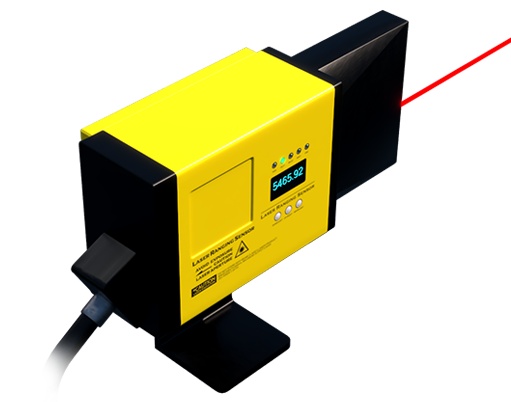
Selecting the appropriate laser fence requires a thorough risk assessment of the application. First, determine the required resolution based on the body part to be protected (e.g., full body, hand, finger). Next, calculate the necessary safety distance to ensure the machine enters a safe state before intrusion. The environmental conditions are critical; factors like dust, fog, vibration, temperature extremes, and potential optical interference must be matched with the sensor's IP rating and environmental specifications. Integration with the machine's control system is another key consideration; the sensor must output a signal (typically via OSSD outputs - Output Signal Switching Devices) compatible with the safety relay or controller. Finally, compliance with regional safety directives (like the EU's Machinery Directive) and relevant standards is mandatory.
Installation and commissioning must be performed meticulously. Precise alignment of the transmitter and receiver is fundamental for optimal operation. Regular testing and validation, as prescribed by the manufacturer and safety standards, are non-negotiable for maintaining the system's integrity over time. This includes daily functional checks where the interruption of beams is verified to cause the intended machine stop.
In conclusion, laser fence sensors are a sophisticated, versatile, and highly effective solution for modern industrial safety challenges. By providing a non-intrusive, programmable barrier of light, they enable both high productivity and rigorous personnel protection. Their successful implementation hinges on a systematic approach: understanding the technology, conducting a precise risk assessment, selecting a certified product with the right specifications, and adhering to strict installation and maintenance protocols. As automation evolves, these sensors will continue to be a cornerstone of safe human-machine collaboration.