Eddy current proximity sensors are widely used in industrial automation for non-contact detection of metallic objects. These sensors operate based on the principle of electromagnetic induction, offering high precision and reliability in various applications, such as position sensing, vibration monitoring, and speed measurement in machinery. Understanding their working mechanism is essential for engineers and technicians in the electrical and automation fields.
The core component of an eddy current proximity sensor is a coil wound around a ferrite core, which is energized by an alternating current (AC) signal. When the AC current flows through the coil, it generates an oscillating magnetic field around the sensor's active face. This magnetic field extends into the surrounding space, and when a conductive metal target approaches within the sensor's detection range, eddy currents are induced on the surface of the target. According to Faraday's law of electromagnetic induction, these eddy currents create their own magnetic field, which opposes the original magnetic field produced by the coil. This opposition results in a change in the impedance of the coil, including its inductance and resistance.
The sensor's electronic circuitry continuously monitors the impedance changes in the coil. As the target moves closer, the eddy current effect intensifies, causing a more significant shift in impedance. This variation is converted into an electrical signal, typically a voltage or current output, which correlates with the distance between the sensor and the target. For instance, in a typical setup, the output might increase linearly as the gap decreases, allowing for precise distance measurement. Most eddy current sensors are designed to detect specific metals, such as steel, aluminum, or copper, with their sensitivity depending on the material's conductivity and magnetic permeability. Ferrous metals like iron generally produce stronger signals due to their magnetic properties, while non-ferrous metals require calibrated sensors for optimal performance.
One key advantage of eddy current sensors is their ability to operate in harsh environments. Since they do not rely on physical contact, they are immune to wear and tear, making them suitable for high-speed or dirty conditions where mechanical sensors might fail. Additionally, they can function through non-conductive materials like plastic or oil, enabling embedded installations. However, limitations include a reduced effective range compared to other proximity sensors and sensitivity to temperature variations, which may require compensation circuits in precision applications.
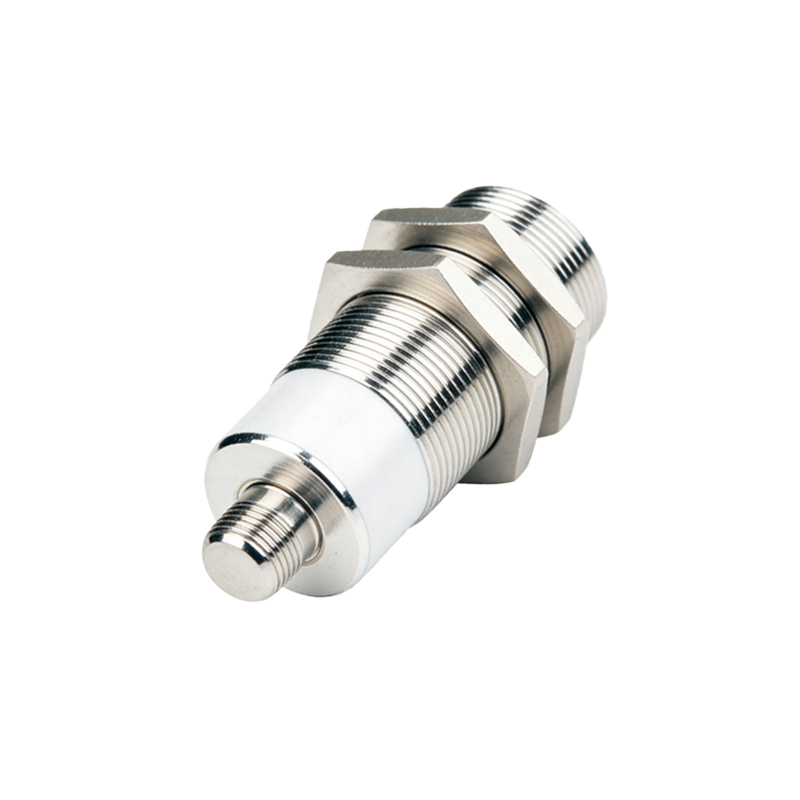
In practical use, these sensors are integral to systems like CNC machines for tool positioning, automotive engines for crankshaft speed detection, and aerospace for monitoring turbine blade clearance. Engineers must consider factors such as target size, material, and installation alignment to ensure accurate readings. Regular maintenance involves checking for environmental contaminants and verifying calibration against known standards.
Overall, eddy current proximity sensors leverage electromagnetic principles to provide reliable non-contact sensing. Their design combines simple physics with advanced electronics, making them a versatile tool in modern industrial automation. As technology advances, improvements in signal processing and materials continue to enhance their performance, supporting more complex and demanding applications across industries.
