In the intricate world of industrial automation and machinery, the ability to detect the presence, absence, or position of an object without physical contact is paramount. This is the core function of a proximity sensor. However, not all sensors are created equal. When applications demand exceptional accuracy, repeatability, and reliability, High Precision Proximity Sensors become the indispensable component of choice. This article delves into what defines these sophisticated devices, their working principles, key characteristics, and critical applications across various industries.
At its essence, a high-precision proximity sensor is a non-contact electronic device designed to detect a target with extreme accuracy in terms of sensing distance, repeatability, and response time. Unlike standard sensors that may have broader tolerances, high-precision variants are engineered to deliver consistent, reliable data even in challenging environments characterized by temperature fluctuations, electromagnetic interference, or the presence of contaminants like oil and coolant.
The most common technologies underpinning these sensors are Inductive, Capacitive, and Laser-based principles.
Inductive Proximity Sensors: These detect metallic objects (ferrous and non-ferrous) by generating an electromagnetic field. When a metal target enters this field, it induces eddy currents, causing a change in the oscillation amplitude, which is then detected by the sensor's circuitry. High-precision inductive sensors offer exceptional repeatability, often in the micron range, and are immune to dust, dirt, and liquids, making them ideal for precise positioning in machine tools, robotics, and metal fabrication.
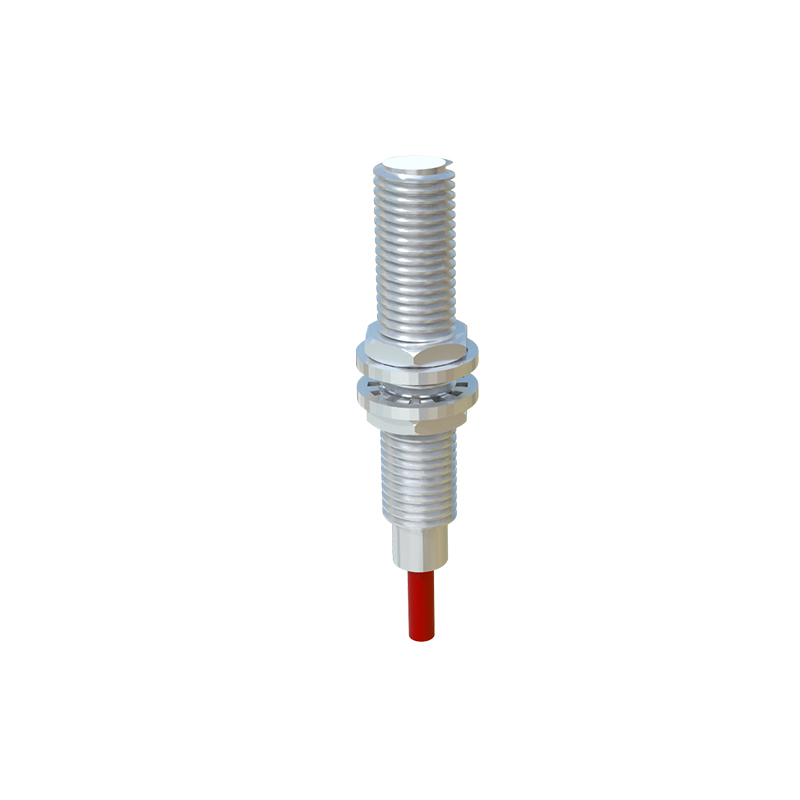
Capacitive Proximity Sensors: These can detect both metallic and non-metallic materials (plastics, wood, liquids, granules) by measuring changes in capacitance. The sensor and the target act as two plates of a capacitor. As the target approaches, the capacitance increases, triggering the switch. High-precision capacitive sensors are crucial in applications requiring precise level detection, thin material sensing, or distinguishing between different material densities.
Laser Triangulation Sensors: Representing the pinnacle of precision for distance measurement, these sensors project a laser beam onto a target. A receiver lens focuses the reflected light onto a CCD or PSD array. The position of the light spot on the array changes with the target's distance, allowing for sub-micron resolution measurements. They are extensively used in semiconductor manufacturing, precision assembly, and dimensional inspection.
Key performance characteristics distinguish high-precision sensors from their standard counterparts:
1. Extreme Repeatability: This is arguably the most critical parameter. It refers to the sensor's ability to consistently detect a target at the exact same position under identical conditions. High-precision sensors boast repeatability values as tight as ±0.1% of the sensing range or even less.
2. High Resolution: The smallest change in distance the sensor can reliably detect. Laser sensors, in particular, offer extremely high resolution.
3. Minimal Temperature Drift: The sensor's switching point remains stable across a wide operating temperature range, a feature achieved through advanced circuitry and compensation algorithms.
4. Fast Response Time: The ability to react quickly to the presence or absence of a target, often in microseconds, is vital for high-speed automation lines.
5. Robust Housing and Design: Built to withstand industrial harshness, including resistance to shock, vibration, and harsh chemicals (often rated IP67, IP69K).
The applications for high-precision proximity sensors are vast and critical to modern manufacturing:
Precision Machining & CNC: Used for tool wear detection, part presence verification, and precise workpiece positioning to ensure machining tolerances.
Semiconductor & Electronics: Essential for wafer handling, chip placement, lead frame inspection, and other processes where micron-level accuracy is non-negotiable.
Robotics & Automated Assembly: Enable robots to perform delicate pick-and-place operations, precise screw driving, and component insertion with flawless accuracy.
Medical Device Manufacturing: Used in the production of implants, surgical instruments, and diagnostic equipment where precision and sterility are paramount.
Printing & Packaging: Ensure precise registration control, web tension monitoring, and accurate label placement.
Selecting the right high-precision sensor requires careful consideration of the target material, required sensing distance, environmental conditions, necessary accuracy (repeatability), and output signal type (analog voltage/current or digital). Consulting with sensor specialists or engineers is highly recommended for critical applications.
In conclusion, high-precision proximity sensors are the unsung heroes of advanced industrial automation. By providing reliable, accurate, and non-contact detection, they form the sensory foundation for quality control, process efficiency, and the relentless pursuit of manufacturing excellence. Their role in enabling smarter, more precise, and more flexible production systems will only continue to grow as Industry 4.