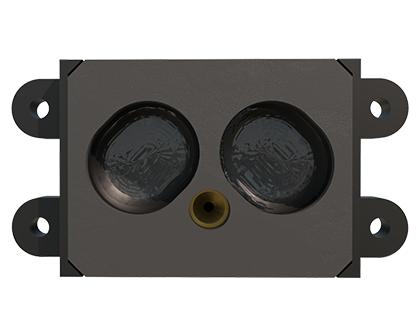
In the realm of industrial automation and environmental monitoring, laser micro dust sensors have emerged as a pivotal technology for precise particulate matter detection. These sensors utilize laser scattering principles to measure dust concentrations with high accuracy and real-time responsiveness, making them indispensable in various sectors including manufacturing, HVAC systems, and cleanroom environments.
The core mechanism of a laser micro dust sensor involves a laser diode that emits a focused beam of light. As airborne particles pass through the detection chamber, they scatter the laser light. A photodetector then captures this scattered light, and the sensor's embedded microprocessor analyzes the signal to calculate particle size and concentration based on Mie scattering theory. This method allows for detection of particles as small as 0.1 micrometers, providing granular data essential for maintaining air quality standards.
Key advantages of laser-based sensors include their low maintenance requirements, long operational lifespan, and immunity to environmental interferences such as humidity or temperature fluctuations. Unlike traditional gravimetric or optical dust sensors, laser variants offer superior sensitivity without frequent calibration, reducing downtime in industrial settings. Modern iterations integrate IoT capabilities, enabling remote monitoring and data logging via cloud platforms, which enhances predictive maintenance and compliance reporting.
Applications span diverse industries. In semiconductor fabrication, these sensors ensure ultra-clean air by monitoring microscopic contaminants that could compromise chip production. Pharmaceutical facilities rely on them to maintain sterile conditions during drug manufacturing. Additionally, laser micro dust sensors are deployed in smart buildings to optimize energy efficiency in ventilation systems, dynamically adjusting airflow based on real-time particulate levels.
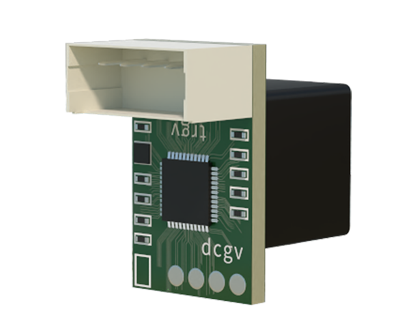
Despite their robustness, challenges persist. High initial costs and specialized installation requirements can be barriers for small-scale operations. However, ongoing advancements in miniaturization and cost reduction are broadening accessibility. Future trends point toward multi-parameter sensors that combine dust detection with gas sensing, offering comprehensive environmental analytics.
In conclusion, laser micro dust sensors represent a convergence of optical engineering and digital innovation, driving safer and more efficient industrial practices. As regulatory standards tighten globally, their role in ensuring air quality and operational integrity will only expand, solidifying their status as a cornerstone of modern industrial instrumentation.