Inductive proximity sensors are non-contact electronic devices that detect the presence of metallic objects without physical contact. Operating on the principle of electromagnetic induction, these sensors generate an oscillating electromagnetic field from a coil wound around a ferrite core. When a metallic target enters this field, eddy currents are induced on the target's surface, causing a change in the oscillation amplitude or frequency within the sensor. This change is detected by the sensor's internal circuitry, which then triggers a solid-state output signal—typically a switching action—to indicate the object's presence.
The utility of inductive proximity sensors in industrial automation is immense, primarily due to their robustness, reliability, and versatility. One of their foremost applications is in position sensing and object detection on assembly lines. For instance, in automotive manufacturing, these sensors verify the presence of engine components, such as pistons or crankshafts, ensuring correct positioning before subsequent machining or assembly steps. Their non-contact nature eliminates mechanical wear, leading to significantly longer service life compared to mechanical limit switches. This characteristic is crucial in high-cycle operations, where durability directly impacts production uptime and maintenance costs.
Another critical application is in machine safety and part counting. Inductive sensors monitor the position of guards on machinery, ensuring they are closed before operation begins, thereby enhancing operator safety. In packaging industries, they count metallic items—like cans or foil-wrapped products—on conveyor belts with high precision, facilitating accurate inventory control and batch processing. The sensors' ability to function in harsh environments is a key advantage. Encased in robust housings made of materials like nickel-plated brass or stainless steel, they resist dust, moisture, oils, and coolants. Many models are rated IP67 or higher, making them suitable for washdown areas in food processing or outdoor use in construction equipment.
Selecting the right inductive proximity sensor involves considering several technical parameters. Sensing distance, or the nominal range at which a standard target can be detected, varies from a few millimeters to about 60 millimeters, depending on the sensor size and design. Factors like target material also influence performance; while ferrous metals (e.g., steel) offer the longest sensing ranges, non-ferrous metals (e.g., aluminum, copper) require shorter distances due to lower permeability. Temperature stability is another consideration, with industrial-grade sensors operating reliably from -25°C to +70°C, ensuring consistent performance in fluctuating conditions.
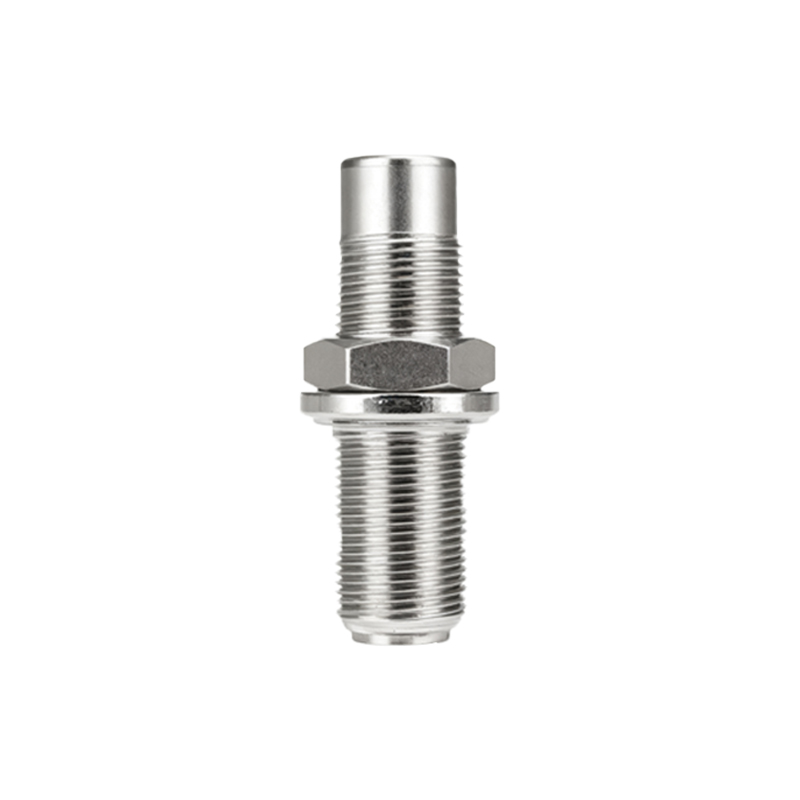
Modern advancements have expanded their capabilities further. Analog-output inductive sensors provide continuous distance measurement, useful in applications like monitoring brake pad wear or controlling valve positions. Additionally, designs with embedded IO-Link communication enable digital parameter setting, diagnostics, and integration into Industry 4.0 networks, allowing for predictive maintenance and real-time data exchange. In summary, inductive proximity sensors are indispensable in automation, offering precise, wear-free detection that enhances efficiency, safety, and reliability across diverse sectors—from metalworking and robotics to material handling and beyond.