In the demanding environments of modern industrial automation, proximity switch sensors play a critical role in non-contact detection, object positioning, and motion control. Among the various configurations, the 3-wire DC proximity sensor, particularly those designed with robust waterproof capabilities, has become a cornerstone for reliable operation in harsh conditions. This article delves into the technology, benefits, and application considerations of waterproof 3-wire proximity sensors.
A standard 3-wire DC proximity sensor comprises three distinct wires: brown for positive supply voltage (typically +V DC), blue for the common negative or ground (0V DC), and black for the output signal. This configuration is favored for its simplicity and direct compatibility with programmable logic controllers (PLCs) and other industrial control systems. The output can be either NPN (sinking) or PNP (sourcing), allowing for flexible integration into different circuit designs. The core sensing technology, whether inductive (for metals), capacitive (for various materials including liquids), or ultrasonic, remains housed within a sealed enclosure.
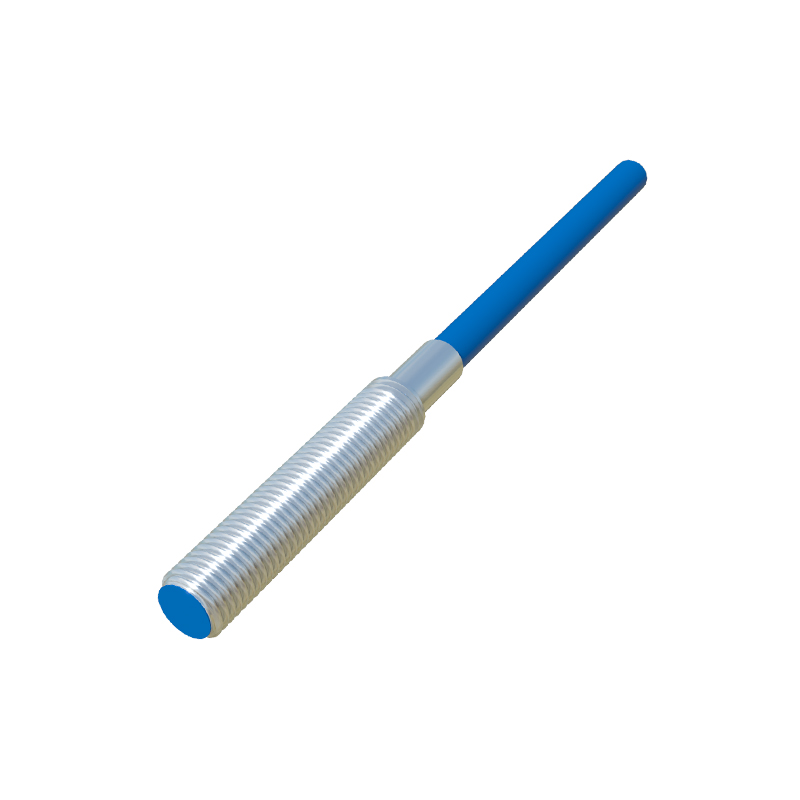
The term "waterproof" in this context is often quantified by the Ingress Protection (IP) rating, as per the international standard IEC 60529. For applications exposed to moisture, washdowns, or outdoor elements, a high IP rating is non-negotiable. Common ratings for industrial-grade waterproof proximity sensors include IP67 and IP68. An IP67-rated sensor can withstand temporary immersion in water up to 1 meter for 30 minutes, while an IP68 rating guarantees protection against continuous immersion under conditions specified by the manufacturer. This sealing is achieved through precision engineering: high-grade stainless steel or nickel-plated brass housings, laser-welded seams, and specially formulated epoxy resins that pot the internal electronics. The cable entry point is another critical area, often secured with a gland or molded connector that maintains the integrity of the seal under vibration and thermal stress.
The advantages of utilizing a waterproof 3-wire proximity sensor are substantial. First and foremost is enhanced reliability and longevity. By preventing the ingress of water, dust, oils, and coolants, these sensors drastically reduce downtime caused by sensor failure. This leads to lower maintenance costs and higher overall equipment effectiveness (OEE). Secondly, they enable automation in previously challenging environments. Food and beverage processing, pharmaceutical manufacturing, wastewater treatment plants, and marine applications all require sensing solutions that can endure high-pressure washdowns, steam, and corrosive atmospheres. A waterproof sensor ensures consistent performance, maintaining process integrity and safety.
When selecting and installing a waterproof 3-wire proximity sensor, several key factors must be considered. Beyond the IP rating, the material of the sensing face and body must be compatible with the environmental chemicals. Stainless steel (e.g., 303, 304, or 316 grades) is a common choice for its corrosion resistance. The sensing range, which can be slightly reduced compared to non-sealed models due to the front cap material, must be carefully verified. Installation is crucial; even the best sensor can fail if installed incorrectly. The mounting should follow the manufacturer's guidelines for tightening torque to avoid distorting the housing. The cable should not be used as a pulling handle, and the cable gland must be properly tightened to preserve the IP rating. Regular inspection for physical damage to the housing or cable is a simple yet effective preventive measure.
In conclusion, the 3-wire waterproof proximity sensor is an indispensable component for resilient industrial automation. Its standardized wiring, coupled with advanced sealing technologies like high IP ratings, provides a robust solution for detection tasks in wet, dirty, or corrosive environments. By understanding its specifications, advantages, and proper installation practices, engineers and maintenance personnel can ensure maximum sensor life and system reliability, contributing to smoother, more efficient, and uninterrupted production operations across a wide spectrum of industries.