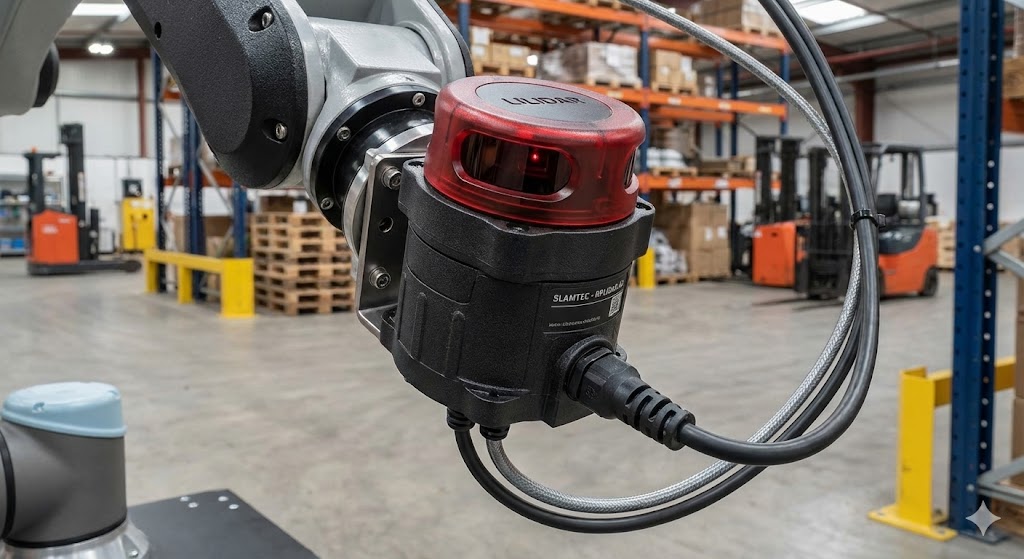
In the realm of industrial automation and precision metrology, the demand for accurate, reliable, and non-contact measurement solutions is paramount. Wide laser displacement sensors have emerged as a critical technology, offering distinct advantages over traditional contact probes and narrower-beam laser sensors. This article delves into the operational principles, key application areas, and essential selection criteria for these versatile instruments.
At its core, a wide laser displacement sensor operates on the principle of optical triangulation. The sensor projects a laser beam—specifically a laser line or a wide spot—onto the target surface. The reflected light from this illuminated area is then focused onto a position-sensitive detector, such as a CMOS or CCD array. When the target's distance changes, the position of the reflected light pattern on the detector shifts accordingly. By precisely calculating this shift, the sensor determines the displacement or distance with high accuracy. The "wide" characteristic refers to the beam's profile; instead of a single pinpoint, it emits a fan-shaped line or a broad spot. This design is particularly beneficial for measuring objects with rough surfaces, uneven textures, or variable reflectivity, as it averages measurements over a larger area, reducing noise and providing more stable readings.
The applications for wide laser displacement sensors span numerous industries. In automotive manufacturing, they are indispensable for measuring body panel gaps and flushness, ensuring quality and fit. In electronics assembly, they verify the coplanarity of component leads on PCBs or measure the thickness of applied coatings and adhesives. The packaging industry utilizes them to monitor fill levels in opaque containers or to check the seal integrity of packages by profiling the surface. Furthermore, in metal processing, these sensors can measure warpage, thickness variation, and surface defects on rolled sheets or extruded profiles, even on hot materials where contact is impossible. Their ability to handle challenging surfaces—including shiny, dark, or translucent materials—makes them superior in many scenarios where standard laser points might fail due to speckle noise or insufficient light return.
Selecting the appropriate wide laser displacement sensor requires careful consideration of several technical parameters. First, the measurement range and stand-off distance must be compatible with the mechanical setup. The spot size or line length at the target is crucial; a wider beam averages over a larger area, which is good for rough surfaces but may reduce resolution on sharp edges. Resolution and linearity define the sensor's precision and accuracy. Sampling speed is vital for high-speed production lines, determining how quickly the sensor can take measurements. The laser wavelength (typically red or blue) influences performance on different materials; blue lasers often perform better on organic materials like rubber or transparent objects. Finally, environmental robustness, including IP rating for dust and water resistance and tolerance to ambient light, is essential for harsh industrial environments.
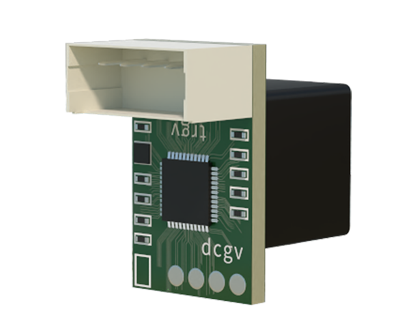
Integration is another key facet. Modern wide laser displacement sensors often come with sophisticated controllers and software that offer real-time data processing, profile comparison, and seamless communication via industrial networks like EtherCAT, PROFINET, or Ethernet/IP. This allows for easy integration into larger Quality Control (QC) or Statistical Process Control (SPC) systems, enabling proactive maintenance and process optimization.
In conclusion, wide laser displacement sensors represent a sophisticated fusion of optics, electronics, and software engineering. Their unique capability to deliver stable and accurate measurements on diverse and challenging surfaces positions them as a cornerstone technology for modern industrial quality assurance. By understanding their working principles and carefully matching their specifications to the application's requirements, engineers can unlock significant gains in productivity, quality control, and operational efficiency.