Hot melt adhesive laser sensors represent a sophisticated category of industrial measurement devices, engineered to deliver precise, non-contact monitoring and control in adhesive application processes. At their core, these sensors operate on the fundamental principles of laser triangulation. A laser diode emits a focused beam of coherent light onto the target surface—typically the hot melt adhesive bead or droplet. The diffuse reflection from this surface is then captured by a high-resolution CMOS or CCD linear array sensor positioned at a specific angle relative to the emitter.
The underlying physics is governed by simple trigonometric relationships. As the distance to the target object changes, the position of the reflected laser spot shifts laterally across the detector array. This displacement is directly proportional to the change in distance. An integrated digital signal processor (DSP) or microcontroller analyzes the pixel data from the detector in real-time, calculating the exact height, width, or profile of the adhesive deposit with micron-level accuracy. This data is converted into standardized analog (e.g., 4-20 mA) or digital (e.g., IO-Link, Ethernet/IP) output signals for seamless integration with programmable logic controllers (PLCs) and robotic dispensing systems.
Key performance parameters include measurement range, resolution, repeatability, and response time. For hot melt applications, sensors are often optimized for specific challenges such as the semi-translucent nature of certain adhesives, high ambient temperatures near application heads, and fast-moving production lines. Advanced models incorporate algorithms to filter out background optical noise and compensate for varying surface colors or textures. Some utilize blue laser technology, which offers superior performance on organic materials and glossy surfaces compared to traditional red lasers due to its shorter wavelength and higher spectral reflectance.
The industrial implementation of these sensors revolutionizes quality assurance in packaging, product assembly, and nonwoven industries. They enable closed-loop control for adhesive bead positioning, ensuring consistent glue pattern geometry, detecting voids or skips, and preventing over-application. This minimizes material waste, reduces downtime, and guarantees bond integrity. Furthermore, the non-contact nature eliminates contamination risks and mechanical wear, ensuring long-term reliability in harsh manufacturing environments characterized by dust, vibrations, and temperature fluctuations.
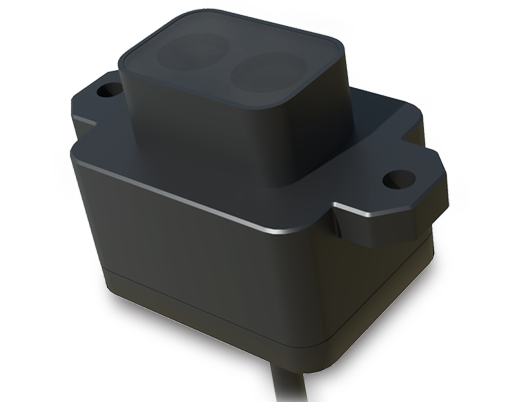
Integration with Industry 4.0 frameworks is a growing trend. Modern hot melt adhesive laser sensors often feature embedded intelligence, enabling predictive maintenance alerts, data logging for traceability, and remote configuration via web interfaces. As adhesive formulations and application techniques evolve, sensor technology continues to advance, with developments in 3D profiling, multi-point measurement, and enhanced communication protocols driving further automation and precision in manufacturing processes.