Photoelectric sensor proximity switches are essential components in modern industrial automation, offering non-contact detection capabilities for various applications. These sensors operate by emitting a light beam—typically infrared, visible red, or laser—and detecting changes in the received light intensity or time-of-flight to determine the presence, absence, or distance of an object. Understanding the key parameters of photoelectric proximity switches is critical for selecting the right sensor for specific operational environments and performance requirements.
One of the primary parameters is the sensing range, which defines the maximum distance at which the sensor can reliably detect a target. This range varies significantly among different types, such as through-beam, retro-reflective, and diffuse reflective sensors. Through-beam sensors, consisting of separate emitter and receiver units, offer the longest sensing ranges, often exceeding 100 meters. Retro-reflective models, which use a reflector to bounce light back to a combined emitter/receiver unit, typically provide ranges up to 30 meters. Diffuse reflective sensors, where the target itself reflects light back to the receiver, have shorter ranges, usually from a few centimeters to several meters, depending on the target's color, material, and surface finish.
Another crucial parameter is the response time, measured in milliseconds (ms) or microseconds (µs). This indicates how quickly the sensor can detect a change and switch its output state. High-speed applications, such as counting small objects on a fast conveyor or detecting parts in rapid assembly lines, require sensors with response times of 0.1 ms or less. For slower processes, sensors with response times of 1-10 ms may be sufficient and more cost-effective. The response time directly impacts system throughput and must be matched to the application's speed demands.
The light source type is a fundamental specification influencing performance. Infrared (IR) LEDs are common due to their immunity to ambient visible light and good resistance to dust and dirt. Visible red LEDs are easier to align during installation because the beam is visible. Laser diodes provide highly focused beams, enabling precise detection of very small objects or long-range sensing with high accuracy. Recent advancements include sensors with modulated or pulsed light sources, which enhance immunity to external light interference and improve signal-to-noise ratios in challenging environments.
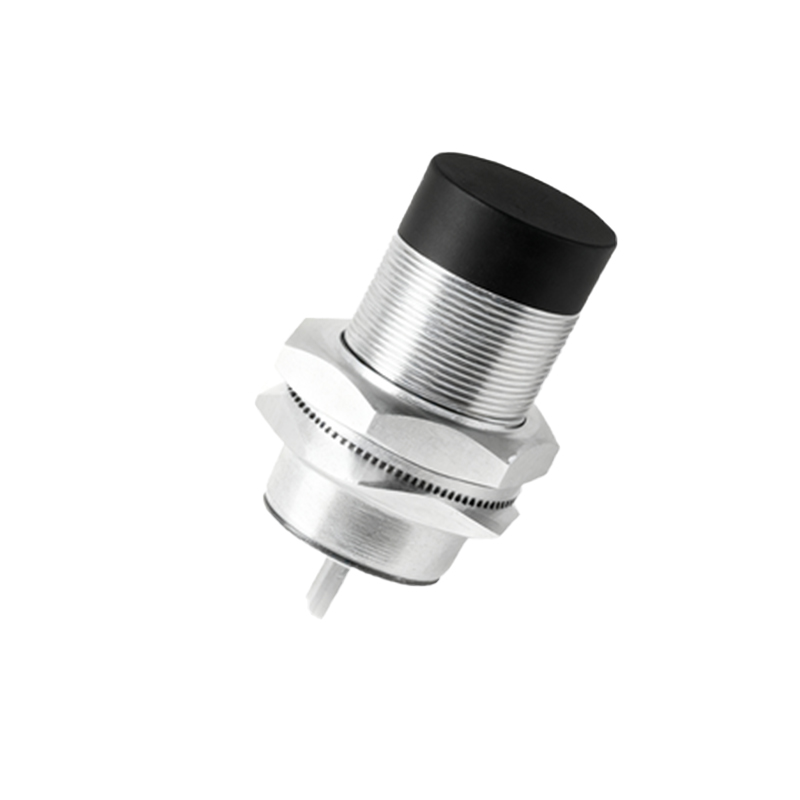
Output configuration is a key electrical parameter. Photoelectric proximity switches typically provide either digital (discrete) or analog outputs. Digital outputs include NPN (sinking) or PNP (sourcing) transistor configurations, which switch a load (like a PLC input) on or off upon detection. Some sensors offer relay outputs for higher current switching. Analog outputs, such as 0-10V or 4-20mA signals, provide continuous distance or intensity information, useful for applications requiring position monitoring or grayscale detection. The choice depends on the control system's input requirements.
Environmental ratings are vital for reliability. The Ingress Protection (IP) rating, such as IP67 or IP69K, indicates the sensor's resistance to dust and water ingress, essential for washdown areas or outdoor use. Operating temperature range specifies the ambient conditions the sensor can withstand, typically from -25°C to +70°C for industrial models. Additional considerations include resistance to chemicals, oils, vibration, and shock, particularly in harsh manufacturing settings like automotive plants or food processing facilities.
Other important parameters include the sensing object characteristics—minimum detectable object size, which depends on the beam spot diameter, and material/color dependency. For diffuse sensors, a standard white target is often used for specification; dark or absorbent materials may require reduced sensing distances. Background suppression capability allows sensors to ignore objects beyond a set distance, preventing false triggers. Supply voltage requirements, usually 10-30V DC or 24-240V AC/DC, must match the available power. Housing material, such as stainless steel or rugged plastics, affects durability and suitability for specific industries.
Modern photoelectric sensors often incorporate advanced features like programmable functions via teach-in buttons or IO-Link communication. IO-Link enables parameter setting, real-time monitoring, and diagnostic data transmission, facilitating predictive maintenance and integration into Industry 4.0 systems. Adjustable sensitivity, time delays, and output logic inversion enhance flexibility. When selecting a sensor, engineers must balance these parameters against application needs, considering factors like target properties, installation constraints, environmental challenges, and cost. Proper parameter alignment ensures reliable operation, reduced downtime, and optimized automation performance.
In summary, photoelectric proximity switches are defined by a comprehensive set of technical parameters. A thorough evaluation of sensing range, response time, light source, output type, environmental robustness, and object compatibility guides optimal sensor selection. As automation evolves, understanding these parameters remains fundamental to implementing efficient, reliable sensing solutions across diverse industrial sectors.