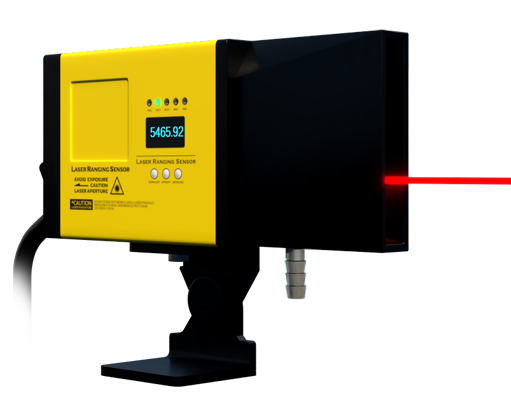
In the rapidly evolving landscape of smartphone technology, laser sensors have emerged as a pivotal component, driving significant advancements in user interaction, photography, and augmented reality. These sensors, often integrated into the device's camera module, utilize laser beams to measure distance with exceptional precision. By emitting a laser pulse and calculating the time it takes for the reflection to return, they can accurately gauge the proximity of objects, enabling features like faster autofocus, improved portrait mode effects, and enhanced low-light performance. This technology not only refines the photographic capabilities of modern smartphones but also plays a crucial role in security applications, such as facial recognition systems that rely on depth mapping to ensure robust authentication.
Beyond imaging, laser sensors contribute to the development of more intuitive user interfaces. For instance, gesture control functionalities allow users to navigate menus or interact with apps without physically touching the screen, a feature particularly useful in scenarios where hygiene or convenience is prioritized. Additionally, in the realm of augmented reality (AR), laser sensors provide precise spatial awareness, enabling virtual objects to interact seamlessly with the real-world environment. This has opened up new possibilities in gaming, education, and professional tools, where accurate depth perception is essential for immersive experiences.

From an engineering perspective, the integration of laser sensors into compact smartphone designs presents both challenges and opportunities. Manufacturers must balance power consumption, size constraints, and cost while ensuring high reliability and performance. Advances in miniaturization and semiconductor technology have made it feasible to incorporate these sensors without compromising the sleek form factors that consumers demand. Moreover, as 5G networks and edge computing evolve, the data generated by laser sensors can be processed more efficiently, paving the way for real-time applications in autonomous navigation and smart home integration.
Looking ahead, the role of laser sensors in smartphones is set to expand further. Innovations in LiDAR (Light Detection and Ranging) technology, for example, are already being adopted in premium models to enhance 3D scanning and environmental mapping. This not only benefits consumer applications but also holds potential for industrial uses, such as in construction or healthcare, where mobile devices equipped with advanced sensors can assist in measurements and diagnostics. As the Internet of Things (IoT) ecosystem grows, smartphones with laser sensors may act as central hubs, interacting with other smart devices to create a more connected and intelligent environment.
In conclusion, laser sensors represent a transformative element in smartphone engineering, bridging the gap between digital and physical worlds. Their ability to deliver precise, real-time data underpins many of the cutting-edge features that define today's mobile experience. For engineers and developers, continued innovation in this area promises to unlock even greater functionalities, making smartphones not just communication tools, but versatile instruments that enhance daily life and professional workflows. As technology progresses, we can anticipate further integration of laser-based systems, solidifying their status as a cornerstone of modern device design.