In the rapidly evolving landscape of industrial automation and quality control, laser displacement sensors have emerged as indispensable tools for non-contact, high-precision measurement. Recent technological advancements are pushing the boundaries of what these sensors can achieve, offering unprecedented accuracy, speed, and versatility. This article delves into the core innovations shaping the next generation of laser displacement sensors and their transformative impact across various sectors.
The fundamental principle of laser triangulation remains at the heart of most displacement sensors. A laser diode projects a focused beam onto a target surface. The reflected light is captured by a receiving lens at a specific angle and focused onto a position-sensitive detector, such as a CCD or CMOS array. Displacement of the target alters the position of the reflected light spot on the detector, allowing for precise distance calculation. However, modern advancements are revolutionizing this classic approach.
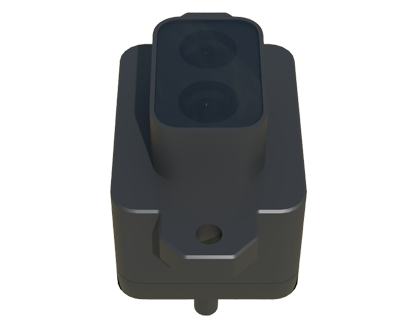
One of the most significant breakthroughs is the development of ultra-high-speed models. Traditional sensors operated at kHz frequencies, but new designs utilizing advanced CMOS technology and optimized algorithms now achieve sampling rates in the MHz range. This enables real-time monitoring of high-speed processes, such as vibration analysis on rotating machinery, thickness measurement of fast-moving webs in paper manufacturing, or inspection of components on ultra-rapid assembly lines. The ability to capture minute, transient deviations is critical for predictive maintenance and zero-defect production.
Furthermore, enhanced resolution and accuracy are being realized through innovations in laser source technology and signal processing. The adoption of blue-violet lasers, with their shorter wavelength compared to traditional red lasers, allows for a smaller, more focused spot size. This minimizes the influence of surface texture and color, providing stable measurements on challenging surfaces like black rubber, transparent glass, or shiny metals. Coupled with sophisticated digital filtering and environmental noise compensation algorithms, modern sensors can now reliably achieve sub-micron resolution even in harsh industrial environments with temperature fluctuations and ambient light interference.
Multi-point and profile measurement capabilities represent another frontier. Instead of a single-point measurement, newer sensor models can project a laser line or multiple points simultaneously. A dedicated camera captures the entire line's deformation or the positions of multiple points. This technology, often integrated into compact systems, allows for 2D profile scanning, flatness assessment, edge detection, and 3D contouring without requiring mechanical scanning mechanisms. This is invaluable in electronics for solder paste inspection, in automotive for sealant bead profiling, and in metallurgy for cross-sectional shape analysis.
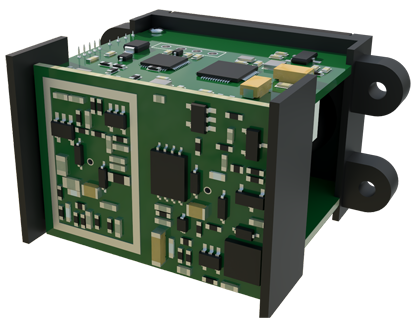
Connectivity and smart features are also becoming standard. Modern laser displacement sensors are equipped with industrial Ethernet (EtherCAT, PROFINET), IO-Link, and high-speed digital interfaces, facilitating seamless integration into Industry 4.0 and IoT frameworks. They can perform onboard data processing, outputting not just raw displacement values but also calculated parameters like thickness, width, or step height. Some models incorporate self-diagnostic functions and automatic calibration, significantly reducing setup time and maintenance overhead.
The application spectrum continues to expand. In the semiconductor industry, these sensors are crucial for wafer warpage measurement and chip lead coplanarity inspection. In precision machining, they monitor tool wear and in-process part dimensions. In robotics, they provide essential feedback for precise guidance and bin-picking operations. Even in emerging fields like additive manufacturing, they are used for in-situ layer height monitoring to ensure print quality.
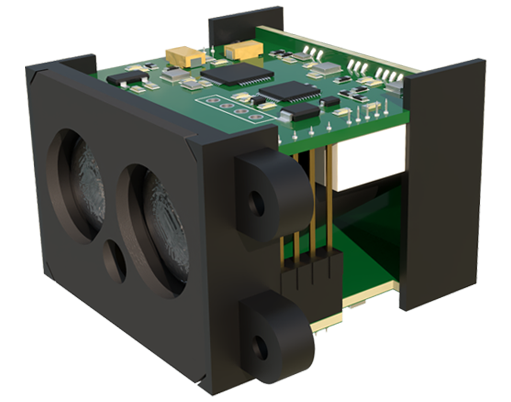
In conclusion, the new wave of laser displacement sensors, characterized by extreme speed, superior accuracy, profile measurement, and intelligent connectivity, is redefining precision metrology. By providing reliable, non-contact data at unprecedented levels, they are empowering industries to enhance product quality, optimize manufacturing efficiency, and transition towards fully automated, data-driven smart factories. As research continues in areas like AI-integrated data analysis and even more compact form factors, the role of these sensors as a cornerstone of advanced manufacturing will only solidify further.