Laser vibration sensors, also known as laser Doppler vibrometers (LDVs), represent a cornerstone technology in modern industrial condition monitoring and precision measurement. Their operation is fundamentally rooted in the Doppler effect, a well-established physical phenomenon where the frequency of a wave changes for an observer moving relative to the wave source. In the context of vibration measurement, a coherent laser beam is directed at the target surface. The vibration of this surface modulates the frequency of the reflected light. A stationary sensor then detects this reflected light and compares its frequency with that of a reference beam, which is typically split from the original source. The frequency difference, or Doppler shift, is directly proportional to the instantaneous velocity of the target's surface along the laser beam axis. This analog signal is then processed through sophisticated electronics and algorithms to derive precise measurements of displacement, velocity, and acceleration over a wide frequency range.
The core component of an LDV is an interferometer, most commonly a Michelson or Mach-Zehnder configuration. The laser beam is split into a measurement beam and a reference beam. The measurement beam travels to the target and back, while the reference beam travels a fixed internal path. Upon recombination, these beams interfere. The constructive and destructive interference patterns, or fringes, are detected by a photodetector. The vibration-induced Doppler shift in the measurement beam causes this interference pattern to fluctuate. By analyzing the phase and frequency of this fluctuating signal, the sensor's decoder can calculate the target's vibration parameters with exceptional accuracy, often in the nanometer or micrometer per second range.
One of the most significant advantages of laser vibration sensing is its non-contact nature. This eliminates mass-loading effects that can distort measurements when using traditional contact sensors like accelerometers, especially on lightweight or delicate structures. It allows for measurements on hot, rotating, electrically charged, or otherwise inaccessible surfaces without risk to the sensor or the process. Furthermore, the laser spot can be focused to a very small diameter, enabling highly localized measurements and the mapping of vibration patterns across a surface, which is invaluable for modal analysis and fault diagnosis in machinery, turbines, and aerospace components.
Industrial applications are vast and critical. In predictive maintenance, LDVs are used to monitor the health of rotating equipment such as motors, pumps, and gearboxes. Subtle changes in vibration signatures can indicate bearing wear, imbalance, misalignment, or looseness long before catastrophic failure. In the automotive industry, they are employed for noise, vibration, and harshness (NVH) testing on engines, brakes, and entire vehicle bodies. The electronics sector utilizes them to characterize the performance and reliability of micro-electromechanical systems (MEMS) and hard disk drives. Additionally, in civil engineering, they assess the structural integrity of bridges, buildings, and wind turbine blades by measuring their dynamic response to environmental loads.
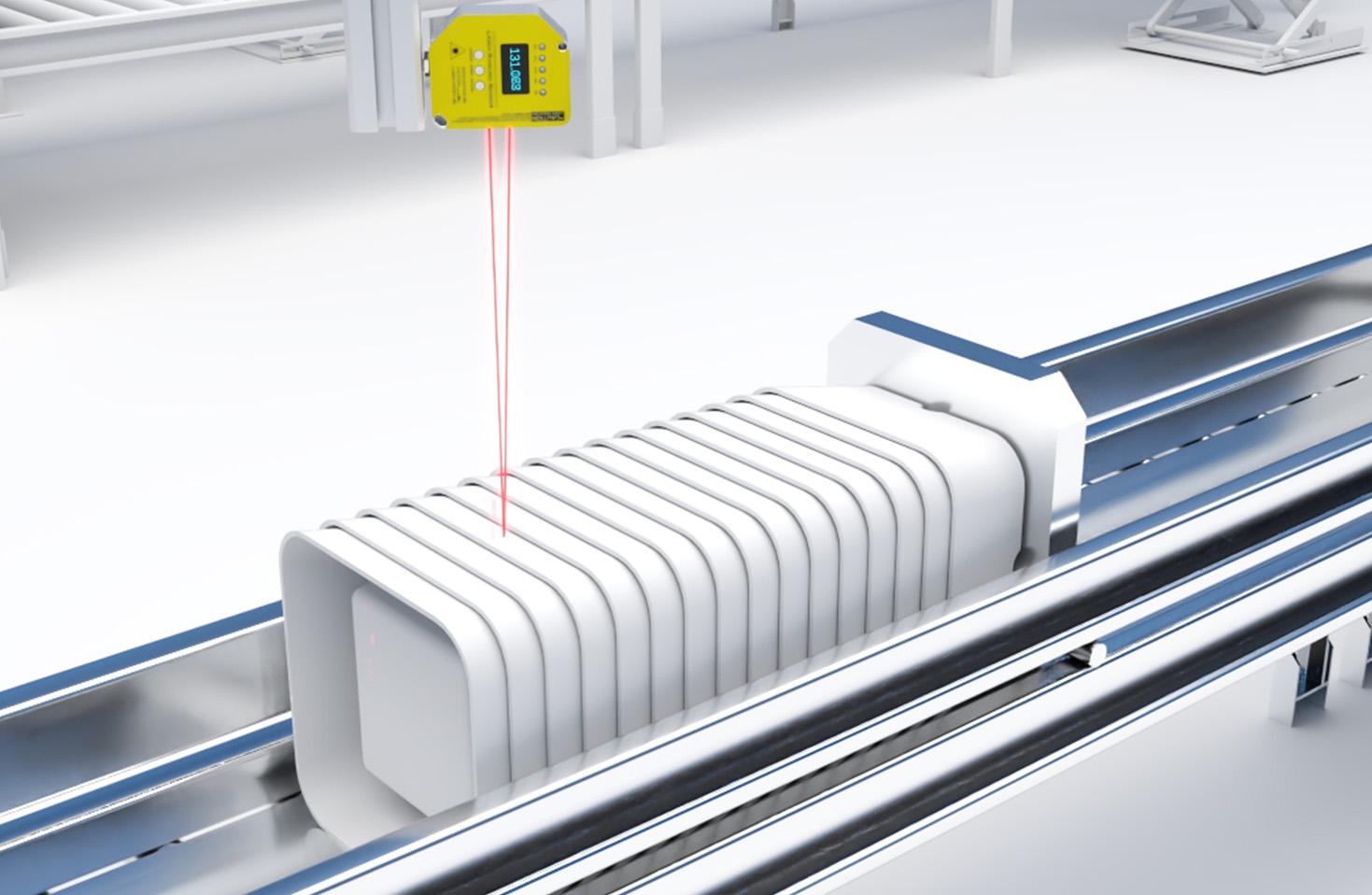
Modern advancements have led to the development of scanning laser Doppler vibrometers (SLDVs), which use moving mirrors to steer the laser beam across a grid of points on a structure automatically. This creates a full-field operational deflection shape or mode shape animation, providing an intuitive visual representation of vibration behavior. Another key development is the use of different laser wavelengths and improved signal processing to handle various surface types, from highly reflective to dark and rough, ensuring robust performance across diverse industrial environments.
While offering unparalleled precision and flexibility, laser vibration sensors also present certain considerations. They require a clear line of sight to the target, and measurements can be compromised by excessive ambient light or if the target surface moves out of the sensor's measurement range. The cost of high-end systems can be significant compared to conventional sensors. However, for applications demanding high fidelity, non-contact measurement, and detailed spatial analysis, the laser Doppler vibrometer remains an indispensable tool, driving efficiency, safety, and innovation across the industrial landscape. Its principle, marrying fundamental physics with advanced optoelectronics, continues to set the standard for precision vibration measurement.