In the realm of industrial automation and precision measurement, coaxial return laser sensors have emerged as a pivotal technology, offering unparalleled accuracy and reliability. These sensors operate on the principle of emitting a laser beam and receiving the reflected light along the same optical axis, hence the term "coaxial." This design minimizes alignment errors and environmental interference, making them ideal for applications requiring high precision, such as dimensional inspection, displacement monitoring, and surface profiling. Unlike traditional sensors that may suffer from signal degradation due to oblique angles or dust, coaxial return sensors maintain consistent performance even in challenging conditions, thanks to their integrated optics and advanced signal processing algorithms.
The core mechanism involves a laser diode that projects a focused beam onto a target surface. The reflected light is then captured by a receiver within the same housing, allowing for real-time analysis of distance or position based on triangulation or time-of-flight methods. This setup ensures minimal parallax error, which is critical in industries like automotive manufacturing, where micrometer-level tolerances are standard. For instance, in assembly lines, these sensors can detect minute variations in component thickness or alignment, enabling automated corrections and reducing waste. Additionally, their compact design and robust construction make them suitable for integration into tight spaces or harsh environments, such as metalworking or electronics production.
One of the key advantages of coaxial return laser sensors is their versatility. They can be configured for various measurement ranges, from sub-millimeter to several meters, depending on the model and application needs. Advanced versions incorporate features like auto-calibration, temperature compensation, and digital interfaces (e.g., Ethernet/IP or IO-Link), facilitating seamless connectivity with industrial control systems. This adaptability has led to widespread adoption in sectors beyond manufacturing, including robotics, where precise object detection is essential for navigation and manipulation, and in quality assurance labs for non-contact testing of materials.
However, selecting the right coaxial return laser sensor requires careful consideration of factors such as target material, surface reflectivity, and ambient lighting. For example, highly reflective surfaces may cause signal saturation, while dark or rough materials could attenuate the beam. Manufacturers often provide specifications on optimal operating conditions, and some sensors include adjustable settings to mitigate these issues. Regular maintenance, such as lens cleaning and firmware updates, also ensures long-term accuracy and prevents downtime in critical processes.
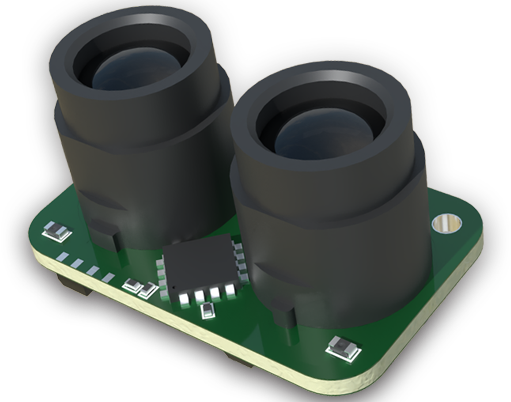
Looking ahead, innovations in laser technology and artificial intelligence are poised to enhance coaxial return sensors further. Integration with machine learning algorithms could enable predictive maintenance and adaptive measurement, while miniaturization may open new applications in fields like medical devices or aerospace. As industries continue to prioritize efficiency and precision, coaxial return laser sensors will remain at the forefront, driving advancements in automation and smart manufacturing. By offering a blend of speed, accuracy, and durability, they exemplify how cutting-edge engineering can solve real-world challenges, ultimately contributing to higher productivity and reduced operational costs across diverse sectors.