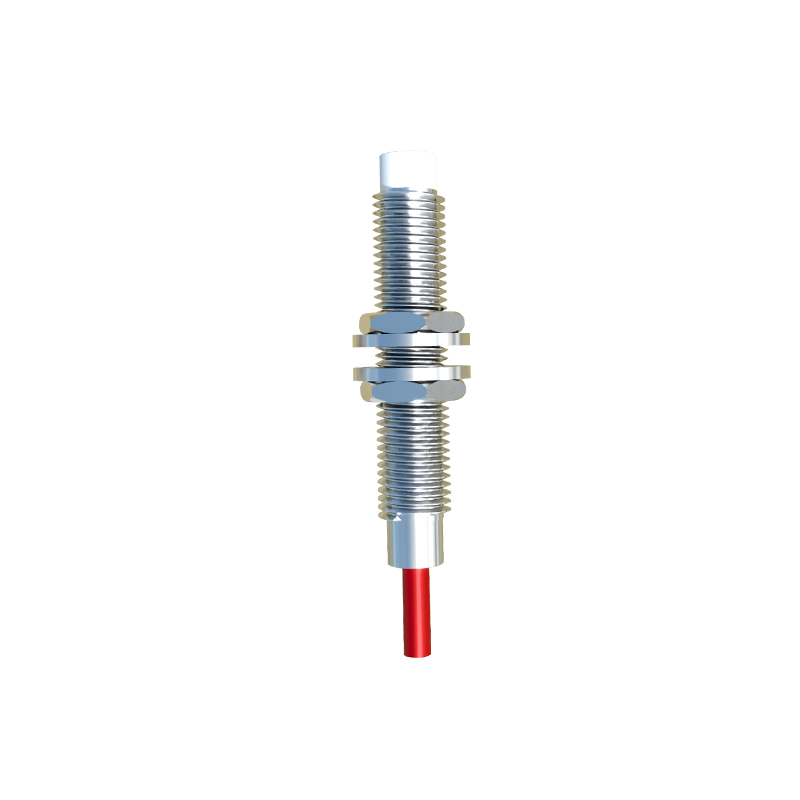
The 612b1l2 proximity sensor represents a significant advancement in non-contact detection technology, designed specifically for demanding industrial environments. As a cylindrical inductive proximity sensor with an M12 threaded housing, this device offers reliable detection of metallic objects without physical contact, making it indispensable in automation systems, material handling, and precision manufacturing.
Operating on the principle of electromagnetic induction, the 612b1l2 generates an oscillating electromagnetic field from its sensing face. When a metallic target enters this field, eddy currents are induced in the target, causing a change in the oscillation amplitude. This change is detected by the sensor's internal circuitry, which then triggers a switching action. The sensor features a nominal sensing range of 2mm for steel targets, with temperature compensation ensuring stable performance across industrial temperature ranges from -25°C to +70°C.
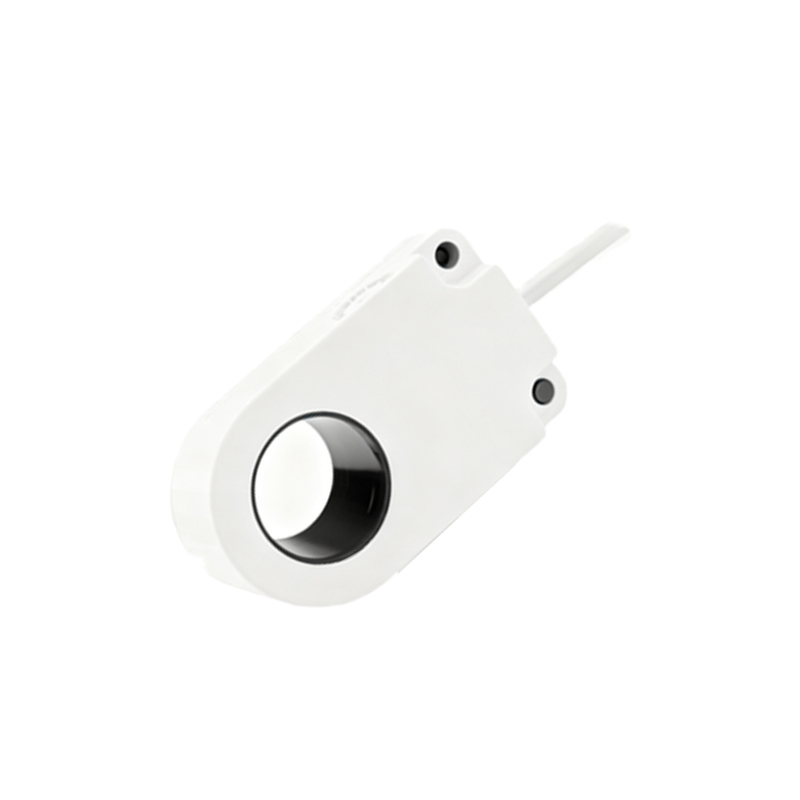
Key technical specifications include a switching frequency of 1kHz, allowing for rapid detection in high-speed applications. The 612b1l2 is available in both normally open (NO) and normally closed (NC) configurations, with PNP or NPN output options to match various PLC and control system requirements. Its IP67 protection rating guarantees reliable operation in environments with dust, oil, and temporary immersion, while the short-circuit and reverse polarity protection circuits enhance durability and reduce maintenance needs.
Installation considerations for the 612b1l2 emphasize proper mounting techniques to maximize performance. The sensor should be mounted with adequate clearance from surrounding metal structures to prevent false triggering—typically 2-3 times the sensor diameter for side clearance and 1-2 times for front clearance. For flush-mounted applications, the sensor can be installed in metal without performance degradation, though the sensing range may be reduced by approximately 30%. Regular maintenance involves periodic cleaning of the sensing face to remove contaminants that could affect detection reliability.
In automotive manufacturing, the 612b1l2 is extensively used for position verification in robotic welding cells, detecting the presence of chassis components before welding operations. The food and beverage industry employs these sensors in packaging lines to detect metal lids and caps, with the stainless steel front face variant meeting hygiene requirements. Material handling systems utilize the 612b1l2 for pallet detection, conveyor jam prevention, and inventory tracking through metal tag detection.
When compared to capacitive or ultrasonic proximity sensors, the 612b1l2 offers superior performance for metal detection with faster response times and immunity to non-metallic materials. However, its limitation to metallic targets makes it unsuitable for applications requiring detection of plastics, liquids, or other non-conductive materials. For such applications, alternative sensor technologies should be considered.
Future developments in proximity sensing technology may enhance the 612b1l2's capabilities through integrated IO-Link communication for diagnostic data transmission or improved sensing ranges through advanced coil designs. Current implementations already demonstrate remarkable reliability, with MTBF (Mean Time Between Failures) ratings exceeding 100,000 hours in typical industrial applications.
Proper integration into control systems requires attention to wiring practices. The three-wire configuration typically includes brown (positive), blue (negative), and black (output) connections. Shielding of cables in electrically noisy environments and proper grounding techniques minimize electromagnetic interference. For applications involving welding equipment or high-frequency devices, additional filtering or physical separation may be necessary to prevent false triggering.
The 612b1l2's compatibility with standard M12 connectors simplifies installation and replacement procedures, reducing downtime during maintenance. When selecting between the various models in the 612b1l2 series, engineers should consider factors including target material (steel, aluminum, or copper alloys), required sensing distance, environmental conditions, and output requirements. Aluminum and copper targets typically require reduced sensing distances compared to steel, with correction factors provided in the technical documentation.
In conclusion, the 612b1l2 proximity sensor provides a robust solution for industrial automation challenges requiring reliable metal detection. Its combination of mechanical durability, electrical reliability, and installation flexibility makes it a preferred choice across multiple industries. As automation systems continue to evolve toward greater precision and efficiency, sensors like the 612b1l2 will remain fundamental components in achieving these operational goals.