M8 pin proximity sensors are compact, non-contact sensing devices widely utilized in industrial automation for detecting the presence or absence of objects. These sensors operate based on electromagnetic fields, with the M8 designation referring to the 8mm threaded housing that provides robust environmental protection. Typically constructed from stainless steel or nickel-plated brass, M8 sensors offer high resistance to vibration, moisture, and chemical exposure, making them suitable for harsh manufacturing environments.
The working principle involves generating an oscillating electromagnetic field from the sensor's active face. When a metallic object enters this field, it induces eddy currents, causing a change in oscillation amplitude. This alteration is detected by the internal circuitry, triggering a switching signal. For non-metallic targets, capacitive or ultrasonic variants are available. Key specifications include sensing distance, which for standard inductive M8 sensors ranges from 1.5 to 2.5 mm, ensuring precise detection. The sensors commonly feature PNP or NPN output configurations, with 3-wire or 4-wire designs allowing compatibility with PLCs and control systems. Voltage ratings typically span 10-30V DC, with short-circuit and reverse polarity protection enhancing reliability.
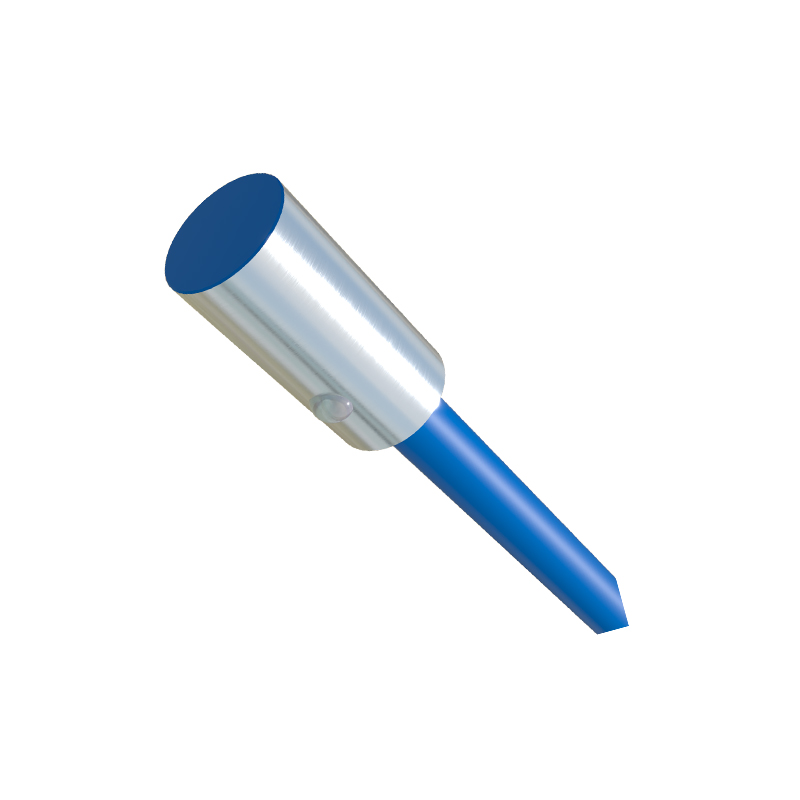
A significant advantage of M8 pin proximity sensors is their space-saving design. The compact form factor enables installation in confined areas where larger sensors cannot fit. Additionally, their threaded barrel allows easy mounting via locknuts, reducing installation time. Many models incorporate LED indicators for operational status, aiding in troubleshooting. High switching frequencies, often up to 5 kHz, support rapid production lines, while repeat accuracy within microns ensures consistent performance in precision applications like CNC machining or robotic assembly.
In industrial settings, M8 sensors are deployed across diverse sectors. In automotive manufacturing, they monitor component positioning on conveyor belts or verify robotic gripper engagement. Packaging machinery utilizes them to detect fill levels or label presence, preventing downtime. Food and beverage industries benefit from hygienic versions with IP67 or IP69K ratings, resisting washdown procedures. Moreover, in material handling, these sensors facilitate object counting, edge detection, and safety interlocking. Their immunity to ambient light and dust makes them preferable over optical alternatives in dirty conditions.
When selecting an M8 proximity sensor, engineers must consider factors like target material, required sensing range, environmental challenges, and output type. For instance, ferrous metals yield longer detection distances than non-ferrous ones. Temperature tolerance, typically from -25°C to 70°C, should align with operational extremes. Shielded models minimize electromagnetic interference in dense installations, while unshielded versions offer extended ranges. Regular maintenance involves checking for mechanical damage or contamination, though their solid-state design ensures long service life with minimal wear.
Advancements in M8 sensor technology include IO-Link connectivity, enabling digital communication for parameter adjustment and diagnostics. Smart sensors can transmit data on operating hours or temperature, supporting predictive maintenance. As Industry 4.0 evolves, these features integrate seamlessly into IoT networks, enhancing automation intelligence. In summary, M8 pin proximity sensors are indispensable for modern industrial systems, delivering reliability, precision, and adaptability in demanding applications. Their continued innovation promises to drive efficiency and safety across global manufacturing landscapes.