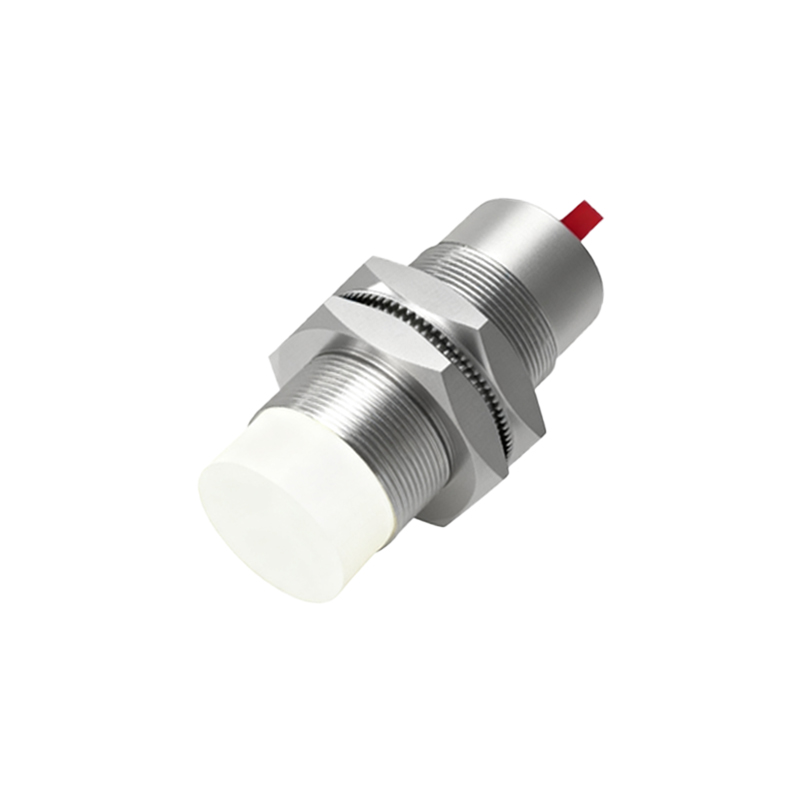
In the realm of industrial automation and control systems, proximity sensors are indispensable components for non-contact object detection. Among the various types available, the DC two-wire proximity switch sensor stands out for its simplicity, reliability, and ease of integration. This article delves into the operational principles, key advantages, typical applications, and critical selection criteria for these widely used sensors.
Fundamentally, a DC two-wire proximity sensor is an electronic device that detects the presence or absence of a target object without physical contact. It operates by generating an electromagnetic field from its sensing face. When a metallic (for inductive types) or any material (for capacitive types) target enters this field, it causes a change in the oscillation amplitude or capacitance. This change is processed by an internal circuit, which triggers a switching action. The term "two-wire" is pivotal; it signifies that the same two wires are used for both supplying DC power to the sensor and carrying the output switching signal. This is in contrast to three-wire or four-wire sensors, which have separate wires for power supply, ground, and output signal. The two-wire design directly connects in series with the load (e.g., a PLC input, relay, or indicator lamp), much like a conventional mechanical switch.
The architecture of these sensors offers several compelling benefits. First and foremost is wiring simplicity. Installation is straightforward, reducing wiring time, complexity, and potential points of failure. This leads to lower overall system costs. Secondly, they exhibit high reliability with no moving mechanical parts, resulting in long operational life and resistance to wear. Modern DC two-wire sensors are also designed with robust housings, typically made of nickel-plated brass, stainless steel, or PBT plastic, offering excellent resistance to shock, vibration, and harsh industrial environments including exposure to oils, coolants, and dust. Many models comply with IP67 or IP69K ingress protection ratings. Another significant advantage is the minimal leakage current. When in the "off" state, a small residual current (typically less than 1.8 mA) flows through the sensor. Modern PLCs and control inputs are designed to handle this, preventing false triggering. When switched "on," the sensor allows the full load current to pass, with a small voltage drop (usually 1.5V to 3V) across it.
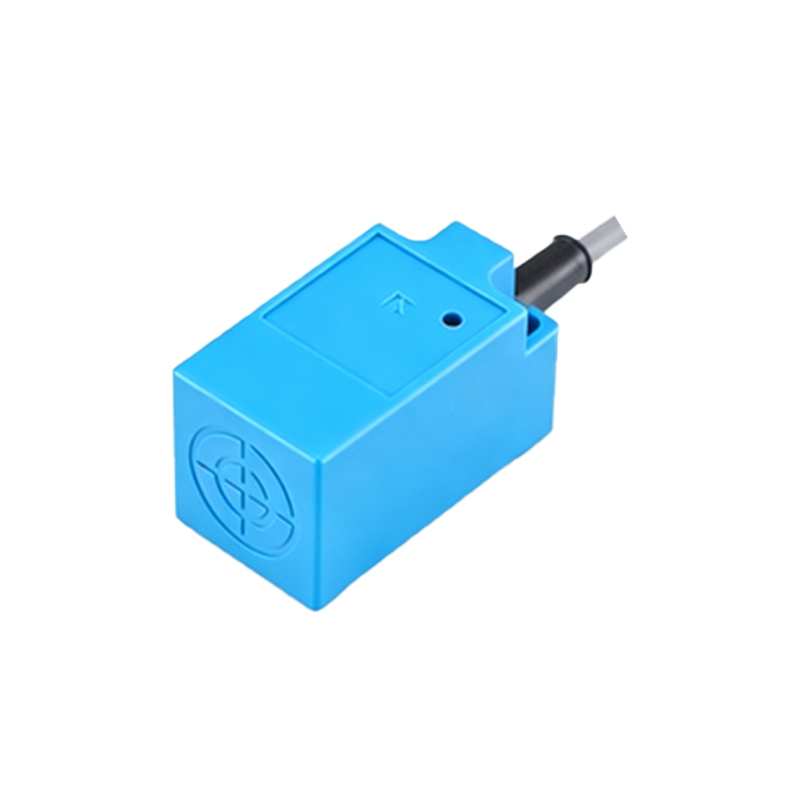
DC two-wire proximity sensors find applications across virtually every industry. Common uses include position sensing (detecting if a cylinder is extended or retracted), end-of-travel limit detection on conveyors or linear actuators, part presence verification in assembly machines, and object counting in packaging lines. They are also extensively used for bin level detection and in safety interlock systems where their simple wiring enhances reliability. Both shielded (flush-mountable) and unshielded (non-flush-mountable) variants are available. Shielded sensors can be mounted flush in metal without affecting their sensing range, making them ideal for space-constrained installations. Unshielded sensors offer a longer sensing range but require a clear zone around the sensing face.
Selecting the appropriate DC two-wire sensor requires careful consideration of several parameters. The operating voltage range is primary; common ranges are 10-30V DC or 20-250V AC/DC for universal types. Ensuring compatibility with the available power supply is essential. The sensing distance, or nominal range (Sn), must be specified based on the application, typically ranging from 1mm to 15mm for standard inductive sensors. Choosing a sensor with a rated distance 10-20% less than the actual required gap provides a safety margin. The output function is either normally open (NO) or normally closed (NC). The load current rating must not be exceeded, and the minimum operating current (minimum load) must be considered to ensure stable switching. For inductive sensors, the target material (steel, aluminum, copper) affects the effective sensing range, with steel providing the standard range. Environmental factors like temperature extremes, chemical exposure, and required ingress protection (IP rating) must align with the operating conditions. Finally, electrical connection types, such as pre-wired cables or quick-disconnect connectors, should be selected for maintenance convenience.
In summary, the DC two-wire proximity switch sensor is a cornerstone of efficient and robust industrial sensing. Its elegant two-wire design merges power and signal, offering a perfect blend of simplicity, durability, and performance. By understanding their working principle and meticulously evaluating application requirements against key specifications—voltage, sensing distance, output type, load, and environmental ratings—engineers and technicians can reliably integrate these sensors to enhance automation system functionality, safety, and uptime. Their continued evolution with features like IO-Link connectivity for diagnostics and parameterization further solidifies their role in the smart factories of today and tomorrow.