In the realm of industrial automation, robotics, and high-precision manufacturing, the ability to measure distance with unwavering accuracy is paramount. Among the plethora of sensing technologies available, laser distance sensors have emerged as a cornerstone for linear measurement applications. Their principle of operation, while sophisticated in implementation, is grounded in straightforward physics, primarily utilizing time-of-flight (ToF) or triangulation methods.
Time-of-flight sensors calculate distance by measuring the time it takes for a laser pulse to travel to a target and back. The formula is elegantly simple: Distance = (Speed of Light × Time) / 2. Modern electronics enable the measurement of these incredibly short time intervals with phenomenal precision, allowing for accurate measurements over long ranges, often from a few centimeters up to several hundred meters. This makes ToF sensors ideal for applications like vehicle detection, bulk material level monitoring, and large-scale surveying.
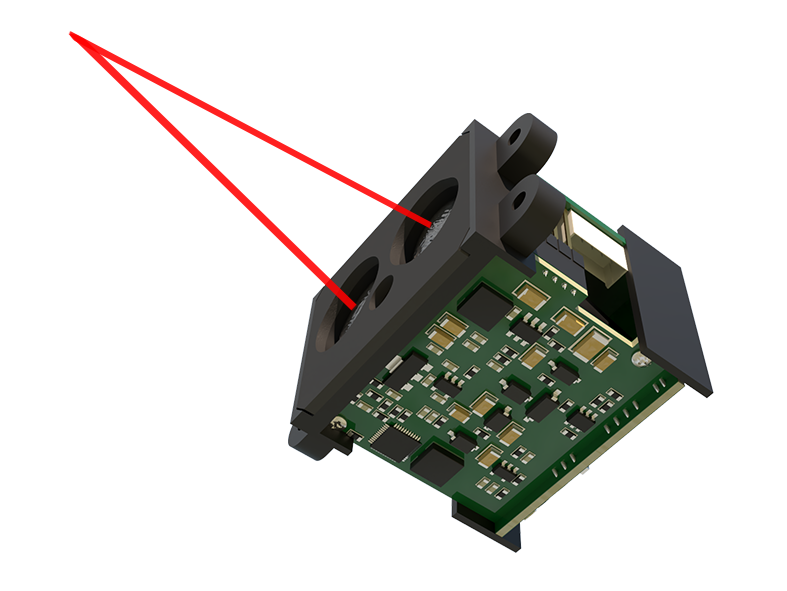
Conversely, laser triangulation sensors are the go-to choice for high-accuracy, short-range measurements. Here, a laser diode projects a visible spot onto the target surface. The reflected light is focused onto a position-sensitive detector (PSD) or a CMOS/CCD array at a known angle. As the target distance changes, the position of the reflected spot shifts on the detector. Using trigonometric calculations, the sensor's processor determines the exact distance. This method excels in resolutions down to the micrometer range, making it indispensable for tasks like wafer alignment in semiconductor fabrication, precision thickness gauging, and profile scanning.
The advantages of laser sensors for linear measurement are compelling. They offer non-contact operation, eliminating mechanical wear and allowing measurement of delicate, hot, or moving objects. Their high sampling rates enable real-time process control, while their small, focused laser spot allows for precise targeting, even on intricate surfaces. Furthermore, advancements in blue laser technology have improved performance on challenging surfaces like dark or shiny materials, which traditionally scatter or specularly reflect red laser light.
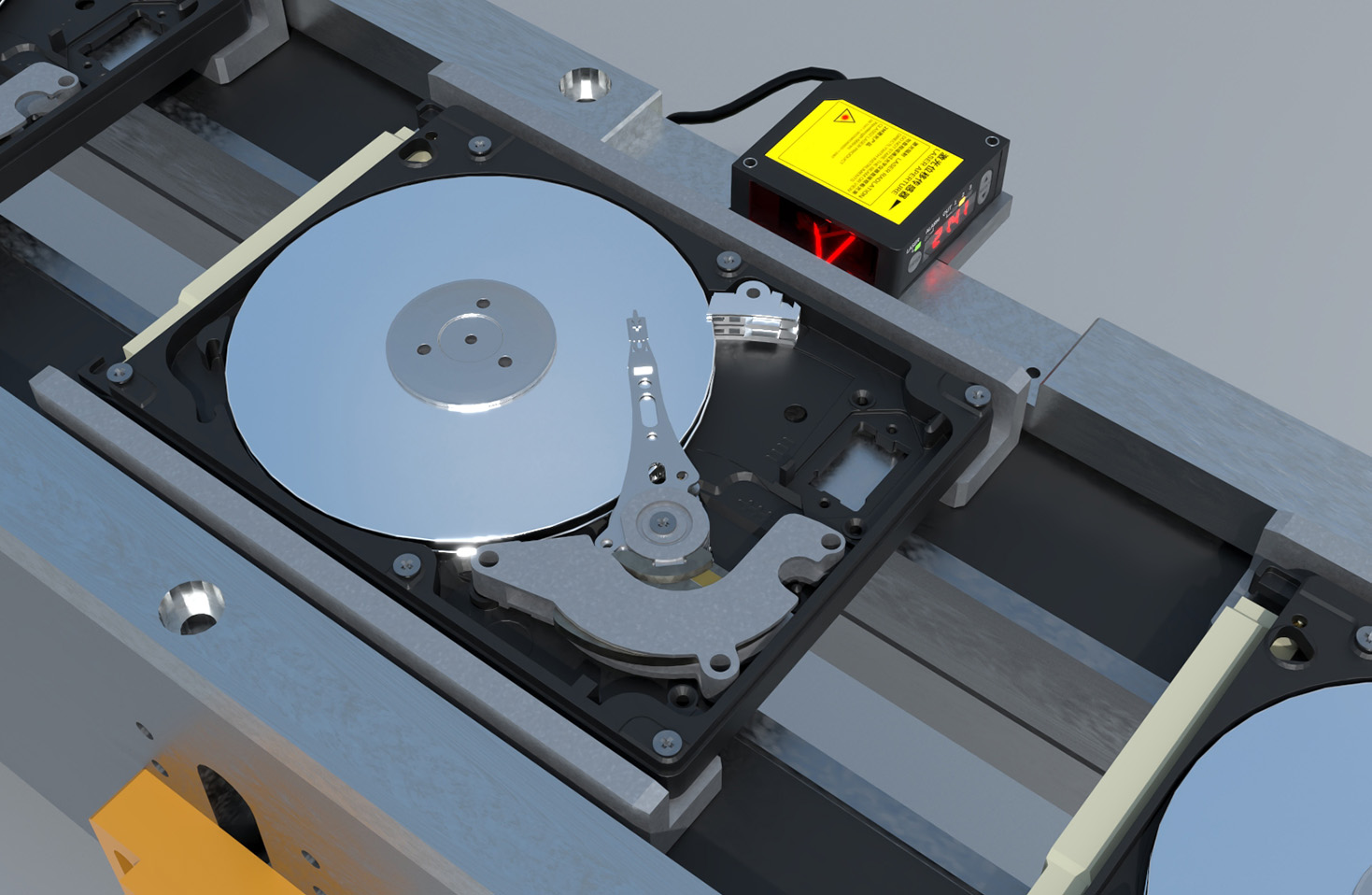
Selecting the appropriate laser distance sensor requires careful consideration of several key parameters. Range and standoff distance define the operational window. Resolution and accuracy specify the smallest detectable change and the trueness to the actual value, respectively. Linearity error indicates the deviation from a perfect straight-line response across the measuring range. The spot size influences the minimum feature that can be measured. Finally, environmental factors like ambient light, dust, temperature, and the target's surface properties (color, texture, reflectivity) must be accounted for. Many industrial-grade sensors incorporate features like background suppression, temperature compensation, and programmable evaluation electronics to mitigate these influences.
In practice, laser distance sensors are the silent workhorses behind countless automated processes. On assembly lines, they verify part presence, position, and dimensions. In robotics, they provide critical feedback for precise arm positioning and object handling. In logistics, they measure package dimensions for volumetric weighing and optimize warehouse storage. They control the gap in rolling mills, monitor the wear of cutting tools, and ensure the flatness of LCD displays.
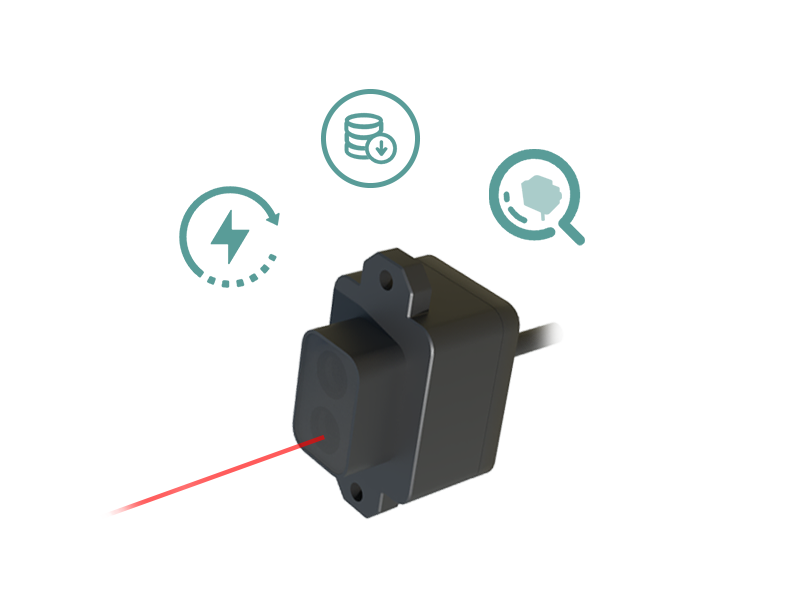
Looking ahead, the integration of laser distance sensors with Industry 4.0 frameworks is accelerating. Sensors with integrated IO-Link or Ethernet connectivity provide not just measurement values but also diagnostic data, enabling predictive maintenance and seamless integration into digital twin models. Furthermore, the development of multi-point and line laser profilers is expanding linear measurement into full 3D contour and shape analysis.
In conclusion, laser distance sensors for linear measurement represent a mature yet rapidly evolving technology. By understanding the core principles of ToF and triangulation, along with a clear assessment of application requirements, engineers can leverage these powerful tools to achieve new levels of precision, efficiency, and quality control in virtually any industrial setting. Their role as a fundamental enabler of automation and precision engineering is both secure and expanding.