In the realm of precision manufacturing, the accuracy of threaded components is paramount. Laser thread detection sensors have emerged as a critical technology for ensuring the integrity and functionality of screws, bolts, and other threaded parts across industries such as automotive, aerospace, and electronics. These sensors utilize advanced laser triangulation or structured light principles to perform non-contact, high-speed inspections, offering significant advantages over traditional mechanical gauging methods.
The core operation of a laser thread detection sensor involves projecting a focused laser beam onto the target thread. A high-resolution camera or photodetector array captures the reflected light pattern. By analyzing the deformation or displacement of this laser line or pattern as it interacts with the thread's peaks and valleys, the sensor's onboard processor can calculate critical dimensional parameters in real-time. These parameters include major diameter, minor diameter, pitch diameter, thread pitch, flank angle, and even surface defects like burrs or chips. This data is then compared against predefined tolerance limits to provide a definitive pass/fail judgment.
One of the primary benefits of laser-based inspection is its non-contact nature. Mechanical probes can wear over time, require frequent calibration, and may even damage delicate or finely finished threads. Laser sensors eliminate this physical contact, thereby reducing maintenance costs and preventing part damage. Furthermore, they operate at remarkable speeds, capable of inspecting thousands of parts per hour, which is essential for high-volume production lines. This speed does not compromise accuracy; modern sensors can achieve micron-level resolution, detecting deviations that are invisible to the human eye.

The integration of these sensors into automated production systems is straightforward. They can be mounted on robotic arms, integrated into conveyor line stations, or placed within CNC machining centers for in-process verification. Communication protocols like Ethernet/IP, PROFINET, or IO-Link allow seamless data transfer to PLCs (Programmable Logic Controllers) and Manufacturing Execution Systems (MES). This enables real-time process control, statistical analysis, and traceability, forming a cornerstone of Industry 4.0 smart factory initiatives. When a defective thread is detected, the system can immediately trigger a reject mechanism or alert an operator, preventing non-conforming products from progressing down the line and reducing waste.
When selecting a laser thread detection sensor, engineers must consider several key factors. The measurement range and stand-off distance must be compatible with the part size and installation constraints. The required resolution and repeatability are dictated by the thread's specifications and tolerance class (e.g., ISO metric, UN, NPT). Environmental robustness is also crucial; sensors deployed in machining environments must be housed in rugged enclosures with high IP ratings to withstand coolant mist, metal shavings, and vibrations. Additionally, the sophistication of the evaluation software is vital. The best systems offer intuitive user interfaces for easy setup of inspection programs and provide comprehensive, easy-to-interpret data visualization and reporting tools.
Looking ahead, the evolution of laser thread detection continues. The integration of artificial intelligence and machine learning algorithms is beginning to enable more sophisticated analysis, such as predicting tool wear on threading machines based on subtle changes in thread profile over time. Multi-sensor fusion, combining laser data with 3D vision or tactile sensing, is also being explored for the most complex inspection challenges. As threads become smaller and tolerances tighter in miniaturized electronics and medical devices, the demand for even more precise and adaptable laser sensors will only grow.
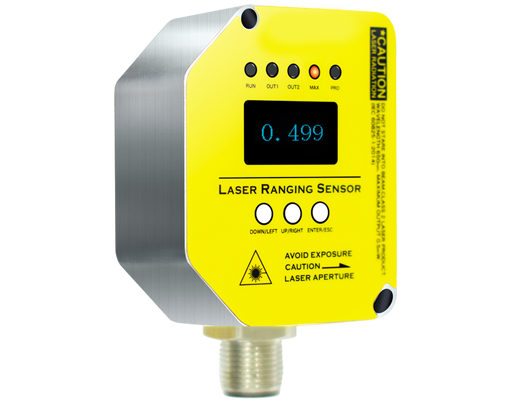
In conclusion, laser thread detection sensors represent a transformative technology for quality assurance in manufacturing. By delivering fast, accurate, and reliable non-contact measurements, they enhance product quality, optimize production efficiency, and reduce operational costs. Their role is indispensable in modern manufacturing, where the reliability of every threaded connection can have significant implications for safety and performance.